Retail customer engagement: Real campaigns, real results
Published on April 09, 2026/Last edited on April 09, 2026/10 min read


Team Braze
The most successful retail brands aren't always the ones with the biggest marketing budgets. According to the 2026 Retail Customer Engagement Review, when brands accurately predict wants and needs, consumers are 23% more likely to make a purchase.
A shopper coming back depends on what a brand does in those in-between moments—showing up when it matters, with something that actually feels relevant to that person. That's a harder thing to manufacture than a big campaign, but it's also more durable. And once you see how other brands have built it, the approach becomes a lot clearer.
This article draws on real campaigns from retail and eCommerce brands who worked with Braze to improve their engagement and business outcomes—what they built, why it worked, and what you can take from it for your own programs.
What is retail customer engagement?
Retail customer engagement covers every interaction a brand has with a shopper across digital and physical channels—and how well those interactions are timed, personalized, and connected to drive repeat behavior. It spans the full customer lifecycle, from the first app open or website visit through to loyalty, re-engagement, and everything in between.
What are the highest-impact moments to engage retail customers?
Before we get into the real-life examples, let’s take a look at some of the moments that have high-impact with retail customers and are therefore a great starting place for engagement campaigns.
An abandoned cart for example, a loyalty reward that has not been redeemed, or an item from a wishlist suddenly back in stock. These moments in the customer journey are where intent is highest. A well-timed, relevant message can make a measurable difference to conversion, retention, and lifetime value.
- Abandoned cart and browsing—A shopper who leaves without buying has shown clear intent. A personalized follow-up that reflects exactly what they were looking at can recover that purchase before interest moves on.
- Back-in-stock alerts—Speed matters here. A triggered notification that arrives quickly after a stock update, with personalized product recommendations alongside it, turns a potential frustration into a conversion opportunity, especially when a product goes viral.
- Loyalty redemption windows—Rewards that go unused are a missed connection. Timely reminders sent at the right point in the redemption window keep loyalty programs working rather than sitting idle.
- Lifecycle moments—Birthdays, anniversaries, and post-purchase moments are natural openings for outreach that feels personal rather than promotional.
- In-app experiences—Scavenger hunts, games, and interactive campaigns keep customers engaged within the app itself, building session frequency without relying purely on outbound messaging.
- Win-back—Behavioral data tells you when someone is drifting and what kind of message is most likely to bring them back, long before they've fully disengaged.
How to engage customers in retail: real-life examples of what leading brands do differently
Retail brands seeing strong engagement results have one thing in common—they respond to what a customer is doing right now, connecting behavioral signals to cross-channel journeys. The following examples show how that plays out across loyalty, SMS, AI-powered personalization, and in-app experiences.
e.l.f. puts its best face forward with a 125% rise in mobile app usage
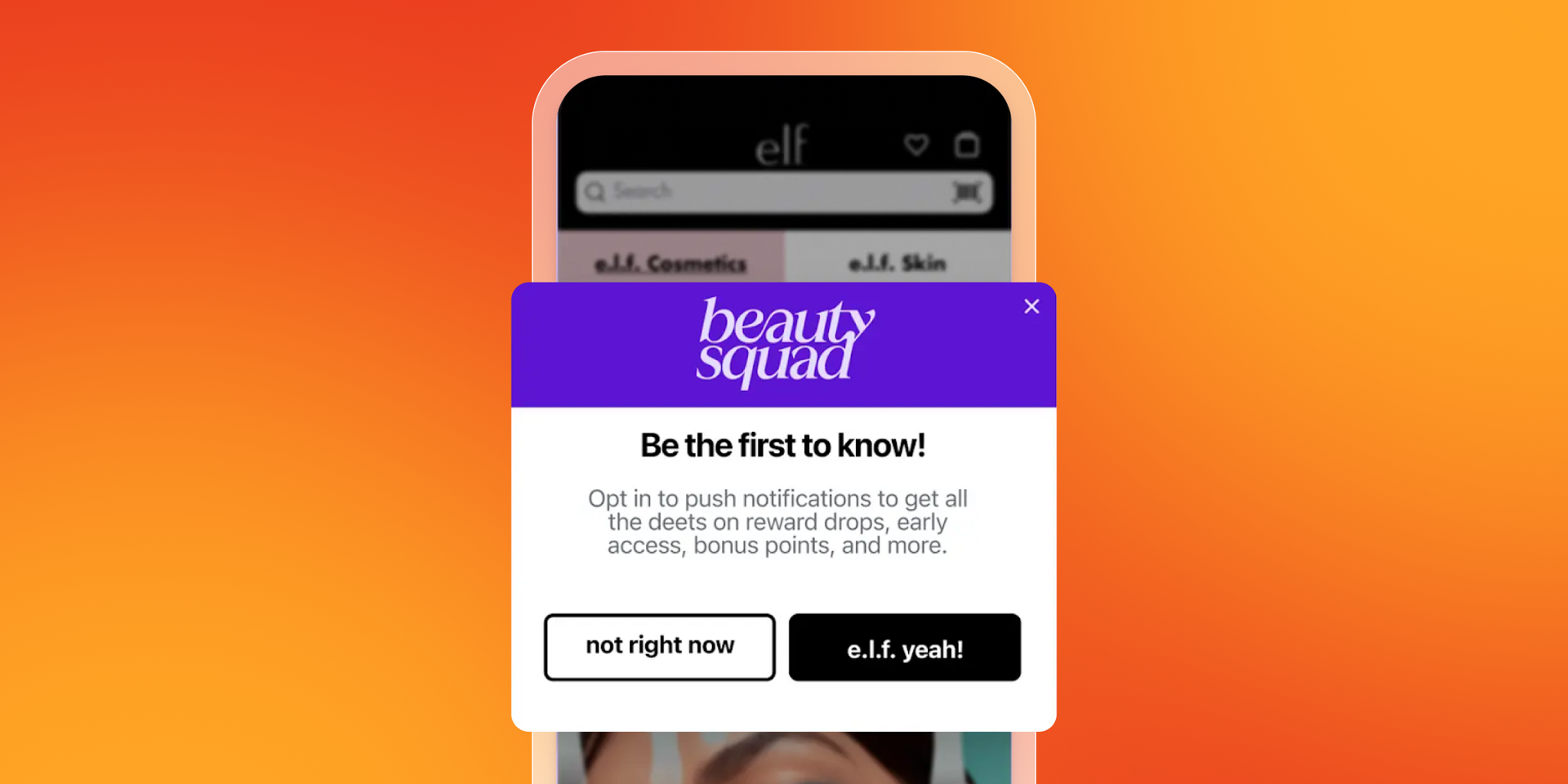
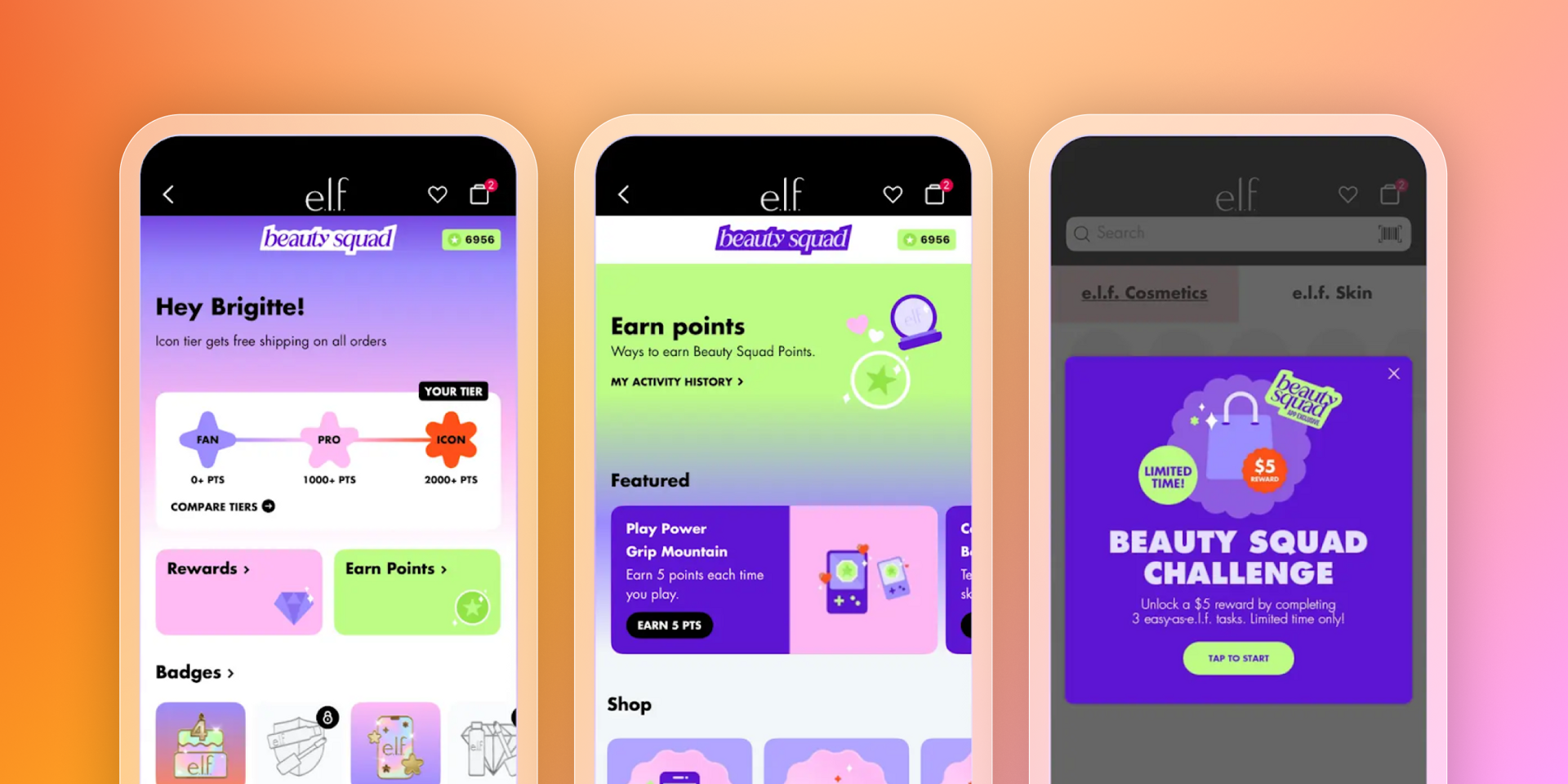
e.l.f. Beauty is a digitally-native cosmetics brand that, as of November 2024, had posted 23 consecutive quarters of net sales growth, crossing $1 billion in annual net sales in March 2024. Central to that growth is Beauty Squad, their loyalty program with over 5.3 million members, and a CRM team that treats creative engagement as a competitive advantage rather than a support function.
The challenge
e.l.f. wanted to deepen digital engagement, drive higher adoption of their loyalty program, and expand into mobile channels they hadn't yet fully activated—specifically push notifications and SMS. Their existing campaigns were performing, but the team knew there was significant headroom in what they could do with the right cross-channel infrastructure.
The strategy
Working with Braze and Braze Alloys partner Stitch, e.l.f. rebuilt key lifecycle touchpoints into coordinated cross-channel journeys. Their monthly loyalty recap—previously a single email encouraging Beauty Squad members to redeem time-sensitive rewards—became a two-step journey, with a push notification following up days later to catch members who hadn't yet acted.
Creative ambition was a defining feature of the program. The team built an in-app scavenger hunt using in-app messages and push notifications, leading customers through a Canvas-orchestrated journey with clues pointing to pages within the app where they could earn redeemable points. It was the kind of experience that built habit and session frequency while keeping the app itself front and center.
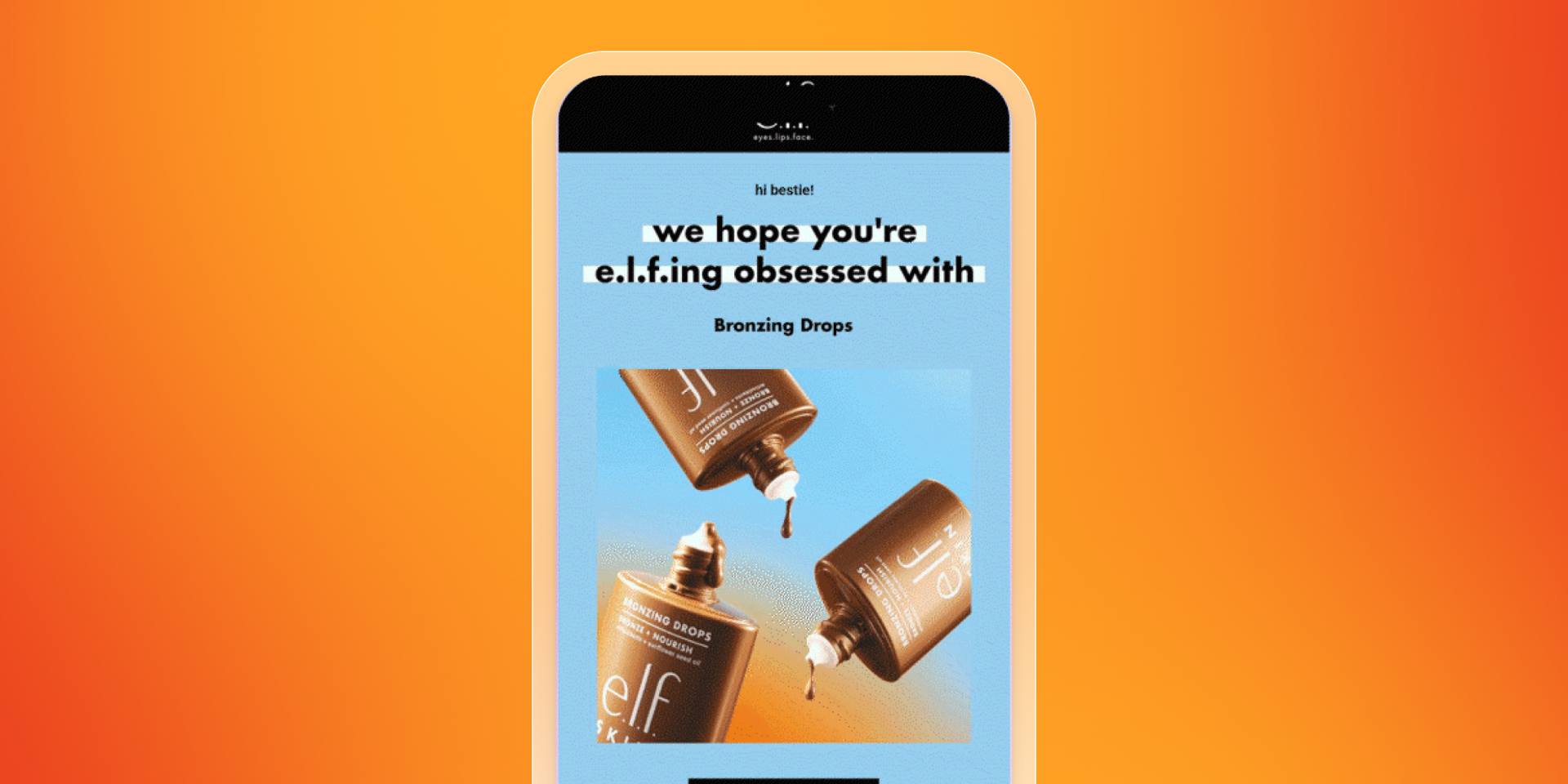
Their most ambitious activation was Beauty Squad Replay—a personalized year-in-review experience for loyalty members, built using custom HTML, JavaScript, and Liquid to deliver a 28-screen in-app message unique to each user, followed by a Content Card landing page with 21 individual cards reflecting each member's personal 2024 milestones. Members could access and share their cards directly to social media—turning a loyalty communication into a brand awareness moment.
The wins
- 125% increase in monthly mobile app usage in March to September 2023
- 58% year-over-year increase in loyalty offer redemptions between 2023 and 2024
- 25% of Beauty Squad Replay participants shared their cards on social media
- 102% initial lift in engagement from a single campaign within three weeks of launching the Stitch partnership
The e.l.f. program is a strong illustration of what becomes possible when a brand commits to treating engagement as a creative discipline and has the data infrastructure to execute at scale across every channel in the mix.
How Mercari thinks about proactive engagement
Mercari is a C2C marketplace app and one of the largest secondhand platforms in the US, connecting millions of buyers and sellers across categories from fashion to electronics. In the video below, Kenadee Hatch, CRM Technical Manager at Mercari, talks about how the brand has moved from reactive to proactive customer relationships—using BrazeAI™, Canvas, content blocks, and landing pages to build flexible, scalable promotions that give the team room to be creative without depending on engineering resource.
Sephora's SMS glow-up: Five programs, one platform
Sephora is the leading global prestige beauty omni-retailer, recognized for its product depth, expert service, and culture of experimentation. Aubrey Jackson, Sr. Marketing Manager of Mobile Marketing, joined the brand in 2021 and took on the task of relaunching its SMS program from the ground up.
The challenge
Sephora needed to relaunch and scale its SMS program across multiple areas of the business, and do it quickly—without routing every new idea through an engineering backlog.
The strategy
Using Braze, Jackson rebuilt Sephora's SMS program and expanded it into five distinct programs across different areas of the business over 2.5 years. Canvas, Liquid, Connected Content, and webhooks gave the team the flexibility to orchestrate campaigns across mobile channels and optimize journeys based on what each action meant to the individual customer.
A significant part of the value came from building a more optimized abandoned cart journey, moving away from manual waterfall logic to properly orchestrate between push and SMS—making sure customers received the right message, at the right time, on the channel of their choice.
The wins
- Five SMS programs built and scaled across the business within 2.5 years
- Seamless orchestration across mobile channels, with campaigns shaped around individual customer behavior
- Lower opt-out rates and higher conversion from the optimized abandoned cart journey
- Faster campaign execution, with no-code solutions removing the need for technical resource on every new idea
24S turns abandoned carts into a luxury sales moment
24S is LVMH's online luxury retailer, launched in 2017 and offering a curated selection of 60+ brands—from established luxury houses to contemporary designers. The platform is built around delivering a premium, personalized digital experience that mirrors the standard of luxury in-store service.
The challenge
24S was running separate platforms for triggered emails, mobile messaging, and product recommendations—a fragmented setup that created disjointed customer experiences and added unnecessary complexity for internal teams. They needed to increase purchase frequency and maximize first-purchase conversion.
The strategy
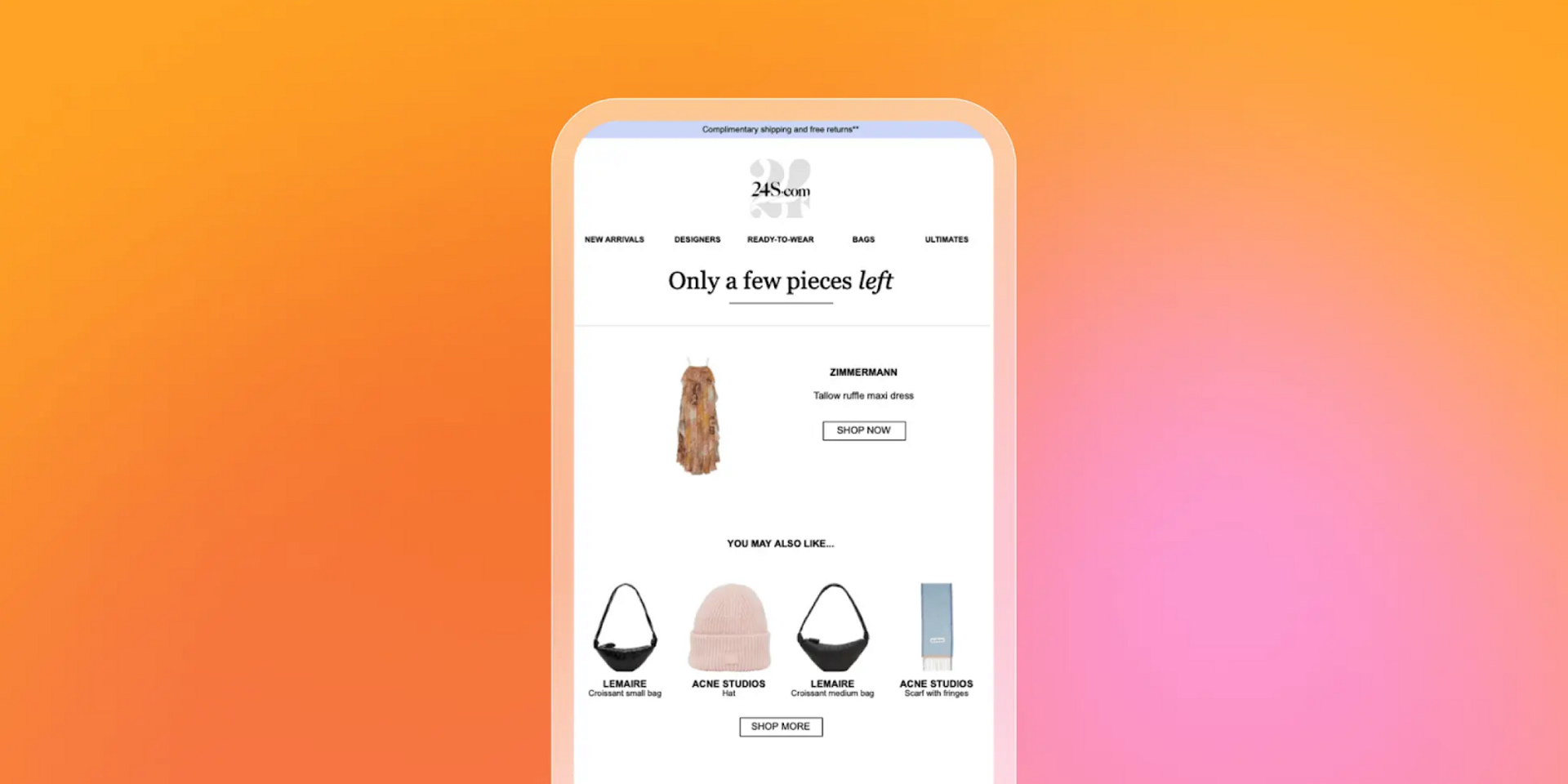
Using Braze, 24S built eight personalized triggered campaigns targeting the friction points that matter most—abandoned carts, low-stock urgency moments, and back-in-stock alerts. Braze Catalogs pulled live inventory data directly into messages, with Liquid operators assessing stock levels in real time to determine when and how to trigger urgency-based notifications. Content Blocks were used to exclude specific premium luxury brands from promotional messaging, protecting brand positioning at the campaign level.
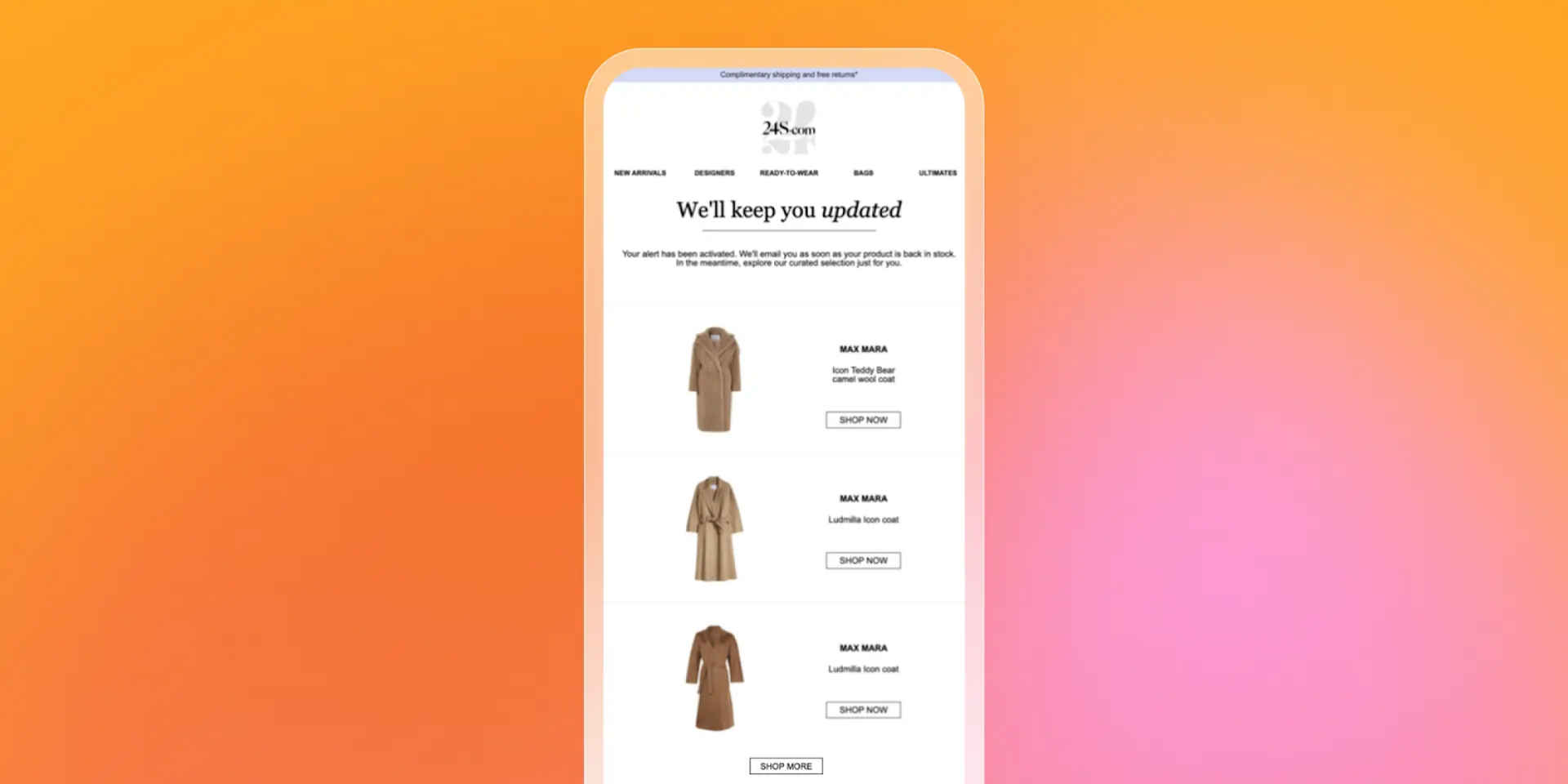
For their back-in-stock campaign, 24S implemented a trigger-based Canvas that confirmed a customer's alert subscription and automatically added four personalized product recommendations powered by Braze AI Item Recommendations—keeping customers engaged and browsing beyond the item that brought them back.
The wins
- 7% increase over six months in add-to-cart rate from the back-in-stock campaign
- 35% increase over six months in purchase conversion rate (3-day window) from abandoned cart and low-stock urgency campaigns
How Estée Lauder personalizes at scale across every channel
Estée Lauder is one of the world's leading prestige beauty companies, with a portfolio of brands spanning skincare, makeup, fragrance, and hair care. In the video below, Morgan Shaharudin-Miller, CRM Senior Executive at Estée Lauder, shares how the brand uses Braze to connect with customers across every channel—and what that looks like at scale.
How to improve customer engagement in retail with data and real-time personalization
The 2026 Braze Retail Customer Engagement Review found that only 53% of consumers say that brands are accurately predicting their wants and needs. That represents a big opportunity for retail brands to get it right.
Braze integrates with platforms like Shopify to give retail teams a unified customer view that pulls together behavioral signals, purchase history, loyalty activity, and real-time session data—without requiring complex custom builds. When that data is in one place, segmentation becomes specific enough to act on in real time rather than on a schedule.
From there, AI takes on the work that would otherwise require manual effort at scale—identifying the next best experience for each customer, determining optimal send times, and sequencing messages across channels based on how someone is actually responding. An engagement program built this way adapts continuously, rather than having to be rebuilt every time customer behavior changes.
What metrics matter most for measuring retail customer engagement success?
The strongest signals of real engagement combine behavioral depth with downstream business outcomes—whether a message moved someone to act, return, or spend more.
Here are the indicators retail teams should be tracking, and what each one actually tells you:
- Purchase conversion rate—Did the message move someone to buy? This is the most direct read on whether a triggered campaign is doing its job at the moment of highest intent.
- Loyalty offer redemption rate—Are loyalty members actually using what they've earned? Low redemption is often a timing and channel problem as much as a program one.
- Mobile app usage and session frequency—Is engagement deepening over time? Rising session frequency tells you customers are building a habit, not just downloading the app once and moving on.
- Add-to-cart rate from triggered campaigns—Are behavioral triggers translating into shopping intent? A useful leading indicator of conversion before you get to the purchase itself.
- Email engagement and deliverability health—Are frequency and relevance working together? High send volume with declining engagement is a warning sign, not a performance metric.
- Revenue per user—How does cross-channel engagement compare to single-channel on actual spend? This is where the commercial case for orchestration becomes measurable.