Mobile customer engagement: How to maximize retention and conversions
Published on June 02, 2026/Last edited on June 02, 2026/9 min read

Courtney Baum
Product Marketing ManagerA mobile customer engagement strategy is about harnessing real-time engagement, behavioral triggers and AI-driven personalization to boost retention, conversion and long-term loyalty.
Mobile is where your customers are. Data tells us that over half of all daily online time worldwide is spent on mobile phones. It’s a central hub for customer engagement, with push, in-app, and SMS sitting alongside email, WhatsApp and every online channel.
You’re competing with the speed, ease and distraction of your customers having access to the internet 24/7 and it’s critical that your messaging cuts through the noise.
Here’s how to maximize those benefits.
TL;DR
- Mobile customer engagement covers every interaction a customer has with your brand on their phone, from push notifications and in-app messages to SMS and email opened on mobile.
- There are many channels to engage customers on their mobile device, such as push notifications and conversational mobile channels such as SMS, WhatsApp, RCS and KakaoTalk. There’s also channels within a brand's owned mobile app such as in-app messages, Content Cards and Banners.
- Push, in-app, SMS, and email each serve a different purpose and work best when coordinated around the mobile customer journey. Push reaches users outside the app, in-app guides active sessions, SMS handles urgent outreach, and email provides context and continuity.
- Real-time, behavior-triggered messaging consistently outperforms scheduled sends because it responds to what a customer is doing at a specific moment, not what a calendar dictates.
- Personalization and segmentation let you deliver relevant experiences to large audiences by responding to individual behavior and preferences.
- Retention, engagement, and revenue metrics are how you know whether mobile engagement is working. Tracking them at the segment level over time shows where to improve and where to invest.
Key takeaways
- Mobile is a proximity channel, and that raises the standards for engagement. Your messages land on a device customers carry everywhere, in moments that are short, frequent, and often unplanned. Relevance and timing matter more here than on any other digital medium.
- Having the channels is not the same as having a strategy. Push, in-app, SMS, and email each play a role, but the experience they create depends on how they're coordinated around the customer journey, not just whether they exist.
- Relevance drives every metric that matters. Retention, conversion, loyalty, and opt-in rates all improve when customers receive messages that reflect their actual behavior and needs.
- Mobile engagement improves when treated as a continuous practice. Test timing, content, and channel combinations regularly, measure at the segment level, and adjust based on what customers show you over time.
What is mobile customer engagement?
Mobile customer engagement is the process of building and maintaining relationships with customers through mobile channels, including push notifications, in-app messages, SMS, mobile email, Content Cards, and Banners. Every interaction a customer has with your brand on their phone generates behavioral signals, and those signals tell you exactly how engaged, loyal, and commercially valuable that customer is.
Desktop sessions are planned. Mobile moments are not. Those shorter, more frequent moments are where retention, conversion, and loyalty are shaped, and the channels you choose determine how effectively you reach customers in them.
Channels for mobile engagement
Each channel plays a different role in the mobile customer journey. How you combine them determines the quality of the experience your customers have at every touchpoint.
Push notifications: Onboarding, retention, and behavioral triggers
Mobile push notifications reach customers on their lock screen, outside of any active app session. Use them to welcome new users through customer onboarding, re-engage lapsed users with retention nudges, and respond to behavioral triggers like an abandoned cart or a completed milestone.
In-app messaging: Contextual content and user-specific flows
In-app messages appear during active sessions. Use them for content tied to what a user is doing in that moment, from onboarding walkthroughs to personalized offers triggered by browsing behavior.
SMS campaigns: Timely, permission-based communication
SMS is one of the highest-visibility channels available. Use it for flash sales, re-engagement campaigns, appointment reminders, and delivery updates. Permission and relevance are non-negotiable; opted-in users who feel spammed will leave.
Mobile email: Complement to in-app and push
Most email is now opened on a phone, making it a mobile channel by default. Use it to set context that push and in-app messages build on, and to maintain the relationship between more immediate touchpoints.
Real-time customer engagement strategies
Customers expect a high level of relevance and a seamless experience. Anything that makes their goal harder puts them at risk. With mobile marketing and a real-time customer engagement strategy, the timing of a message shapes how effective it is, almost as much as the content itself. Reaching customers with something directly relevant to what they just did consistently outperforms anything sent on a schedule.
Triggered campaigns based on behavior and context
Real-time triggered campaigns respond to specific customer actions the moment they happen. For example, a customer browsing a product repeatedly, adding it to their cart without purchasing, or going inactive for a couple of weeks generates signals. You can use those signals to respond in the right way, incorporating the nuance and context you have around that individual.
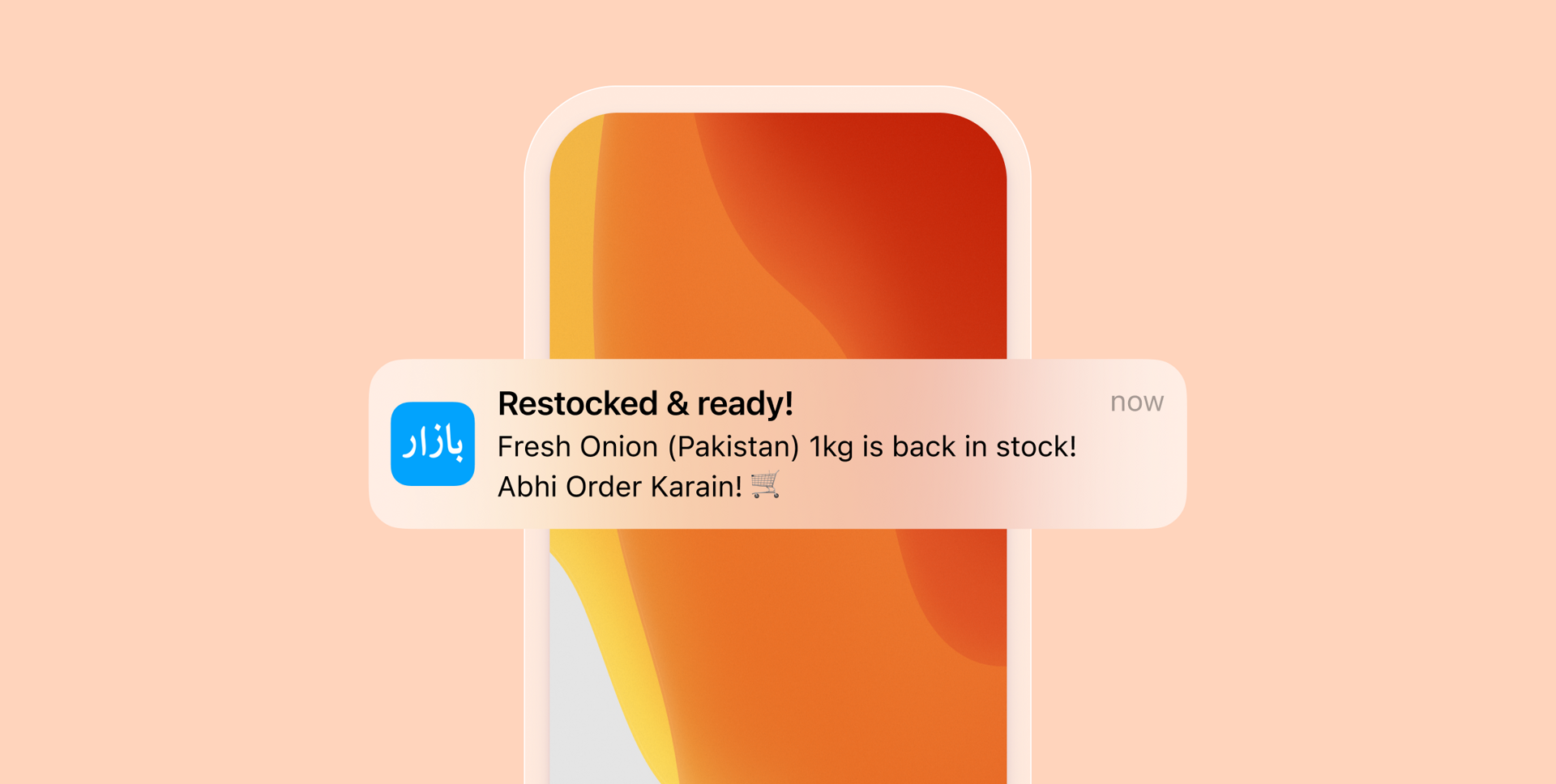
Take Bazaar, Pakistan's leading eCommerce and fintech platform. They wanted to increase their customer engagement without increasing complexity or overhead. They now build, test and optimize campaigns in Braze. One of their campaigns was for restock notification, combining customer consent, product interest data, and live inventory feeds. When a product came back into stock, Braze automatically sent a personalized push notification. That campaign alone delivered a 29% increase in open rates, a 26% increase in orders, and a 21% increase in revenue, built in just two days on Braze Canvas.
Personalized notifications and content based on user actions
Personalization shows your users you know and understand them. If you want to build loyalty and retention, you need to show your customers you value them on an individual basis.
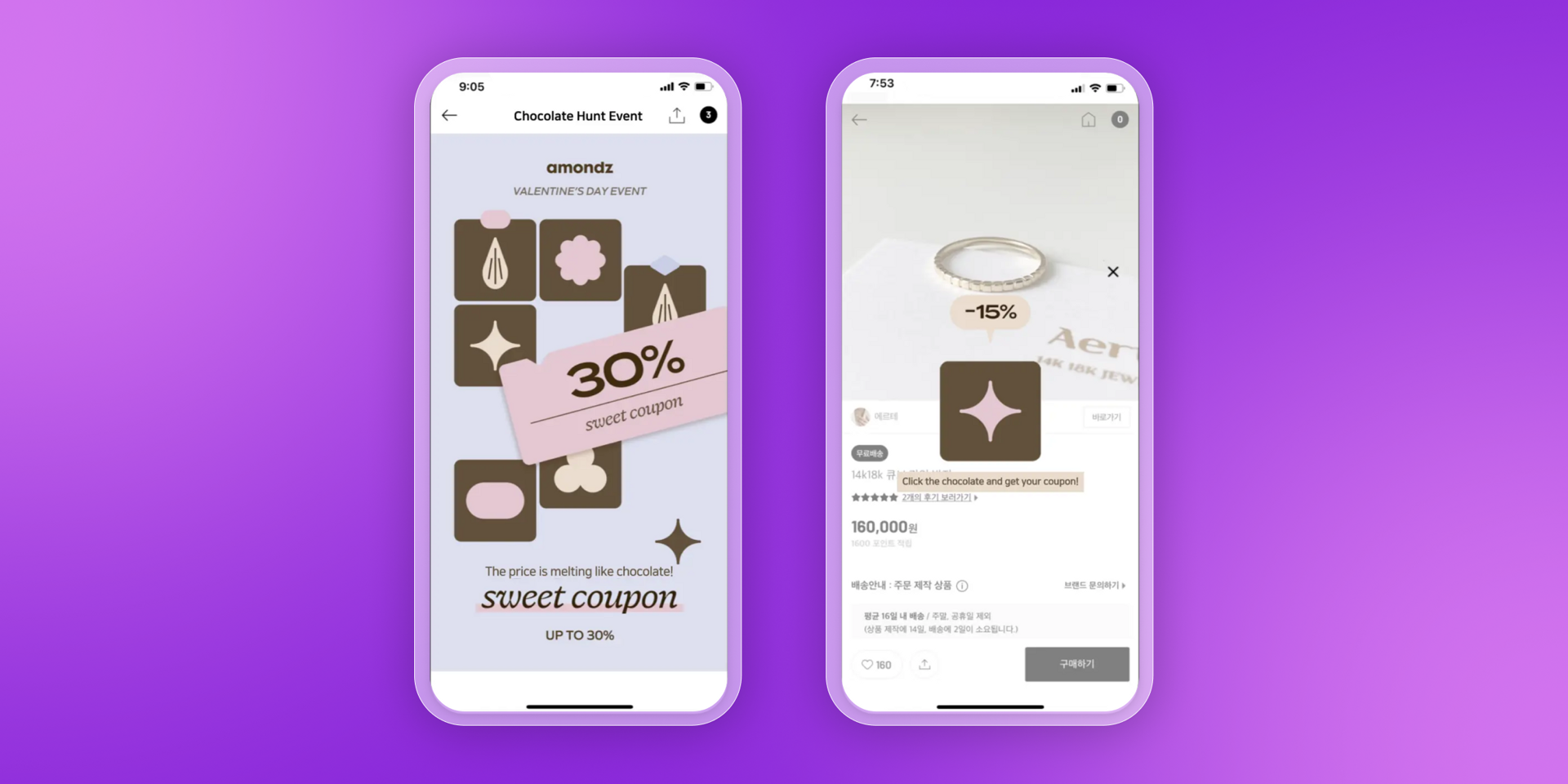
amondz, a South Korean jewelry app, wanted to bring the personal touch back to jewelry shopping. They used the Braze platform to create and send push notifications and in-app messages aimed at behavior-related segments, including a Valentine's Day campaign that triggered personalized coupon reveals based on in-session browsing.
amondz saw a 20% increase in conversions after sending push notifications to customers who had abandoned their carts, and a 50% click-through rate on highly personalized push notifications and in-app messages.
AI-driven recommendations to maximize relevance and engagement
AI-driven recommendations can suggest products based on behavioral history. It helps increase average order value and repeat purchase rate by making each interaction feel individually curated. With AI you can do this at scale too, so you can send messages to all your customers, and they’ll each receive a recommendation that feels personal to them.
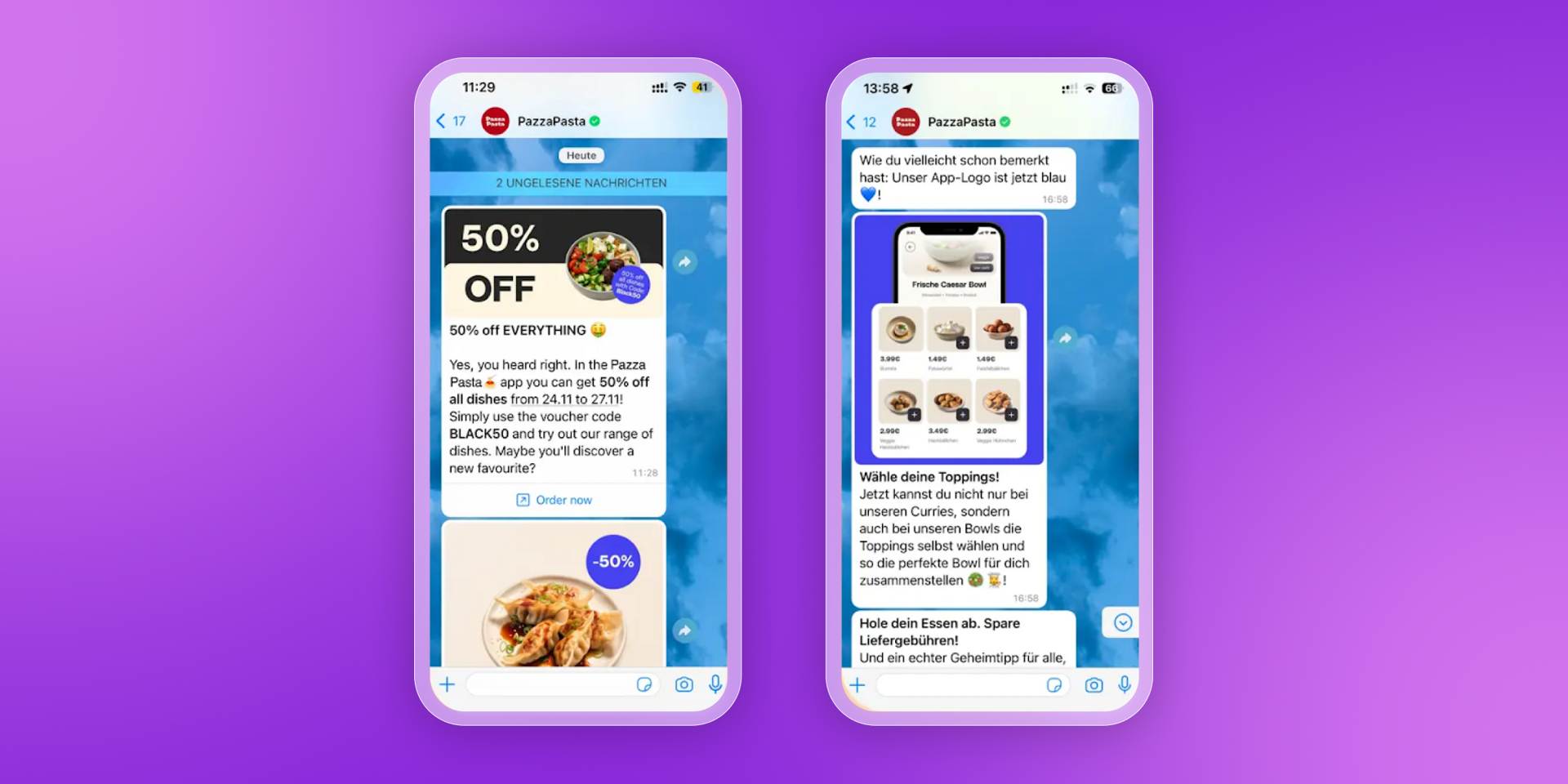
Pazza Pasta, a pizza delivery brand, used BrazeAI™ Item Recommendations and Personalized Paths to automate 1:1 personalized experiences across push and WhatsApp. Item Recommendations identified the dishes each customer was most likely to order. Personalized Paths matched each customer to the message, copy, and channel most likely to drive action. By utilizing these tools, Pazza Pasta generated 6X higher purchase rates than the same campaign on email, and product announcements saw items added to cart 4.5X more often.
Personalization and segmentation
Personalization and segmentation work together to make mobile customer engagement feel relevant to each individual user. The more precisely you understand who your users are and what they do, the better your campaigns can respond to them as individuals. Personalization at scale needs to achieve this without the overheads and resources it would take to be done manually, and that’s where solutions that allow for segmentation and tailoring on a 1:1 level are key.
Behavioral and demographic segmentation complement each other. Behavioral data tells you what a user does, including what they browse, what they buy, how often they open your app, and the triggers that prompt action. Demographic data tells you who they are. Together, they let you build audiences specific enough to receive messaging that reflects their real-life situation.
Dynamic content applies that precision at the message level. A user who has browsed a product multiple times but has yet to purchase receives a push notification featuring that exact product; a user who has just reached a loyalty program milestone receives an in-app message acknowledging it. The segmentation defines who receives what, and the dynamic content makes it feel personal.
Mobile users don't live solely on their phones, though. They move between mobile, desktop, email, and in-store touchpoints throughout their customer journey, and a strong engagement strategy accounts for all of them. Multi-touch coordination across the lifecycle means a customer who engages with your campaigns on mobile doesn't receive a disconnected or contradictory message on another channel shortly after. Without it, users could experience intense relevancy at one point in their journey and complete indifference at another.
Measuring mobile engagement performance
The metrics you track shape every decision you make about your mobile engagement strategy. These are the ones worth building into your regular reporting.
- Retention rate tracks the percentage of users who return to your app at Day 1, Day 7, and Day 30, showing how well each stage of the experience holds their attention.
- Churn rate shows how many users stopped engaging over a given period and at what point in the lifecycle they dropped off.
- DAU/MAU ratio compares daily to monthly active users, revealing how embedded your app has become in users' routines.
- Session length tracks how long users spend in your app per visit, with longer sessions reflecting higher engagement.
- Feature adoption shows which parts of your app users engage with most, and which are being overlooked.
- Push performance covers opt-in rate, open rate, and conversion rate, showing how many users you can reach via push and how effectively those messages drive action.
- SMS open and response rate reflect how urgently users are acting on your text messages.
- Conversion rate tracks the percentage of users who complete a specific goal, such as a purchase or a sign-up.
- Revenue per user and LTV (lifetime value) measure the commercial value each user generates over time, helping you prioritize retention for your highest-value segments.
Best practices and takeaways for mobile customer engagement
Mobile customer engagement should be built around the customer rather than the channels. Mobile is an intimate channel. Your messages arrive on a device customers carry everywhere, which means the bar for relevance and timing is higher than almost any other medium.
Generic or poorly timed messages get ignored, and at scale they damage the relationship and erode the opt-ins you've worked to earn. Every touchpoint is a chance to show customers you understand them, and doing so consistently builds lasting trust.
Treat mobile engagement as a continuous practice, where every campaign generates data about what's resonating and what isn't. Testing timing, content, and channel combinations regularly, and acting on what you find, compounds into results that improve over time.