6 min read
How Tala's marketers took ownership of the app home screen
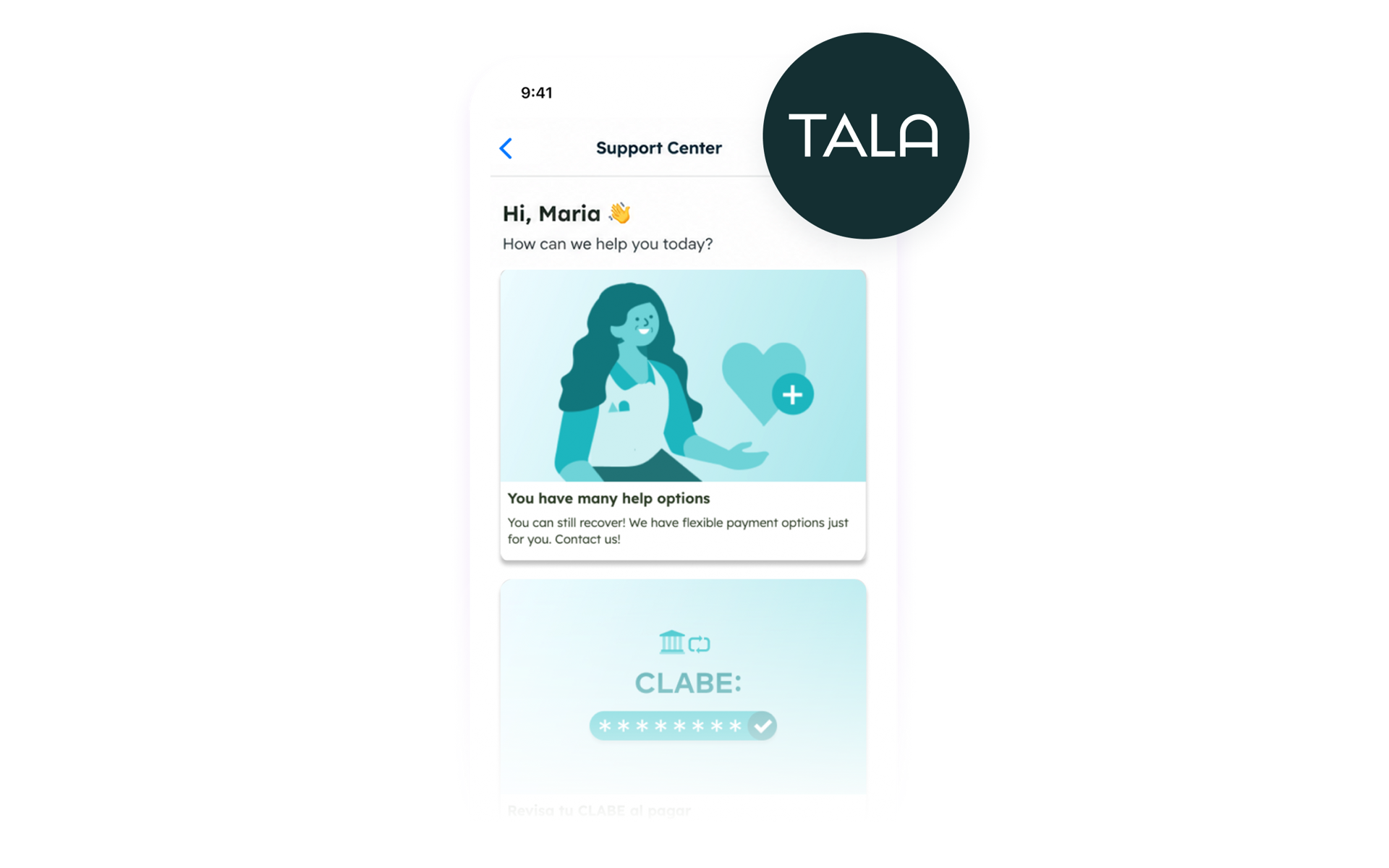
Tala had a key goal for their 2025 home page redesign: enable lifecycle marketing to personalize the home page and meet customers at each stage of their financial journey. Previously, every content update, whether it was a new message, a refreshed creative, or a change in targeting, required a developer and app release, creating a bottleneck that slowed iteration and limited the team’s ability to reach customers with the right messages at the right time.
Tala implemented Braze Banners, giving marketers the ability to personalize and target app content entirely through the Braze platform. The team uses Banners to dynamically serve content based on each user’s profile, including loan count, approval status, delinquency status, and product feature eligibility, so the home screen reflects where every customer is in their financial journey with Tala. Once the implementation was complete, all content updates, targeting changes, and creative decisions flow through Braze, allowing the lifecycle team to tie in-app messaging directly into their broader marketing strategy without any ongoing engineering involvement.
Quick implementation by one developer gave Tala’s lifecycle marketing team something they didn’t have before: full independence over a section of the home screen experience. With Banners, every content, creative, and targeting change now ships from the Braze platform with no release cycle, reaching every user instantly. By the end of 2025, that independence translated into over 100 unique and personalized Banners served to a single market without app updates.

INDUSTRY
BY THE METRICS
100+
Unique personalized Banners delivered in Mexico
1
Developer to implement
Tala is a global fintech company on a mission to build a financial system that works for everyone. Operating across emerging markets including Mexico and the Philippines, Tala uses AI-native data models to assess creditworthiness and extend financial access to underserved populations. Lifecycle marketing is central to how Tala operates: it's how the team builds trust, educates customers, and drives responsible repayment behavior at scale.
Tala has been a Braze customer since 2019, and has built a sophisticated data infrastructure to support it. They integrated Snowflake for data storage and ingestion, Amplitude for funnel tracking, and implemented APIs and SDKs to keep customer data flowing into Braze across every market. As Tala's data capabilities grew more sophisticated, so did their ambitions for the experience they could deliver to customers directly inside the app.
Giving marketers control of the home screen
When Tala undertook a significant rework of its app home screen in 2025, it became clear that one of the team's core goals was to empower the lifecycle marketing team to move faster. That meant giving marketers the ability to update content, test messaging approaches, and respond to customer behavior across markets, without depending on engineering at every step.
The status quo made that impossible. Every app screen content change, from a new message, to a different visual, or an updated targeting rule, required a developer. Lifecycle marketing lived in a queue behind engineering priorities, and the pace of iteration suffered as a result, as did the team’s ability to get timely, relevant information in front of their customers when it mattered most.
The team set out to change that. Their requirement wasn't just a better home screen. It was a home screen the marketing team could integrate into their overall lifecycle marketing strategy.
Braze Banners: Built for marketer independence
Working closely with the Braze team, Tala identified Braze Banners as the right solution, not just because it could power a more dynamic home screen, but because of where it sits in the stack. Because Banners is built into the Braze platform, marketers can test creative freely and update targeting on the fly, reaching customers with the right message at the right moment. Marketers are in the driver's seat.
That distinction matters. Plenty of tools can update content. What Banners offers is a cohesive strategy for in-product messaging. It’s a persistent, always-on channel that connects customer data, segmentation logic, and creative execution in one place, giving the lifecycle team the ability to act on customer signals without waiting for a build cycle.
Banners was built to be implemented quickly, and Tala's engineering team did exactly that by completing the work in a single sprint. That one-time investment established marketer independence as the foundation of the entire experience. From that point forward, no engineering involvement was needed for day-to-day content operations.
A personalized home screen at scale
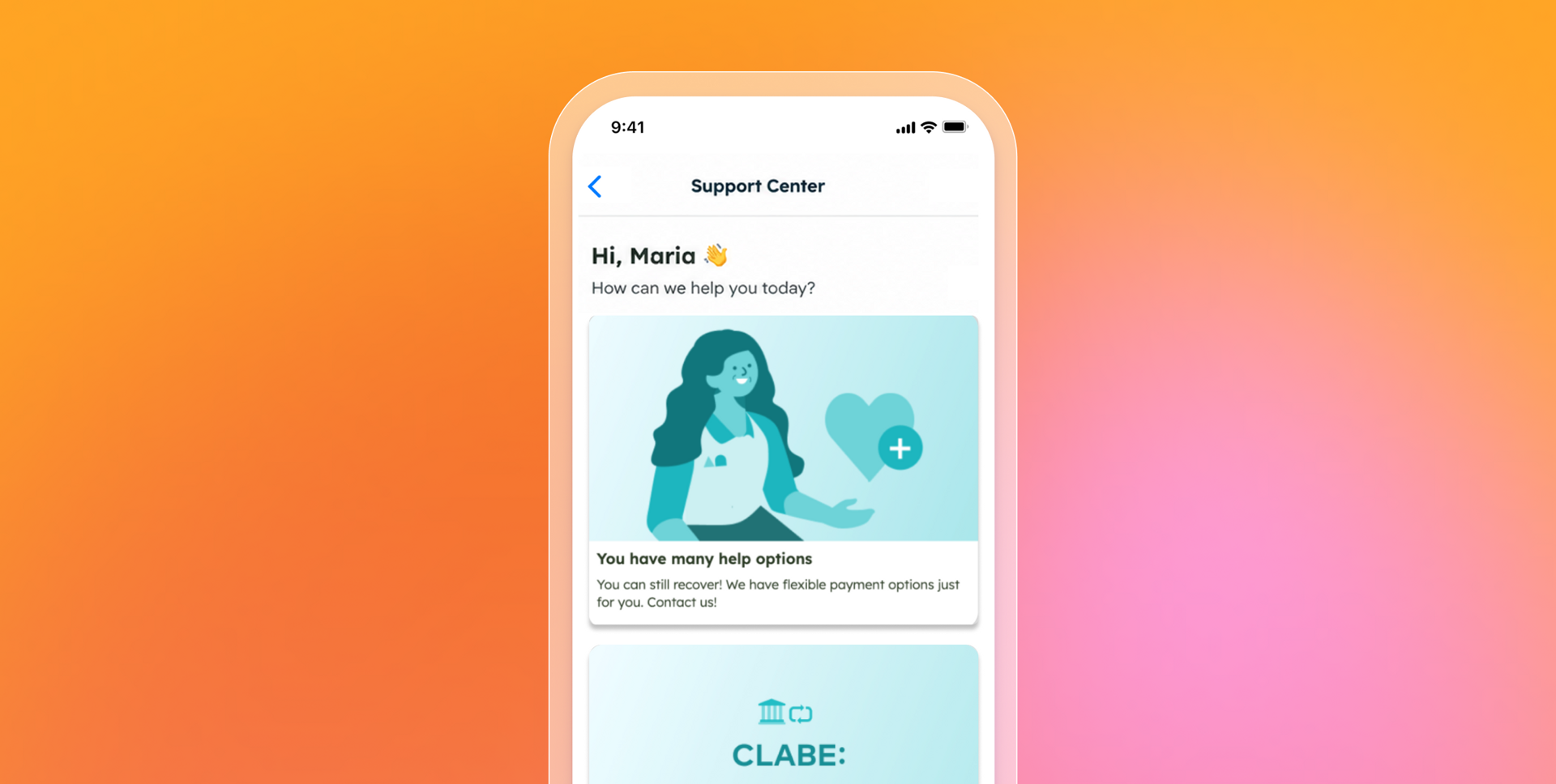
The result is a persistent, carousel-style Banner placement on the app home screen. They are high-visibility, consistent touchpoints that deliver messaging tailored to where each customer is in their financial journey with Tala.
Banners are served dynamically based on each user’s profile details such as loan count, approval status, delinquency status, and product feature eligibility. This means no two users necessarily see the same home screen, and the lifecycle team can update targeting criteria, swap creative, or test new messaging at any time, without touching a line of code.
When Braze introduced Canvas support for Banners, Tala's team moved quickly to adopt it as it unlocked more sophisticated journey logic and enabled the kind of responsive, orchestrated lifecycle marketing that reflects each customer's relationship with their products in real time.
The results: Marketer autonomy at scale
By the end of 2025, Tala had deployed over 100 unique Banners for its Mexico customer base and begun expanding the program to the Philippines. The lifecycle marketing team finally had what it set out to build: control over a block of the home screen, with the ability to iterate in real time and no engineering dependency.
The contrast with the old model is stark. Before Banners, any home-screen change meant developer work and a new APK release to the Play Store, a cycle that slowed every update and reached customers only as they got around to updating the app. Banners removed that constraint entirely.
Building a comparable system in-house would never have been a one-time cost. It would have meant owning the rendering on Android, keeping it intact through every update, and carrying the testing and compliance overhead, a permanent tax on the engineering team. With Braze, that capability is built into the same platform Tala already uses to run its entire lifecycle marketing operation. The home screen became one more channel the marketing team controls, rather than one more system the engineering team has to maintain.
“Braze unlocks the ability to connect with customers around the world from a single, unified platform. It’s both powerful and intuitive, and their rapid pace of innovation—driven by real customer feedback—continually makes the platform even better.”
—Tala Lifecycle Marketing Team
Key Takeaways
- Design for marketer ownership from the start. Tala's core requirement wasn't a better home screen, but a home screen the marketing team could influence. By choosing a solution that routes content management through the Braze platform, the team eliminated their engineering dependency without sacrificing targeting sophistication or creative possibilities. That outcome starts with choosing the right architecture, not retrofitting autonomy later.
- In-product messaging is most powerful as a cohesive strategy. Banners isn't just a content slot, it's what connects customer data, segmentation, and creative execution in one place. Tala's ability to serve over 100 unique Banners to a single market, grounded in real-time user attributes, is what makes the home screen feel relevant to every individual customer rather than every customer segment.
- Dynamic attributes are what make personalization scalable. Serving personalized content at scale isn't operationally viable if each variation requires manual management. By grounding Banner logic in a user’s profile, Tala built a system where personalization updates automatically as customer states change, rather than requiring the team to manage individual segments by hand.
- A lean implementation can unlock lasting leverage. Low engineering investment gave Tala's lifecycle marketing team long-term independence. The value of that trade-off compounds over time, as every campaign, test, and content update the team runs without opening an engineering ticket is time and capacity redirected toward better marketing.
FEATURED TOPICS
ALLOYS PARTNERSHIPS


INDUSTRY
Financial ServicesCheck out more Case Studies
View Case Studies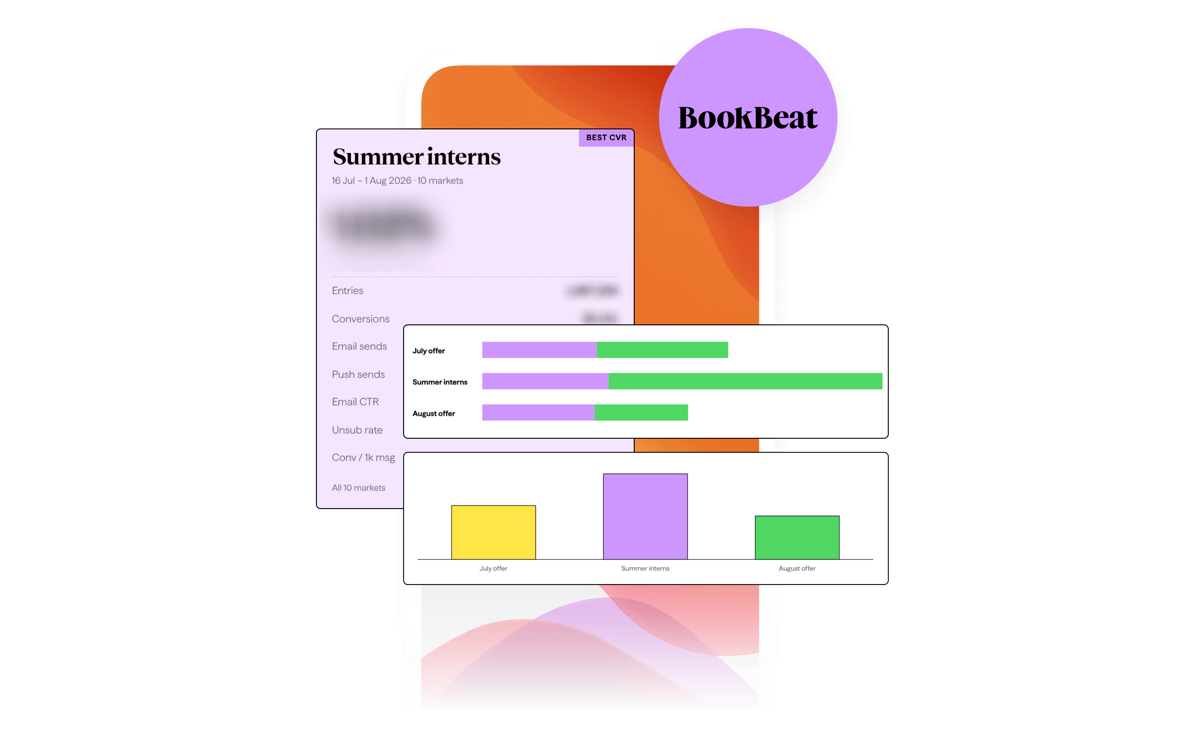
How BookBeat cut days of cross-market reporting to minutes with the Braze MCP Server
Klover turned a testing plateau into its biggest open-rate wins with Braze Content Optimizer