
The complete guide to WhatsApp marketing
Published on August 26, 2026/Last edited on April 10, 2025/17 min read

Team Braze
WhatsApp marketing is the practice of reaching customers with personalized, interactive, two-way conversations on the WhatsApp Business Platform, as part of cross-channel campaigns.
WhatsApp is estimated to have reached almost 3.3 billion unique active users worldwide in June 2025, and it's opened more often than any other social media app, with an average daily open rate of 82.7% on Android globally in February 2026. Added to a wider channel mix, WhatsApp has been shown to drive a 190% increase in first purchase rate and a 137% increase in average user lifetime.
This guide covers what WhatsApp marketing is, who it's for, the features and formats available, the benefits, how to set up and scale a program, the strategies and use cases that work, and how AI is reshaping the channel.
TL;DR
- WhatsApp marketing uses the WhatsApp Business Platform to send personalized, interactive, two-way messages, reaching a channel with almost 3.3 billion unique active users worldwide.
- Interactive formats are what separate it from other messaging channels. Flows, Commerce, carousels, list messages, and limited-time-offer messages let customers browse, book, and buy without leaving the thread.
- Explicit opt-in is mandatory before any marketing message. Consent, template approval, business verification, and a healthy quality rating are what determine how far a program can scale.
- WhatsApp performs best as part of a wider mix rather than a standalone channel, driving a 190% increase in first purchase rate and a 137% increase in average user lifetime when added to other channels.
- The highest-impact use cases are onboarding nudges, abandoned cart recovery, order updates, back-in-stock alerts, loyalty enrollment, upsell and cross-sell, and win-back campaigns.
- AI agents, decisioning, and generative personalization are reshaping the channel, moving WhatsApp from broadcast messaging toward real-time, in-thread conversation at scale.
What is WhatsApp marketing?
WhatsApp marketing is the use of the WhatsApp Business Platform to send personalized, interactive, two-way messages to customers who have opted in to receive them. Brands use it for promotions, order updates, cart recovery, and support, usually as one channel inside a wider cross-channel campaign.
What sets it apart from other messaging channels is the range of interactive formats available. Each is built to keep the customer inside the thread rather than pushing them out to a browser tab.
- Quick reply buttons: respond with a single tap instead of typing.
- Call-to-action buttons: send people straight to a product page, app screen, or phone call.
- WhatsApp Flows: customizable forms for sign-ups, surveys, bookings, and lead capture.
- WhatsApp Commerce: pulls products from a Meta Catalog into shoppable messages.
- Carousel messages: multiple images and buttons in one swipeable message.
Who is WhatsApp marketing for?
WhatsApp marketing suits both commerce and service-driven brands with mobile-first customers they need to regularly message. It’s particularly fitting in retail and eCommerce, financial services, travel and hospitality, media and entertainment, QSR and on-demand, and healthcare and wellness.
Retailers use it to move people toward a purchase, while brands built around bookings, accounts, or appointments use it to deliver information essential for customers and their experience, like these top use cases:
- Retail and eCommerce: personalized promotions, abandoned cart messages, and exclusive discounts, plus in-thread shopping experiences with WhatsApp Commerce.
- Financial services: real-time transaction alerts, fraud notifications, and account updates.
- Travel and hospitality: booking confirmations, flight updates, and personalized offers, with WhatsApp Flows handling reservations in the thread.
- Media and entertainment: content recommendations, event reminders, and subscription renewal alerts, plus interactive list messages to capture preferences for future personalization.
- QSR and on-demand: order confirmations, delivery tracking, and loyalty rewards.
- Healthcare and wellness: appointment reminders, test result notifications, and telehealth support.
How to use WhatsApp for marketing: features and formats
You use WhatsApp for marketing by sending pre-approved message templates and interactive messages that let customers act without leaving the chat. Features change and update over time, but as of July 2026, the following formats are all confirmed available:
Interactive list messages attach a button to your message that opens a scrollable menu, with options grouped into sections. The customer taps one and their selection returns as a reply. Good for appointment slots, product categories, support routing, or asking someone what they want to hear about.
WhatsApp Flows are multi-screen forms that open inside the conversation. Customers fill in fields, choose from dropdowns, and submit, with no browser involved. Used for sign-ups, surveys, service bookings, lead capture, and guided product recommendations.
WhatsApp Commerce connects your Meta Catalog to the thread. A single-product message features one item; a multi-product message shows a selection grouped into sections. Customers browse, add items to a cart, and send the order back as a message.
Carousel messages hold up to 10 swipeable cards in one message, each with its own image or video, optional body text, and up to two buttons. There are two versions. Media card carousels use any image you supply, and tapping a link button opens a browser. Product card carousels pull from your catalog and keep the customer inside WhatsApp.
Limited-time-offer messages are marketing templates carrying a countdown timer that ticks down live in the chat, usually paired with an offer code the customer can copy in one tap.
These formats remove steps and friction points. A customer who picks a delivery slot, completes a booking, or adds to cart inside the thread never reaches the point where opening a browser tab loses them. The two carousel types make the trade-off visible: one keeps the customer in the conversation, the other sends them out of it.
WhatsApp marketing benefits
The main benefits of WhatsApp marketing are reach, meaningful two-way conversations, global scale, stronger conversions and customer lifetime value, and better use of budget. Whether you’re looking to reach customers where they are, build stronger relationships, scale globally, or improve key marketing metrics, WhatsApp offers a lot of potential.
Here’s why it should be a key part of your marketing strategy:
1. Connect with customers where they are
One of the biggest challenges for marketers is getting and keeping customers engaged. The best way to do that? Meet them where they already spend their time—and for billions of people, that place is WhatsApp.
With almost 3.3 billion active users, WhatsApp is the #1 messaging app, with many people interacting directly with brands on WhatsApp every day, whether they’re sending inquiries, browsing business profiles, or getting support. If your customers are already using WhatsApp daily, why not make it easy for them to interact with your brand there too?
2. Create meaningful conversations
Great marketing isn’t just about sending messages—it’s about starting conversations. WhatsApp is built for two-way communication, making it perfect for brands that want to engage customers in a more interactive and personalized way.
Unlike traditional marketing channels like SMS or email, WhatsApp allows for real-time, dynamic conversations. Businesses can use this to learn more about their customers, answer questions instantly, and create personalized experiences. Whether it’s gathering feedback, recommending products, or providing tailored support, WhatsApp helps you build stronger, more authentic relationships with your audience.
3. Scale your marketing efforts globally
For global brands, choosing the right communication channels can be tricky. Some platforms work better in certain regions than others, making it difficult to reach audiences worldwide. But WhatsApp is different—it’s one of the few platforms with massive global reach.
With high penetration rates in regions like Asia Pacific, parts of Europe, and Latin America, WhatsApp is an ideal channel for businesses looking to connect with international audiences outside of the US. No matter where your customers are, WhatsApp provides a consistent and effective way to engage them.
Note: since April 1, 2025, WhatsApp paused marketing message sending in the US. This pause is ongoing as of July 2026. Learn more about the change.
4. Drive conversions and increase customer lifetime value
WhatsApp is also strong at converting customers. The platform's rich features, including quick reply buttons, multimedia messaging, and interactive calls-to-action, allow brands to create highly engaging campaigns that capture attention and drive action.
With the right approach, WhatsApp can be used to:
- Create appealing onboarding campaigns to activate more customers
- Drive upsells and cross-sells with messages that show off your products & services
- Recover lost sales with abandoned cart reminders
- Gather valuable feedback with quick, in-thread surveys
- Encourage referrals with easy sharing options
- Boost customer loyalty with helpful transactional reminders
- Win back dormant customers with compelling messages
When combined with AI-powered optimization and advanced segmentation, WhatsApp helps brands deliver the right message to the right customer at the right time, increasing both conversion rates and customer lifetime value.
5. Get more from your marketing budget
Marketing budgets are often under pressure, and brands need to maximize ROI by focusing on the most cost-effective and high-impact channels. WhatsApp lets businesses reach customers they already have permission to message, rather than paying to reach them again through ads.
By integrating WhatsApp into your cross-channel marketing strategy, you can:
- Lower customer acquisition costs by using direct messaging
- Improve engagement by using a channel customers actually want to interact with
In short, WhatsApp helps businesses cut through the noise, connect with customers efficiently, and get the most out of their marketing spend.
How to get started with WhatsApp business marketing (and scale it)
Setting up WhatsApp marketing takes five steps: connect WhatsApp through a provider, collect opt-ins, segment your audience, build automated personalized messages, and measure what works. Scaling it takes a few more.
1. Create your WhatsApp Business Account
- Choose a provider that offers a convenient embedded sign-up flow.
- Create your profile, complete business verification, and become an Official Business Account.
2. Get customer opt-ins
- WhatsApp requires explicit consent before sending marketing messages.
- Promote your WhatsApp program and collect opt-ins via your website, landing page, phone number capture form, or social media links.
- Be transparent about who you are and what type of messages subscribers can expect, and comply with regional data privacy laws.
3. Segment your audience
- Use purchase history, engagement levels, demographics, and other first-party customer data to segment users.
- Example: Send VIP-only offers to repeat customers and welcome journeys to new users.
4. Set up automated and personalized messages
- Use quick replies and calls-to-action to create interactive messages and streamline communication.
- Example: If a customer abandons their cart, trigger an automated reminder with a discount and a link that takes them back to the specific product page.
5. Measure performance and optimize
- Track key metrics like read rates, click-through rates, and conversions.
- A/B test message timing, formats, and CTA placements to improve engagement.
Pro Tip: Start with simple promotional campaigns before moving to more complex multi-step journeys.
How to scale
Verification, template approval, and quality rating and messaging limits all govern how far a WhatsApp program can grow.
Business verification confirms your company is a real, registered business, usually through documents like a certificate of incorporation or a utility bill. Completing it unlocks higher messaging limits, and it's a prerequisite for Official Business Account status, which adds the green checkmark to your profile.
Quality rating is WhatsApp's Low, Medium, or High score based on how customers respond to what you send. Blocks and reports pull it down, and if it falls far enough your number can be flagged and your ability to scale restricted. Relevant messages to engaged segments are what protect it, which is why segmentation pays off before volume does.
Messaging limits cap how many business-initiated conversations you can start in a 24-hour period. The cap rises as you build a sending reputation, stepping up from 1K to 10K, 100K, and eventually unlimited, provided verification is complete and your quality rating holds.
Template approval applies to every message you send outside an open conversation. Meta reviews each template before it goes live, so build your core set early: welcome messages, order updates, cart recovery, and win-back. Templates are categorized as marketing, utility, or authentication, and the category determines when and where you can send them.
One market-specific note. Meta paused delivery of marketing template messages to US phone numbers on April 1, 2025, and that pause is still in place as of July 2026, with no scheduled date for it to be lifted. Utility, authentication, and service messages still work in the US, as do replies inside the 24-hour customer service window, and marketing messages to all other supported countries are unaffected. Our guide to the recent changes to WhatsApp's policies covers how to plan around it.
WhatsApp marketing strategies, use cases, and real examples
WhatsApp is an effective tool for engaging customers, driving conversions, and building long-term relationships. But to get the most out of it, you need a well-planned strategy.
WhatsApp marketing strategy
Grow your WhatsApp subscriber list
Before you can send marketing messages, you need explicit opt-ins. Building a strong subscriber base should be your first priority.
- Use WhatsApp's built-in tools: share QR codes and short links across your website, emails, socials, and in-store displays.
- Use social media: add WhatsApp action buttons to your Facebook and Instagram profiles and shops.
- Run Ads That Click to WhatsApp: paid ads attract new customers and existing ones who haven't opted in yet.
- Highlight the benefits: tell users what they'll gain—exclusive deals, early access, order updates, or VIP perks.
- Offer incentives: a discount, free trial, or special offer motivates sign-ups.
Positioning your WhatsApp experience as an exclusive, high-value channel can significantly boost your subscriber numbers.
Integrate WhatsApp into your cross-channel strategy
WhatsApp works best as part of a broader engagement strategy. Because it's a more premium channel, you can build a cross-channel strategy and pair it with more cost-effective channels like push and in-app messages. For example:
- Use WhatsApp for interactive, quick engagement, while email provides in-depth content.
- Send personalized WhatsApp messages after key interactions like purchases or abandoned carts, paired with emails recommending related items or push notifications when relevant products go on sale.
- Build a high-touch onboarding campaign that guides customers through your product's value across email, WhatsApp, and in-app messages.
Personalize your campaigns
Customers expect messages that are relevant, timely, and tailored to their interests, preferences, and behaviors.
- Use customer data: draw on past interactions, preferences, and behaviors.
- Segment your audience: group users by purchase history, location, or engagement level.
- Use dynamic content: achieve personalization at scale with product recommendations, offers, or loyalty points.
- Trigger at the right moments: send timely notifications for order updates, event reminders, or exclusive deals.
High-impact WhatsApp marketing use cases
Brands across many industries use WhatsApp to drive key customer actions. These are the campaigns that consistently perform.
- Onboarding and abandoned registration: nudge users who downloaded your app or signed up but never finished setting up, with quick reply buttons to gather the missing details in-chat.
- Abandoned cart recovery: remind customers what they left behind, with a "Complete Order" button that takes them straight back to checkout.
- Loyalty enrollment: invite customers to join your program in one tap, and offer WhatsApp-only deals to reward subscribers.
- Order updates: confirmations, delivery tracking, and shipping alerts.
- Back-in-stock alerts: tell customers the moment something they wanted returns.
- Upsell and cross-sell: recommend add-ons based on what someone already bought.
- Win-back campaigns: re-engage lapsed customers with a personalized offer.
Pro Tip: Multivariate test the timing of your abandoned cart message, 15 minutes, 30 minutes, or an hour after abandonment, to find what performs.
Real-life WhatsApp marketing examples
Winning hearts and re-engagement with Floward
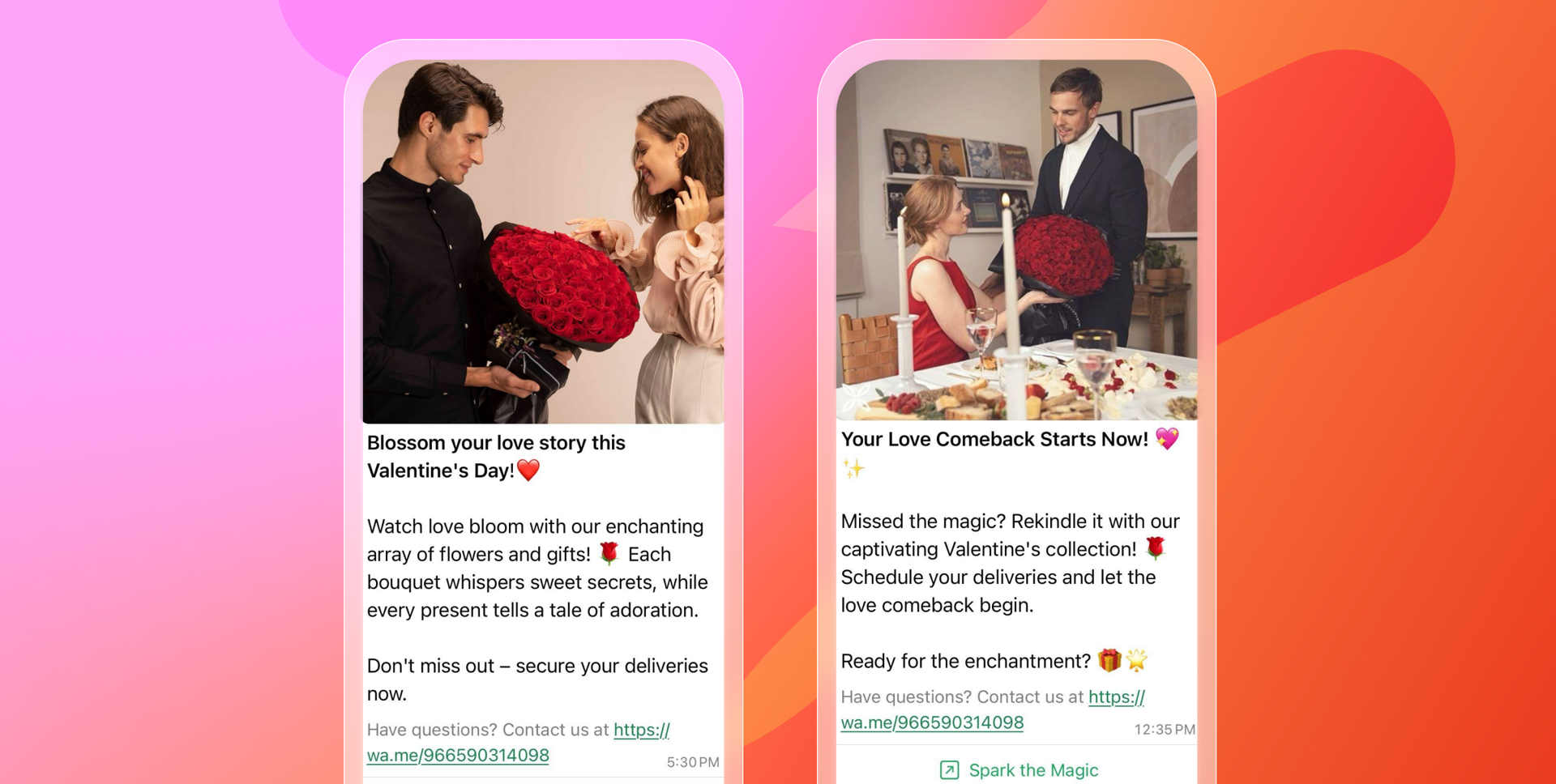
Floward is the leading destination for online flowers and gifts delivery in MENA and the UK, dedicated to bringing joy, convenience, and thoughtfulness to gifting. Customer engagement sits at the heart of its success, building a loyal customer base and driving repeat business.
The challenge
Floward wanted to maximize engagement and conversion during the peak Valentine's Day season. They were facing high new-user churn and low re-engagement among lapsed customers, which was holding back sales and reducing brand visibility.
The strategy
Using Braze Canvas, Floward used cross-channel orchestration to build a journey for their "Romance is Simpler with Floward" campaign across WhatsApp, push notifications, in-app messages, and email. Recency, Frequency, and Monetary analysis segmented customers, with separate campaigns for each market and tailored content for churned users and new customers. Braze Intelligent Timing delivered each message when a user was most likely to engage, and Canvas Analytics let the team adjust in real time. The whole process took about five weeks from ideation to launch.
The results
WhatsApp generated the highest revenue and conversion rates of every channel used:
- A 55% WhatsApp read rate, much higher than their other channels
- A 21% increase in positive reviews
- 99.1% share of voice compared to direct competitors for the holiday
Turning missed orders into repeat customers the Rappi way
Rappi launched in Bogotá in 2015 as Latin America's first superapp and now serves consumers across nine countries and more than 300 cities, connecting people with groceries, restaurant orders, prescription deliveries, and more.
The challenge
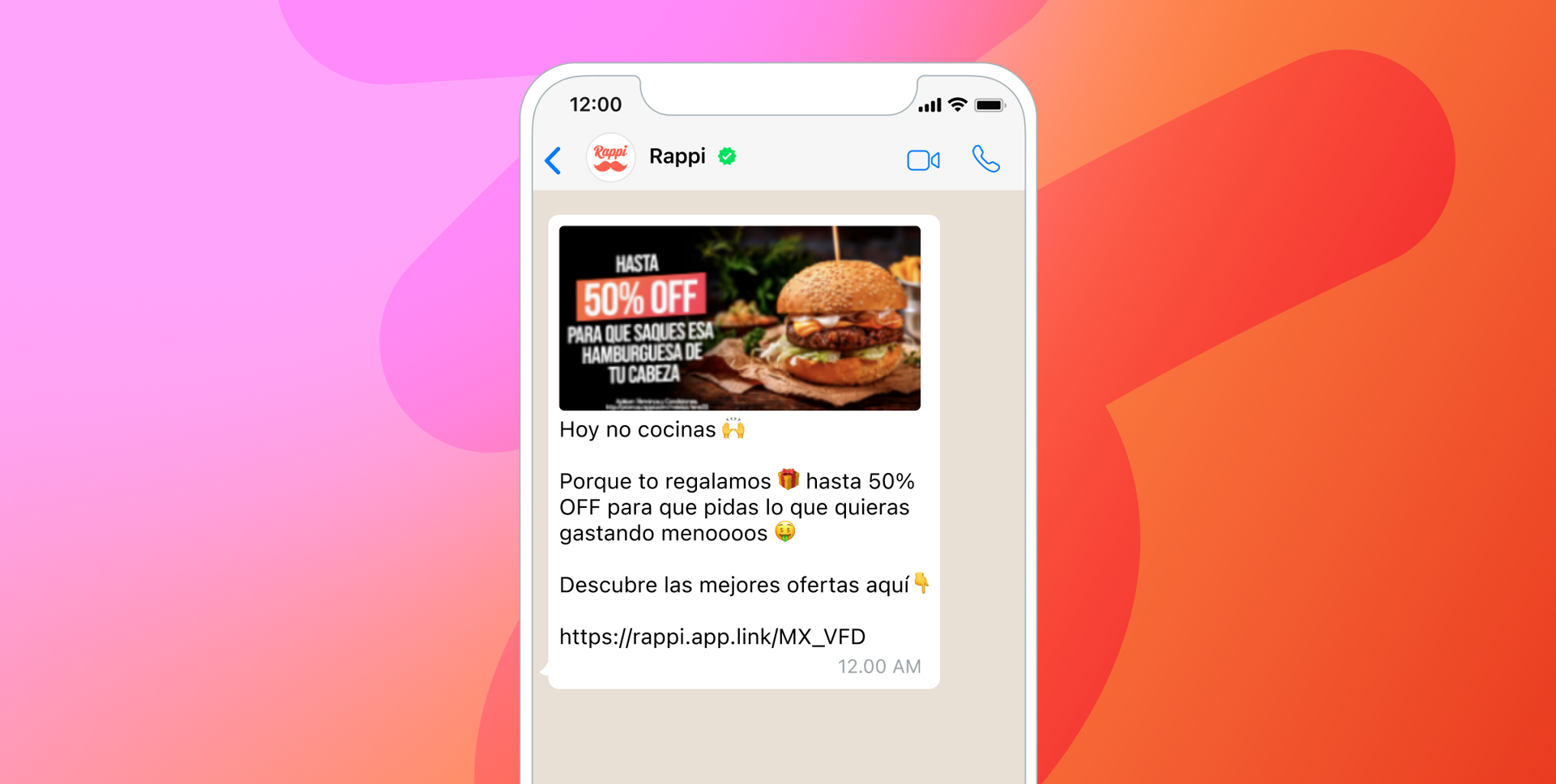
Rappi needed a more effective, out-of-product channel to reach their audience directly, motivating lapsed users to purchase again and encouraging active users to buy more often.
The strategy
Rappi divided their audience into two segments, Momentum for active users and Reactivation for lapsed ones, and set goals for each. They built campaign templates in WhatsApp Manager, then populated them in Braze to personalize content per user and target each segment. Braze Canvas Flow automated the journeys and consolidated channels and data in one place.
The results
Read rates came in at 71% for active users and 67% for lapsed ones:
- 80% increase in users who made a purchase, versus a control group receiving the same offers by push and email only
- 28% lift in users who reactivated and made one purchase within 30 days
- 43% lift in users who reactivated and made two or more purchases within 30 days
Pazza Pasta serves up 6X higher purchase rates
Pazza Pasta is a German food delivery brand from Circus Group, on a mission to shake up the industry by blending technology with the foods customers love, serving fresh, affordable meals.
The challenge
Pazza Pasta saw an opportunity to reach their most engaged customers on WhatsApp, a channel that carries particular sensitivity in Germany given local regulations. With a CRM team of two people, they needed to expand into mobile messaging and build compelling campaigns without heavy resource demands.
The strategy
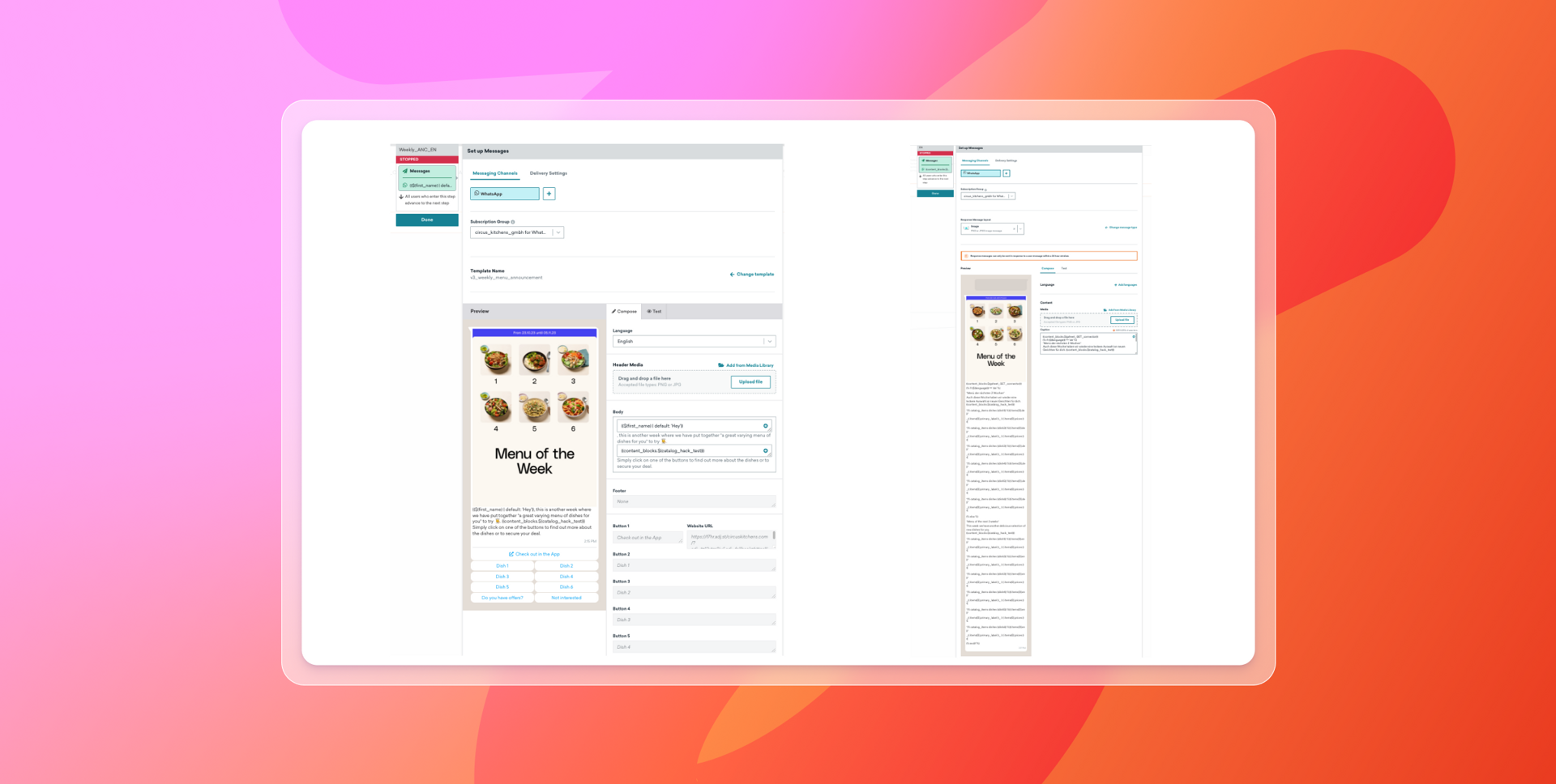
Setup took two days. The team rebuilt an existing weekly menu campaign, six dishes plus a €3 voucher, as a WhatsApp flow in Braze Canvas, pulling product names, images, and labels from Braze Catalogs, synced from Snowflake via Cloud Data Ingestion. Liquid and Connected Content matched dishes to the calendar week, and the OpenAI API generated copy in the brand's voice. WhatsApp-opted-in customers were removed from the email version, so nobody received both.
The results
- 6X higher purchase rates on WhatsApp compared to the same campaign on email
- 4.5X higher conversion rates for new product announcements, measured by products added
- 50% app open rate from their Black Friday campaign
- 12 hours of manual work saved every week
Stori banks on WhatsApp for a smoother customer experience
Stori is a trailblazer in Latin American fintech, offering digital financial solutions to people underserved by traditional banking, with a 99% credit acceptance rate and a 15% yield on deposit accounts.
The challenge
Stori identified that some of its processes were difficult for customers to navigate, including making changes to a user profile and accessing account information.
The strategy
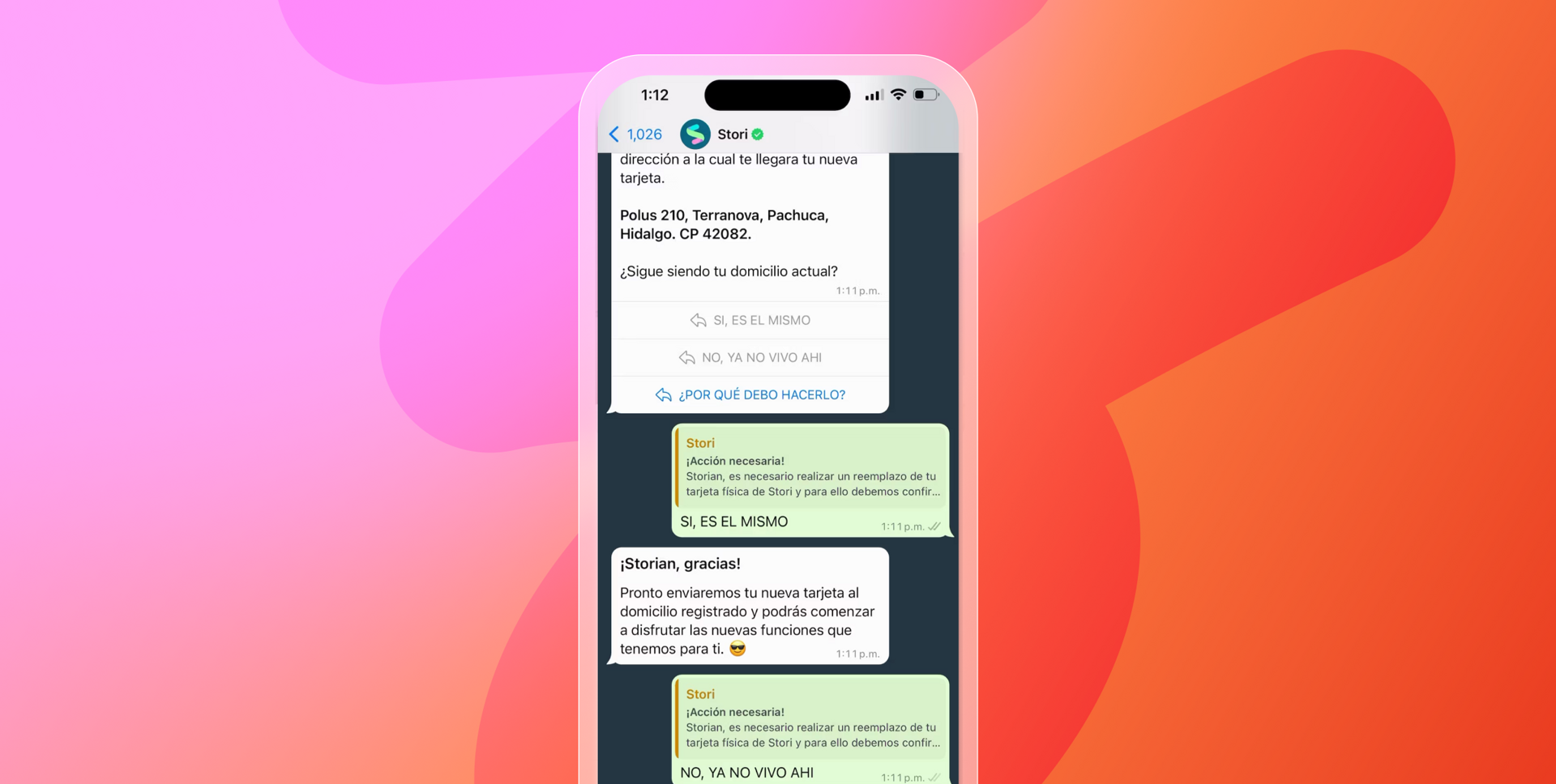
Stori built two WhatsApp campaigns. The first allowed customers to update their address in one click inside a message, targeted at users needing updates ahead of credit card replacements. The second turned a payment reminder into an interactive chatbot conversation, orchestrated in Braze Canvas, using webhooks and Liquid logic to pass customer data and quick reply responses to their chatbot tool. Content and timing were A/B tested.
The results
- 3X more engagement on WhatsApp than push notifications, by response rate
- 26% higher conversion than the equivalent in-app process
WhatsApp, AI, and conversational marketing
WhatsApp is built for replies, which makes it a flagship channel for conversational marketing. BrazeAI™ Agents execute, learn, and optimize across every touchpoint powered by Braze, handling real-time replies and in-thread experiences at scale, so a customer asking a question or working through a booking gets an answer immediately.
AI shapes the message before the conversation starts too, and this is where generative AI and action optimization do different jobs. Generative AI produces the content, writing and localizing WhatsApp messages using customer attributes, event data, and brand guidelines. Action optimization decides who receives a WhatsApp message at all, and when: BrazeAI Decisioning Studio™ draws on hundreds of customer characteristics to make 1:1 decisions that optimize any business KPI, selecting the channel, product, offer, creative, timing, and frequency for each individual.
See how Braze helps brands run WhatsApp as part of a personalized, cross-channel engagement strategy.
Related Tags
Releated Content
View the Blog
Cracking Microsoft: A deep-dive into Outlook and Hotmail deliverability

Steve Butcher
Braze named a Leader in the 2026 Gartner® Magic Quadrant™ for Multichannel Marketing Hubs
Team Braze
Email deliverability 101: What actually goes into a healthy email program