
Email marketing strategy for 2026: How to build high-impact, AI-powered programs
Published on January 21, 2026/Last edited on January 21, 2026/20 min read
Team Braze
An email marketing strategy can still deliver some of the strongest returns in a channel mix. It’s dependable, measurable, and built on a direct relationship with people who’ve chosen to hear from you.
Email use hasn’t slowed down, either. In 2020 there were 4 billion email users and by 2027, that’s expected to be 4.85 billion, sending around 408.2 billion emails worldwide. That reach is part of why email remains such a valuable asset. It’s a consistent way to communicate across the customer lifecycle, from onboarding and education to launches, renewals, and win-back.
But many brands hit a plateau once email becomes more about volume than progress, and teams stop revisiting what’s running and why. A modern email strategy can turn email into an always-on system tied to clear goals, first-party data, lifecycle campaigns and journeys, and ongoing optimization.
Short on time? Here’s a quick summary:
- Email marketing strategy: An always-on system tied to lifecycle goals, first-party data, and repeatable journeys.
- Start with goals by lifecycle stage (acquisition, activation, revenue, retention, advocacy).
- Build dynamic segments and automation for welcome, abandonment, post-purchase, replenishment, and win-back.
- Prioritize deliverability foundations: Consent, SPF/DKIM/DMARC, preference center, and sunset policies.
- Measure outcomes with clicks, conversions, revenue per send, complaints/unsubs, and list growth—not opens alone.
Why email strategy still matters in 2026
An email marketing strategy matters because it replaces guesswork with a plan you can measure and improve. It helps teams send more relevant messages, drive specific outcomes, and build stronger customer relationships over time.
With a strategy in place, it’s easier to:
- Create personalized content based on customer data and behavior
- Guide customers to the right next step (store, product, feature, or offer)
- Improve retention by delivering value between purchases
- Drive awareness and product discovery with an opted-in audience
- Save time with behavior-triggered automation
- Track performance, test, and iterate toward clearer goals
- Align email with other channels for consistent campaigns
- Build and use first-party data in a privacy-conscious way
- Increase revenue and customer lifetime value through both promotional and relationship-building sends
An email marketing strategy also helps protect email’s ROI. According to the State of Email Report 2025, for every $1 marketing leaders spend on email, 35% see $10-$36 in return, 30% see $36-$50, and 5% see more than $50. A “~40:1” ROI benchmark therefore is within reach for many teams, and some exceed it.
What is an email marketing strategy?
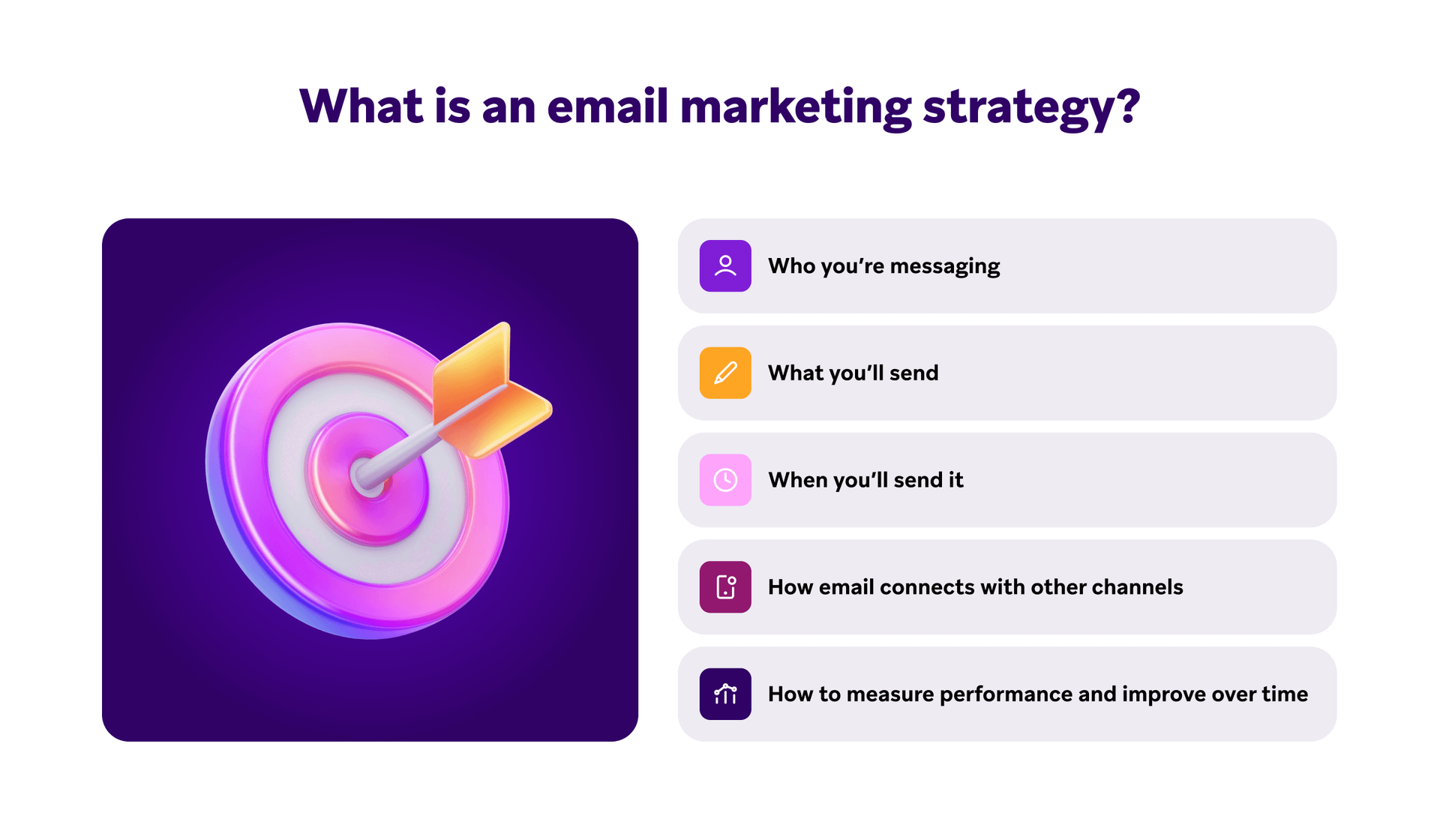
An email marketing strategy is an always-on plan for how your brand uses email to reach specific goals. It outlines who you’re messaging, what you’ll send, when you’ll send it, how email connects with other channels, and how you’ll measure performance and improve over time.
Your strategy is larger than a one-off campaign or a single send because it creates a system you can repeat, test, and refine.
An email marketing strategy typically includes:
- Goals and measurement
- Audience understanding and first-party data
- Segmentation for relevance
- Content and creative planning
- Coordination across channels and the marketing calendar
- Testing and iteration
How to create an email marketing strategy
The next step is turning your plan into a detailed and repeatable system. These steps help you to keep improving performance over time.
Step 1: Set clear, measurable goals
Having well-defined goals makes it easy to see if your campaign—or your overall email program—is effective. It’s the best way to really get to know your audience, find out what works and what doesn’t, and strengthen the strategy.
These goals also serve to align teams and broader business needs, guaranteeing that there are common, shared objectives across the company.
To make goal-setting more actionable, map goals to key lifecycle stages:
- Acquisition: list growth, sign-ups
- Activation: first key action (first purchase, first session, profile completion)
- Revenue: repeat purchase, upgrade, renewal
- Retention: 30/60/90-day engagement, churn reduction
- Advocacy: referrals, reviews, loyalty participation
From there, turn each goal into something measurable and time-bound. For example, you might aim to increase 90-day retention by 30% for new subscribers who complete onboarding, grow newsletter-driven revenue by 15% this quarter, or reduce churn in a high-risk segment by 10% through a win-back journey.
Step 2: Understand your audience and build smart segments
If you want consumers to connect with your brand, then understanding your audience and personas is key to making that happen. The more you can segment your emails, the better chance you have of making that connection and understanding what it is your audience wants the most.
Personas are a useful starting point, and behavioral analysis helps you get more specific. First-party data shows you what people browse, buy, click, and ignore, plus how their engagement changes over time. Dynamic segments tend to outperform static lists, because they keep targeting relevant by updating as behavior changes, without constant manual upkeep.
List growth matters here, too, because acquisition sources shape the quality of your segments. Capture the signals you’ll need later, like interests, product preferences, location, and channel opt-ins, then build subscription preferences so people can choose what they want from the start. Over time, this keeps list growth from turning into a relevance problem and gives you cleaner first-party data to personalize with.
A customer engagement platform can help you build dynamic audiences guided by customer insights and use predictive intelligence to anticipate where customer journeys will go, moving people in and out of relevant segments as behavior changes. And with AI, you can anticipate customer behaviors using rich, first-party insights and target customers based on their propensity to purchase, churn, or take another high-value action.
Step 3: Choose the right email types across the lifecycle
A strong email program uses a consistent mix of email types, with each one tied to a clear lifecycle goal. That way, every send has a purpose, and you can balance short-term revenue with longer-term engagement.
Here are the core email types to include, and what they’re designed to support:
- Welcome and onboarding
T
hese messages help new subscribers or customers take the first meaningful step, like completing setup, making a first purchase, or exploring key features. They’re often a key lever for activation, because timing and guidance matter most early on. - Newsletters and editorial
Regular content emails keep your brand familiar between transactions. They support engagement and retention, especially when they’re tailored by interests, behavior, or lifecycle stage. - Promotions and launches
Promotional campaigns and product announcements drive revenue by giving customers a reason to act and they perform best when they’re targeted by intent and past behavior, rather than sent as broad blasts. - Transactional
Order confirmations, receipts, account alerts, and subscription updates build trust through clarity and timeliness. They also create a natural moment for helpful next steps, like support resources, setup tips, or relevant add-ons. - Lifecycle triggers
These are behavior-based emails that respond to what a customer did or didn’t do, such as browsing a category, abandoning a cart, hitting a milestone, or going inactive. They support progression through key behaviors because they meet customers in context. - Reactivation and win-back
These programs focus on churn reduction by spotting inactivity or other signs of disengagement early and giving customers a reason to return. That might mean new content, a product update, a personalized offer, or a reminder of value they’ve missed.
Step 4: Design omnichannel-ready email journeys
Customers move between channels depending on context, preferences, and where they spend their time. That’s why email strategy works better when it’s planned as part of an omnichannel journey, with the right channel mix for your audience and your business. A customer engagement platform can help you orchestrate these touchpoints in a single flow, using tools like Braze Canvas, so timing, message logic, and personalization stay consistent across channels.
Common journey examples include:
- A welcome series that introduces value, captures preferences, and guides the first key action a user should take
- Browse and cart abandonment that follows intent with timely nudges, using the channels your audience responds to most
- Post-purchase education that supports onboarding, reduces returns, and encourages the next purchase
- Loyalty and milestone moments that reward behavior, reinforce progress, and keep members active
- Renewal reminders that start early and adapt based on engagement to reduce churn
Step 5: Content, creative, and personalization that perform
Designing and crafting the ideal email goes a long way toward boosting open and click-through rates. Enticing subject lines help encourage recipients to open the email, while tone of voice, way images are positioned, or even the colors used can help improve the quality of the messages you send, reinforcing brand awareness and supporting increased loyalty.
Start with the fundamentals that shape engagement. Subject lines and preview text should set clear expectations and match what’s inside the email. Keep the layout scannable with a clear hierarchy, short sections, and a single primary CTA. A mobile-first approach matters here too, since many subscribers will read on their phones.
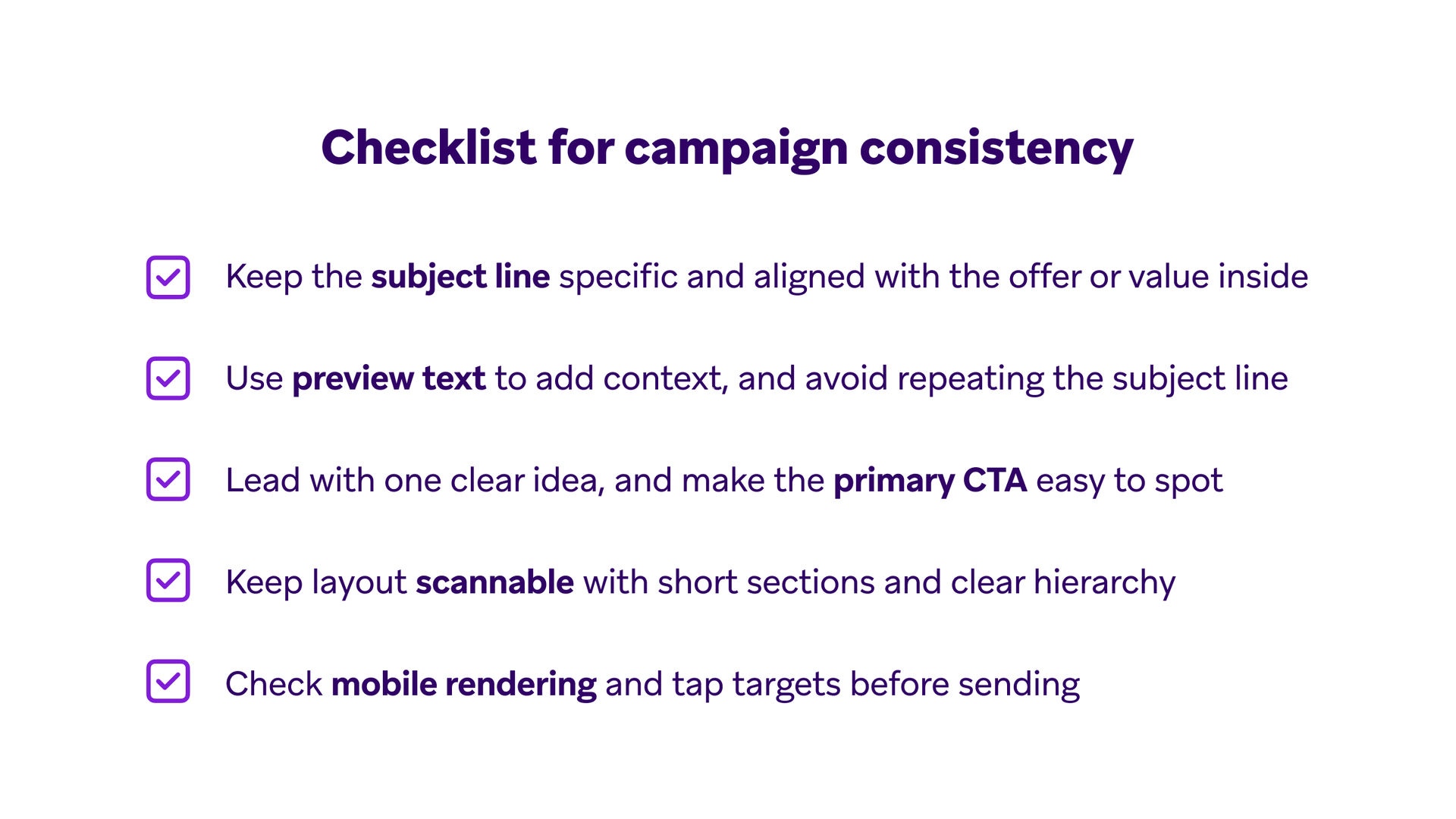
A quick creative checklist can help teams stay consistent across campaigns:
- Keep the subject line specific and aligned with the offer or value inside
- Use preview text to add context, and avoid repeating the subject line
- Lead with one clear idea, and make the primary CTA easy to spot
- Keep layout scannable with short sections and clear hierarchy
- Check mobile rendering and tap targets before sending
Using dynamic content blocks, you can tailor emails by lifecycle stage, product interest, location, preferences, and recent behavior. That can include item recommendations, localized offers, and tone variation by audience, while keeping your brand voice consistent.
As you scale this approach, tools like BrazeAI can help in two key areas:
- Speeding up production and review through the AI Copywriting Assistant, AI Image Generator, and AI Content QA, and
- Supporting more individualized experiences through item recommendations (plus capabilities like Personalized Variants and Personalized Paths, so content and journey logic can adapt based on customer behavior and predicted intent).
Step 6: Automation and always-on workflows
Automation is a time saver when it comes to email. Set up workflows within your email marketing strategy that trigger when subscribers take specific actions. This allows you to plan and create messaging sequences in advance, to be sent when customer behavior calls for it. With these planned emails running in the background, you have more time to focus on other areas of your marketing plan.
High-impact automated workflows often include:
- Welcome and onboarding series triggered by sign-up, app install, or first purchase
- Browse and cart abandonment triggered by product views, add-to-cart events, or checkout starts
- Post-purchase follow-ups like how-to content, cross-sell recommendations, and review requests
- Replenishment and reorder reminders based on predicted replenishment windows or repeat purchase cycles
- Milestones and loyalty moments triggered by points earned, anniversaries, or tier changes
- Reactivation and win-back triggered by inactivity windows, churn-risk signals, or subscription lapses
A customer engagement platform can help manage this logic in one place, so triggers, timing, segmentation, and personalization stay aligned as your program grows.
Step 7: Deliverability, list hygiene, and compliance
Deliverability depends on the signals inbox providers use to decide whether your emails belong in the inbox, promotions, or spam. In 2026, that comes down to reputation management, authentication, and list quality, with spam complaints and bounces carrying real weight. Apple’s Mail Privacy Protection also means open-based signals need a more cautious read.
A few practices make the biggest difference over time:
- Consent management and clear expectations
Use explicit opt-in, keep acquisition sources clean, and match frequency and content to what subscribers agreed to. - Authentication protocols
Set up SPF, DKIM, and DMARC for the domains you send from. Bulk sender rules from major mailbox providers treat authentication as a baseline requirement. - Subscription preferences
Give people control over topics and frequency so they can adjust instead of unsubscribing or marking messages as spam. - Frequency by segment
Send frequency affects deliverability and relevance. Use engagement trends and preference signals to set different rhythms for different groups, like lighter sends for low-engagement subscribers and higher-touch messaging for active shoppers or new users in onboarding.
- Sunset policies and list cleaning
Remove hard bounces quickly, and stop sending indefinitely to people who haven’t engaged in a defined window. Double opt-in can help when list quality is a priority. - Reputation monitoring through complaints and bounces
Track spam complaint rate, hard and soft bounces, and delivery trends by mailbox provider so you can respond early with targeting, frequency, or acquisition changes. - Segmentation and personalization that support engagement
Dynamic segmentation and relevant content help drive clicks and conversions, which supports sender reputation over time.
Step 8: Measuring email success
A measurement framework helps you understand the success of your email marketing strategy—what’s working, where customers are dropping off, and which changes are worth making next. With Apple’s Mail Privacy Protection, open rate can still offer directional context, but it’s no longer dependable enough to use as a primary success metric or a trigger for big program decisions.
Instead, focus on KPIs that connect directly to customer actions and business impact:
- Clicks and click-through rate, which show whether content and CTAs are resonating
- Conversions, tied to the actions you care about, like purchases, upgrades, trial starts, or feature adoption
- Revenue per send or revenue per recipient, which helps you compare performance across campaigns and segments
- Unsubscribe rate and spam complaint rate, which are early indicators of relevance, frequency fit, and deliverability risk
- List growth, including net growth and the quality of new subscribers over time
To make these metrics more useful, tie them back to outcomes that leadership cares about. For example, onboarding and education emails should move activation and lift long-term value, while retention programs should reduce churn and increase customer lifetime value (LTV).
Promotional and lifecycle triggers should show a clear link to revenue, like incremental purchases, upgrades, renewals, or higher average order value.
Over time, this view helps you balance short-term performance with the programs that keep customers engaged and spending.
Step 9: Test, learn, and optimize with AI and experimentation
Measurement tells you what happened. Experimentation is how you decide what to change next. A customer engagement platform that supports testing, optimization, and AI decisioning makes it easier to improve timing, content, and journey logic at scale, then roll what works into your always-on program.
To support that kind of experimentation, look for capabilities like:
1. Data agility and customer journey orchestration
Journey orchestration brings data from multiple sources into a single view of the customer, so you can act on it in one place, or trigger campaigns based on audiences defined in your data warehouse. With a customer engagement platform that fits into your tech stack, you can keep data flowing between systems as your needs change.
Orchestration also makes experimentation more useful, because you can test sequencing, timing, and channel mix across the journey, then optimize based on real behavior.
2. Experimentation beyond basic A/B tests
Look for testing support that lets you move from simple A/B tests into multivariate testing, where you can measure how combinations of variables perform together, like subject line + offer + layout.
It also helps to have optimization tools that can adjust delivery and content, such as send-time optimization, variant selection based on predicted engagement, and journey path optimization that routes customers into the next best step based on behavior.
AI decisioning can take this further by using outcomes to decide what to send next for each customer, balancing business goals with what each person is likely to respond to.
3. Dynamic segmentation and real-time analytics
Tracking and coordinating the insights from your emails to personalize a customer’s experience can have a positive effect on your customer relationships and bottom line. But it’s normal for audiences and their behaviors and preferences to change over time, creating a challenge for marketers. With dynamic segmentation and real-time analytics that populate and update based on subscriber behavior, brands can gain an in-the-moment understanding of their audience and use it to provide timely experiences for each individual user.
A simple testing roadmap
- Start with subject lines, preview text, and CTAs
- Then test lifecycle flows like welcome, post-purchase, replenishment, and win-back
- Then test offers, segments, and personalization logic
- Roll winning changes into your always-on program, and use results to set up the next round of tests
Email campaign strategy vs. customer engagement strategy
An email marketing or email campaign strategy focuses on how you use email to communicate, convert, and retain.
A customer engagement strategy takes a wider view and covers how your brand shows up across the channels your audience uses, as well as how those channels work together.
Email fits inside that broader plan as a reliable channel for messages that benefit from clarity and depth, like onboarding, education, product updates, and transactional communications.
Other channels may lead when timing and context matter more, like real-time alerts, short prompts tied to in-app behavior, conversational support, or community-led engagement. The right mix depends on your audience, product, and how people prefer to interact with your brand.
Whatever your strategy, consistency is key. Customers should get coordinated messaging across channels, with the same offer logic, tone, and next step, even when the channel changes.
Email marketing best practices
These best practices focus on how to run email as an always-on program, so it stays relevant as your audience, product, and channel mix evolve.
- Write down your rules of the road. Define suppression and eligibility logic, how frequency changes by engagement, and what triggers a pause.
- Protect the inbox first. Keep acquisition sources clean, maintain a preference center, and act quickly on complaints and bounces.
- Treat every send as a decision. Be clear on the job of each message, the audience it’s meant for, and the action it should drive.
- Keep journeys current. Review automated flows regularly, especially welcome, post-purchase, and win-back, and refresh content as products and behavior change.
- Build creative for speed. Use modular templates and reusable blocks so updates don’t mean rebuilding from scratch.
- Use personalization with restraint. Personalize where the signal is strong and the value is clear, aligned with business goals.
- Keep measurement tied to outcomes. Track performance against your goals and use what you learn to guide what is prioritized next.
- Maintain a steady optimization rhythm. Use the experimentation tools you have, whether that’s structured testing, multivariate approaches, or AI-driven decisioning, and roll improvements into your always-on program.
Email marketing examples: High-impact email strategies in action
So what exactly does a successful email marketing strategy look like? Here are a few examples to help inspire you.
Testing and optimization: BlaBlaCar puts a name to the numbers
BlaBlaCar is a France-based carpooling platform that sought to reach customers more effectively through email and improve opens.
The challenge
BlaBlaCar wanted to lift email open rates across markets while keeping the approach simple enough to scale.
The strategy
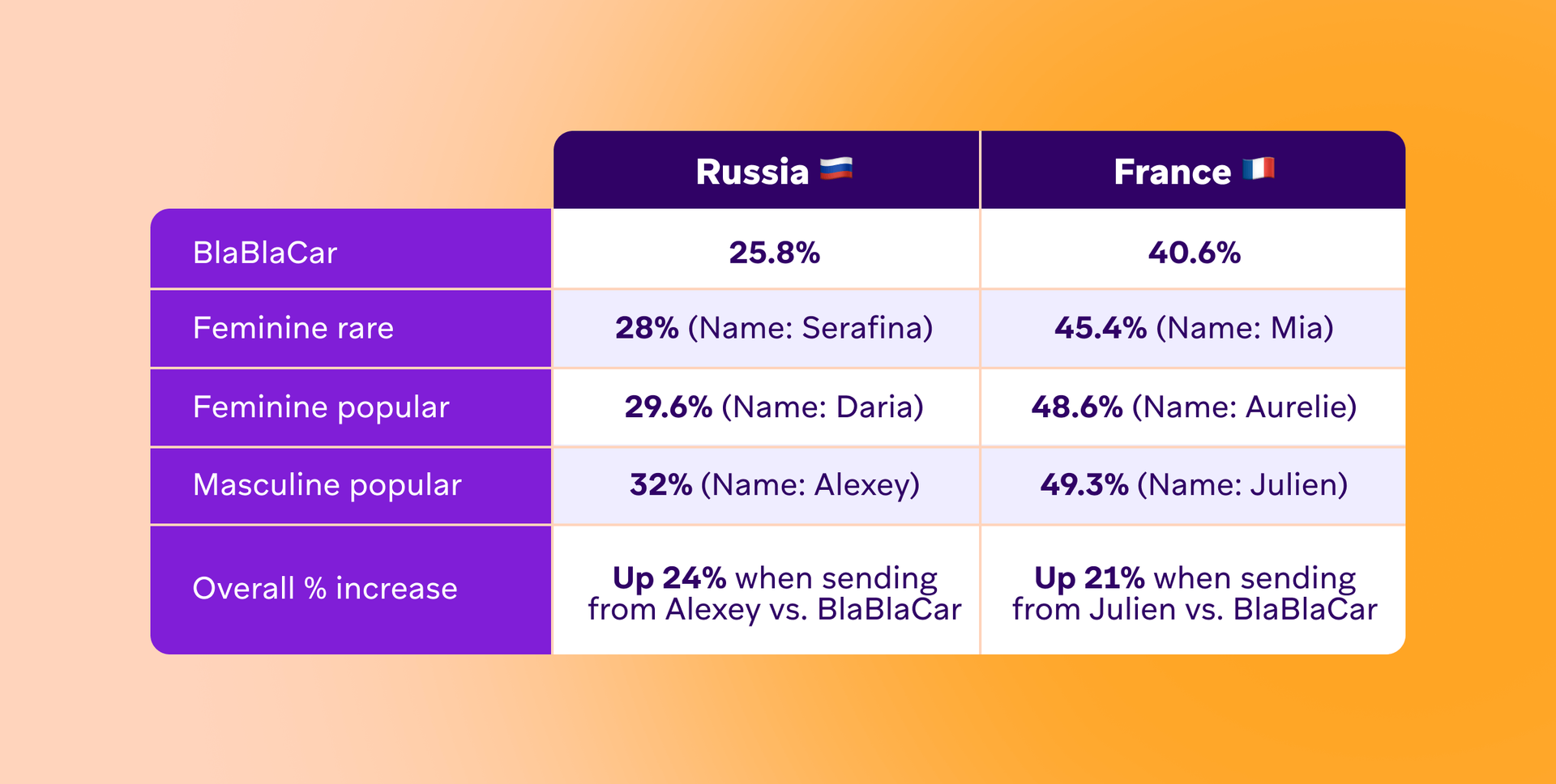
The team ran structured tests around sender identity, starting with two hypotheses. Recipients would be more likely to open emails from a person’s name, and the strongest sender-name style would vary by country.
The wins
BlaBlaCar saw open rates increase by up to 24%, with first-name senders driving 20%+ higher opens than messages sent from the brand name.
Personalization and relevance: Canva’s feature rollout, personalized at scale
Canva is a design platform that wanted to improve feature adoption messaging while making it easier to keep content current for new launches.
The challenge
The team needed a better way to surface relevant features to different users, support stickiness, and update communications quickly as new features shipped.
The strategy
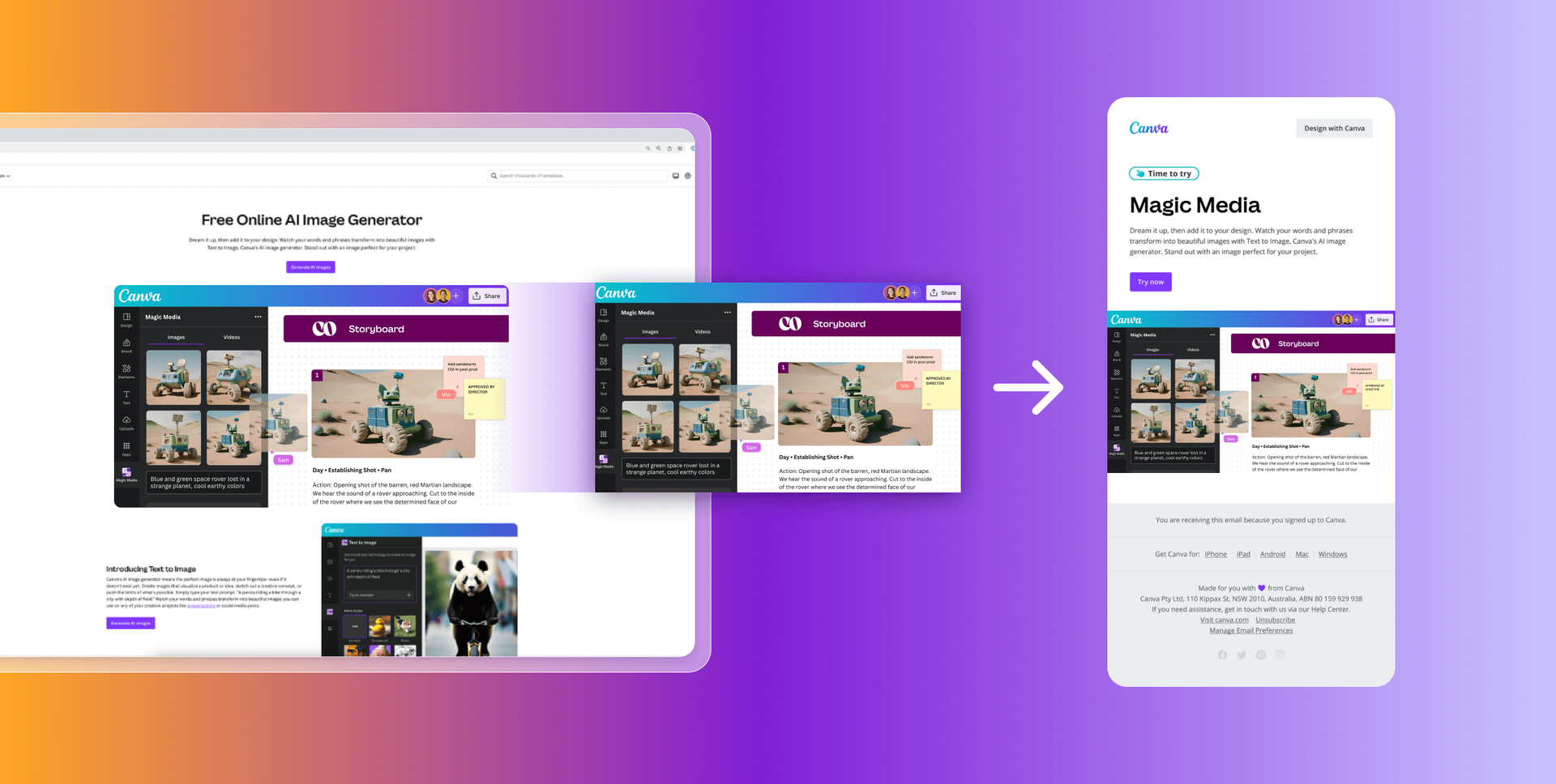
Canva built personalized feature-adoption campaigns that matched users to the most relevant product features, then scaled that approach across hundreds of campaigns and variants.
The wins
Canva increased message opens by 55% and clicks by 47%, and lifted feature adoption by up to 8%, with downstream impact on retention and revenue. The team also saved about 1,000 hours of production time while optimizing for 25 features with 200+ variants.
Retention and win-back trust: KFC Spain turns fry critics into a 95% email open rate
KFC Spain is known for bold, witty marketing and a playful brand voice. But years of complaints about its fries started to erode trust, and the team needed a launch plan that could win customers back.
The challenge
KFC Spain’s fries were the brand’s most complained-about product, driving negative reviews and lost transactions. After reformulating the recipe, the team needed a way to reintroduce fries to customers who had already written them off.
The strategy
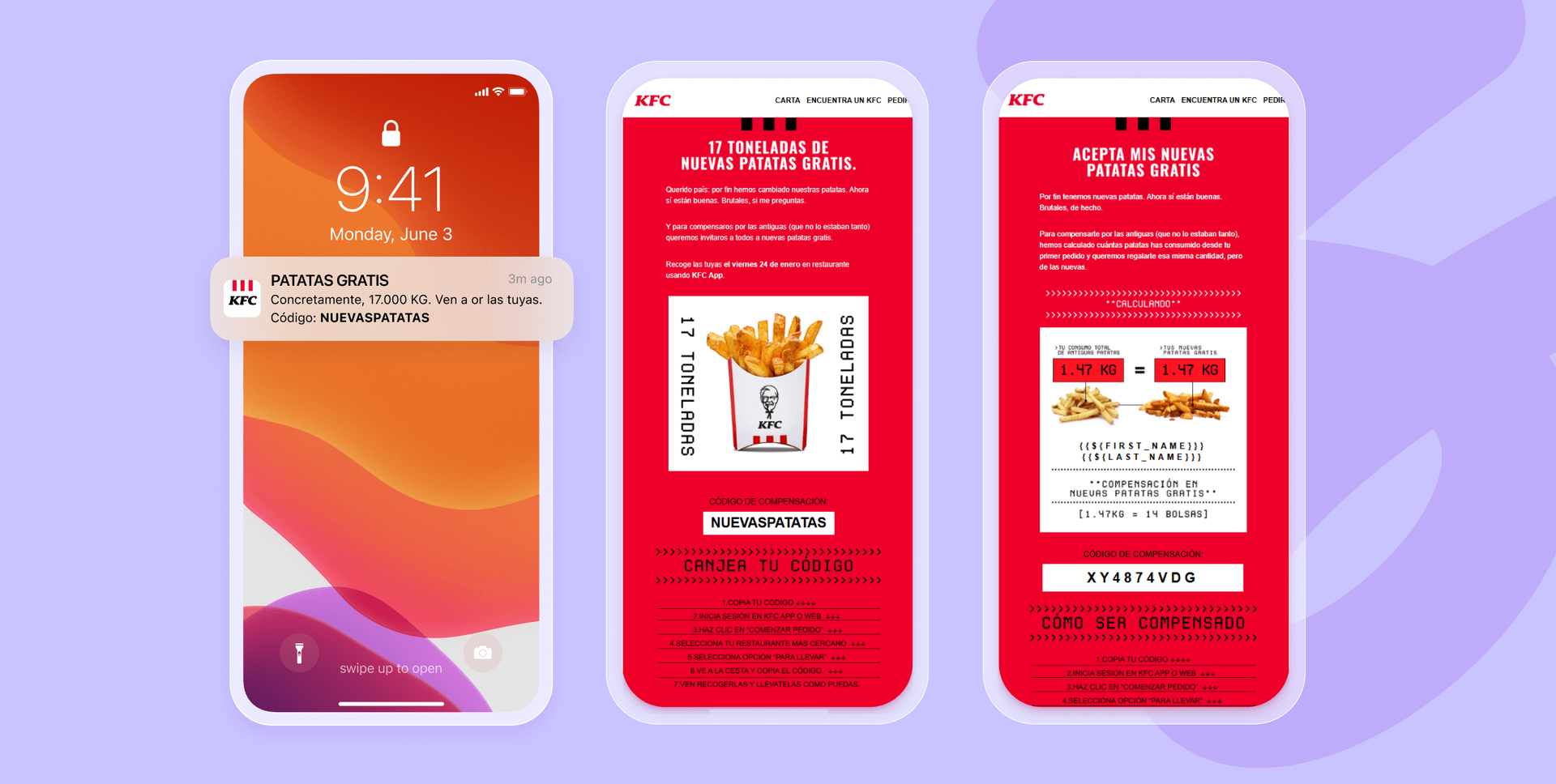
KFC Spain used historical purchase data to identify customers who had ordered the old fries, then sent each person a personalized message that matched their past purchases. The “Fries Compensation” program offered customers the exact value of fries they’d previously bought, and the campaign extended beyond owned channels through social engagement and public-facing transparency.
The wins
- 95% email open rate
- 679% increase in app downloads
- 233% increase in daily active users
- 20x increase in daily orders on launch day
- 42 million impressions and 1.3 million social interactions
Activation and onboarding: Stash boosts onboarding with a 20.34% first-deposit start rate
Stash is a personal finance app that helps Americans invest and build long-term wealth, starting in small increments. The team focused on improving onboarding so more new users could make it through key setup steps and start investing.
The challenge
Stash wanted to reduce drop-offs during onboarding and increase activation. The process can be complex, and the team needed messaging that could build confidence and guide users through the next step.
The strategy
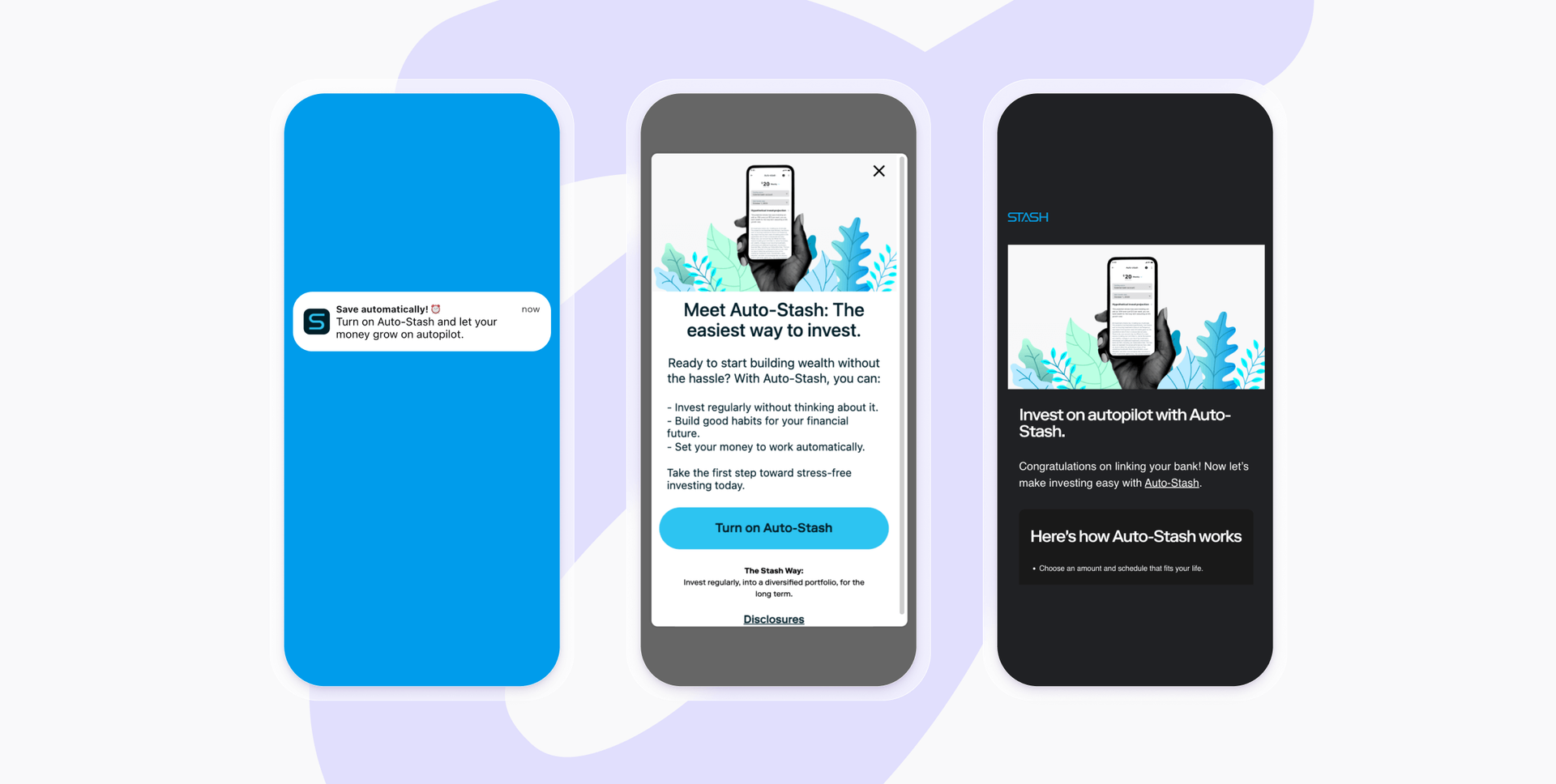
Stash built a multi-step onboarding journey that personalized messaging based on where each user dropped off. Using real-time segmentation and behavioral triggers across multiple channels, the team tailored content to the next action each user needed to take and tested variants to improve performance.
The wins
- 64% increase in email click-through rate
- 72% increase in email open rates
- 20.34% “FirstDeposit_Started” conversion rate
- 18.71% “DepositSetup_Submitted” conversion rate
- 19.75% “Deposit_Completed” conversion rate
- Nearly 60,000 new users starting their investing journey
Choosing the right platform to power your email strategy
The right platform makes email easier to scale without losing relevance. When you’re comparing options, focus on how well the technology supports orchestration, data access, experimentation, deliverability, and measurement across your full lifecycle.
Here’s what to look for in a customer engagement platform.
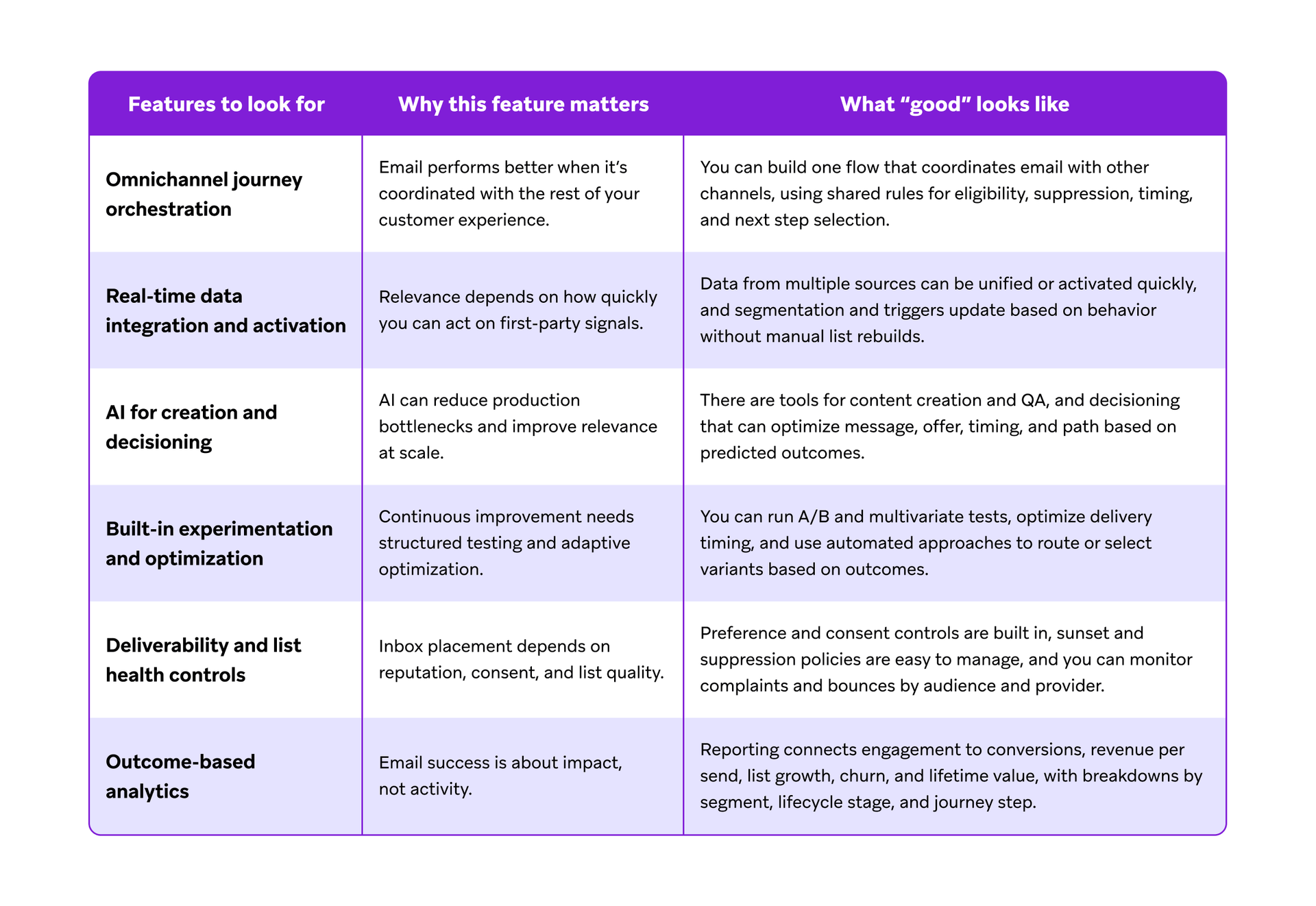
Platforms offer different strengths, which you’ll need to consider as you evaluate options:
- Email-first platforms can be a strong match for teams that primarily need email and SMS execution, templating, and straightforward automations.
- Broad marketing suites can work well when CRM-led workflows and sales alignment are the primary driver.
- Platforms like Braze tend to be a better fit for brands that need cross-channel orchestration, real-time data activation, and AI-powered optimization at scale—especially when email is one part of a larger customer engagement program spanning multiple channels, products, markets, and lifecycle stages.
Key takeaways and an actionable email marketing plan
Strong email programs are easier to manage when a few fundamentals remain consistent:
- Set measurable goals mapped to lifecycle stages so every program has a clear job.
- Use dynamic segments built on first-party data so targeting stays relevant as behavior changes.
- Match email types to lifecycle outcomes and balance revenue sends with onboarding, retention, and trust-building messages.
- Scale relevance with automation and AI across personalization, timing, variants, paths, and next-best action decisions.
- Keep measurement tied to outcomes and use it to prioritize what to improve next.
If you want a straightforward way to put this into practice, our 30-day plan covers the basics without trying to rebuild everything at once.
A simple 30-day plan to improve your email program
Days 1-5: Audit
Review campaigns and always-on workflows, segment logic, list health, and deliverability signals. Check how you’re using first-party data today and where targeting or journeys feel out of date.
Days 6-10: Set goals
Choose one or two goals for the quarter, map them to lifecycle stages, and define success criteria. Make sure reporting ties engagement to outcomes, so priorities stay clear.
Days 11-15: Map moments
List the lifecycle moments that matter most, then decide which journeys to support and which channels you’ll use. Set basic rules for eligibility, suppression, and next steps so messaging stays coordinated.
Days 16-25: Build one to two journeys
Build a welcome series, then add one journey tied to your goal, like abandonment, post-purchase, replenishment, renewal, or win-back. Add personalization where signals are reliable, and use variants and path logic to keep the experience relevant.
Days 26-30: Optimize
Set a steady optimization rhythm. Use the testing and optimization tools you have, then apply learnings back into journeys, audiences, and content so performance keeps improving over time.
Ready to take your email program from ad hoc sending to strategic, AI-powered engagement? Discover how Braze helps teams build, automate, and optimize high-impact email strategies.
Related Tags
Releated Content
View the BlogEmail marketing strategy for 2026: How to build high-impact, AI-powered programs
Team Braze
2026 email deliverability predictions: What marketers should know

Esther Davis
What is a customer engagement platform?