
Integrated marketing strategy: How to align campaigns, messaging, and data across channels
Published on April 27, 2026/Last edited on April 27, 2026/13 min read

Team Braze
Most customers have no idea how many separate systems are involved when a brand reaches out to them. They just notice whether the experience felt right, and whether the message made sense for where they are, what they've done and what they want to do next.
Coordinating this experience across multiple channels, including email, push, SMS, in-app, paid, and social is the job of an integrated marketing strategy. At first glance it might appear complicated. Campaign teams need to work in parallel, as data often sits across multiple platforms, and channels that look aligned in a strategy document can drift apart when it comes to execution. When this happens, customers feel it. They might get repeated messages about things they've already bought, or promotions that ignore everything the brand already knows about them.
An integrated and coordinated marketing strategy pulls everything together at the structural level, aligning campaigns, data, and messaging so every channel works from the same picture of the customer. Like Panera Bread, who unified email, push, in-app messages, and Content Cards to retain guests during their biggest-ever menu transformation, and KFC Spain, who connected CRM data, digital channels, and out-of-home advertising into one campaign that delivered their highest-ever day of app sales.
If you’re looking for the key to running cohesive and effective campaigns that drive engagement, retention, and ROI, then read on.
TL;DR
- An integrated marketing strategy coordinates campaigns, data, and messaging across every channel so customer interactions build on each other rather than starting over each time
- Data centralization and AI personalization are what make integration executable at scale
- Measuring across the full customer journey, rather than channel by channel, is what turns campaign data into decisions
Key takeaways
- The distinction between multichannel and cross-channel marketing matters: integration requires a shared data layer and coordinated channel logic, not just parallel campaigns running simultaneously
- Customer lifecycle integration means mapping campaigns to where a customer actually is in their relationship with your brand, from onboarding through retention and re-engagement
- AI personalization in marketing delivers the most value when applied at the strategy level, not just to individual campaigns, because it allows channel mix and timing to adapt continuously
- Journey-level metrics, customer lifetime value, and lift measured through control groups give a far more accurate picture of what's working than channel metrics alone
- Always-on engagement and cross-device planning require a unified customer profile updated in real time, without which coordination between channels breaks down in practice
What is an integrated marketing strategy?
An integrated marketing strategy is the coordinated approach of aligning campaigns, messaging, and data across all owned, earned, and paid channels so that every interaction works together rather than in isolation.
With integrated marketing, customers receive a consistent and trustworthy experience, that heightens customer engagement, retention and positive business outcomes.
What is the difference between cross-channel marketing and multichannel marketing?
These two terms appear interchangeably in most marketing conversations, but they describe different approaches, and the distinction is important for how you build your strategy.
Multichannel marketing means reaching customers across several channels, each of which can operate independently. An email team, an SMS team, and a push team may all be running campaigns for the same brand at the same time, but without a shared data layer or coordinated logic. Customers can end up receiving redundant messages, contradictory offers, or communications that don't account for what another channel has already done.
Cross-channel marketing goes further. Every channel shares customer data so that behavior in one place directly shapes what a customer receives in another. A customer who clicks through a push notification and makes a purchase won't receive a reminder about that same product 12 hours later. A customer who consistently opens emails but ignores SMS is identified as email-preferring, and the channel mix adjusts. Coordination is built into the approach by design.
What is an omnichannel strategy?
An omnichannel strategy focuses on creating a seamless, consistent experience for customers across every touchpoint they have with a brand, including physical and service interactions, not just digital channels. A customer browsing in-store who later receives a relevant follow-up based on what they looked at, or a customer who contacts support and then receives a campaign that accounts for that interaction, is experiencing omnichannel engagement.
An integrated marketing strategy works hand in hand with an omnichannel one. It’s the operational framework that makes the omnichannel experience deliverable at scale. Omnichannel sets the experience goal, and integration provides the structure to achieve it.
Key benefits of integrated marketing strategy
Most brands run campaigns across multiple channels. Not all coordinate those channels so that everything works from a shared picture of the customer, but the benefits of bringing campaigns together are both operational and commercial.
Cohesive, consistent messaging across channels
Consistent messaging across channels builds customer trust faster than any single campaign. In fact, engagement rates can be boosted by as much as 844% according to the Braze cross-channel messaging guide.
Brand recognition helps build loyalty too. Customers who see the same voice and identity across all channels recognize and respond to brand communications faster.
Improved campaign performance and marketing ROI
Coordinated campaigns avoid the waste that siloed ones produce, including repeated messages about things a customer has already acted on or promotions that ignore what the brand already knows about them. When brands accurately predict customer wants and needs, 30% are more likely to be loyal and 23% more likely to make more purchases (2026 Global Customer Engagement Review).
Attribution also becomes more accurate when all channels feed into a shared view of the customer journey. Teams can identify which touchpoints are truly driving outcomes, not just which ones happen to be last in line before conversion.
Enhanced marketing orchestration
Integration makes it possible to coordinate the sequence, timing, and content of communications across channels as a single, connected flow. A customer who doesn't engage with a push notification can be automatically routed to email, for example, or a customer who converts via SMS stops receiving follow-ups about the same offer. Marketing orchestration helps build these responsive sequences at scale.
Ability to leverage cross-channel insights and analytics
When data from every channel flows into a shared view, questions that channel-level reporting can't figure out, become easier to answer. Which message sequence drives the highest lifetime value? Which segments respond consistently to push but not email? Which creative variations are actually moving conversions?
Cross-channel analytics lets teams track campaign and journey performance side by side, compare variants at every step, and measure conversion impact across channels in one place. Teams can also pinpoint where a journey is losing people and act on it in time to make a difference.
How to build an integrated marketing strategy
Before any campaign goes live, the structural foundations need to be in place. How data flows between systems, how teams share goals, and how channels connect all determine whether integration holds together.
1. Map touchpoints through customer lifecycle integration
Customer lifecycle integration means aligning campaigns and channels to the stages a customer moves through, from awareness and first purchase through to retention and advocacy. The campaign a new customer receives on day one should look entirely different from what a loyal customer receives when they start to disengage.
Getting this right depends on a few things working together:
- Understanding actual customer behavior at each stage—what actions indicate a new user is finding value, and what patterns suggest a long-term customer is drifting
- Data centralization—when purchase history, engagement data, and customer attributes live in separate systems, executing campaigns that reflect the full picture becomes very difficult
- A unified customer profile—the foundation for trigger-based journeys that activate at key moments, such as a first purchase, a lapse in activity, or a subscription milestone
2. Align paid, owned, and earned media campaigns
Paid, owned, and earned channels each play a different role in the customer journey. For example, a paid social ad driving awareness should connect directly to the onboarding email a new customer receives after converting. A PR story earning coverage should be reflected in owned channel messaging at the same time.
Alignment requires shared campaign briefs, shared objectives, and enough visibility across teams so that no channel marketing optimization creates confusion elsewhere.
3. Incorporate AI personalization for real-time relevance
AI personalization in marketing automates decisions about channel selection, message timing, and content at the individual level. Behavioral signals such as a browsing session, a product search, or an abandoned cart are most useful in the moments immediately after they happen.
According to the 2026 Global Customer Engagement Review, 60% of marketers use AI to support personalization across channels, but 48% lack the tools to orchestrate coordinated cross-channel experiences. Connecting AI across the full strategy rather than within individual campaigns in isolation allows channel mix, timing, and content to adapt continuously as customer behavior changes.
4. Measure, optimize, and iterate campaigns
Measuring integrated campaign performance requires looking across the customer journey. A campaign that looks weak by email metrics alone might be the critical first touchpoint in a sequence that converts through push.
Campaign measurement in an integrated strategy operates across four levels.
- Channel-level metrics such as open rates, click rates, conversion rates, and opt-out rates, which show how individual channels are performing
- Journey-level metrics including completion rates, drop-off points, and time to conversion across multi-step sequences
- Lifecycle marketing metrics such as retention rate, customer lifetime value, repeat purchase rate, and churn rate, which connect campaign activity to long-term outcomes
- Attribution and lift through control groups, holdout tests, and multivariate experiments that measure incremental impact
Measurement should feed directly back into how campaigns are built. A/B testing, frequency testing, and cohort analysis all produce signals for what to adjust next.
Examples of integrated marketing in action
Each of the following examples shows a different facet of integrated marketing strategy at work, from AI-driven personalization to cross-channel lifecycle campaigns to using customer data in ways that go well beyond targeting.
1. KFC Spain serves up a 20X daily sales record by giving away fries
KFC Spain is one of the country's most recognised QSR brands, known for its creative, tongue-in-cheek marketing and loyal customer base. But for years, its fries were its biggest liability—drawing thousands of negative reviews and social media jokes.
The challenge
After reformulating their fries recipe, KFC Spain faced a problem that advertising alone couldn't fix. Customers who had repeatedly ordered and disliked the old version had no reason to trust a "new and improved" claim. The brand needed to win back trust, not just promote a product change.
The strategy
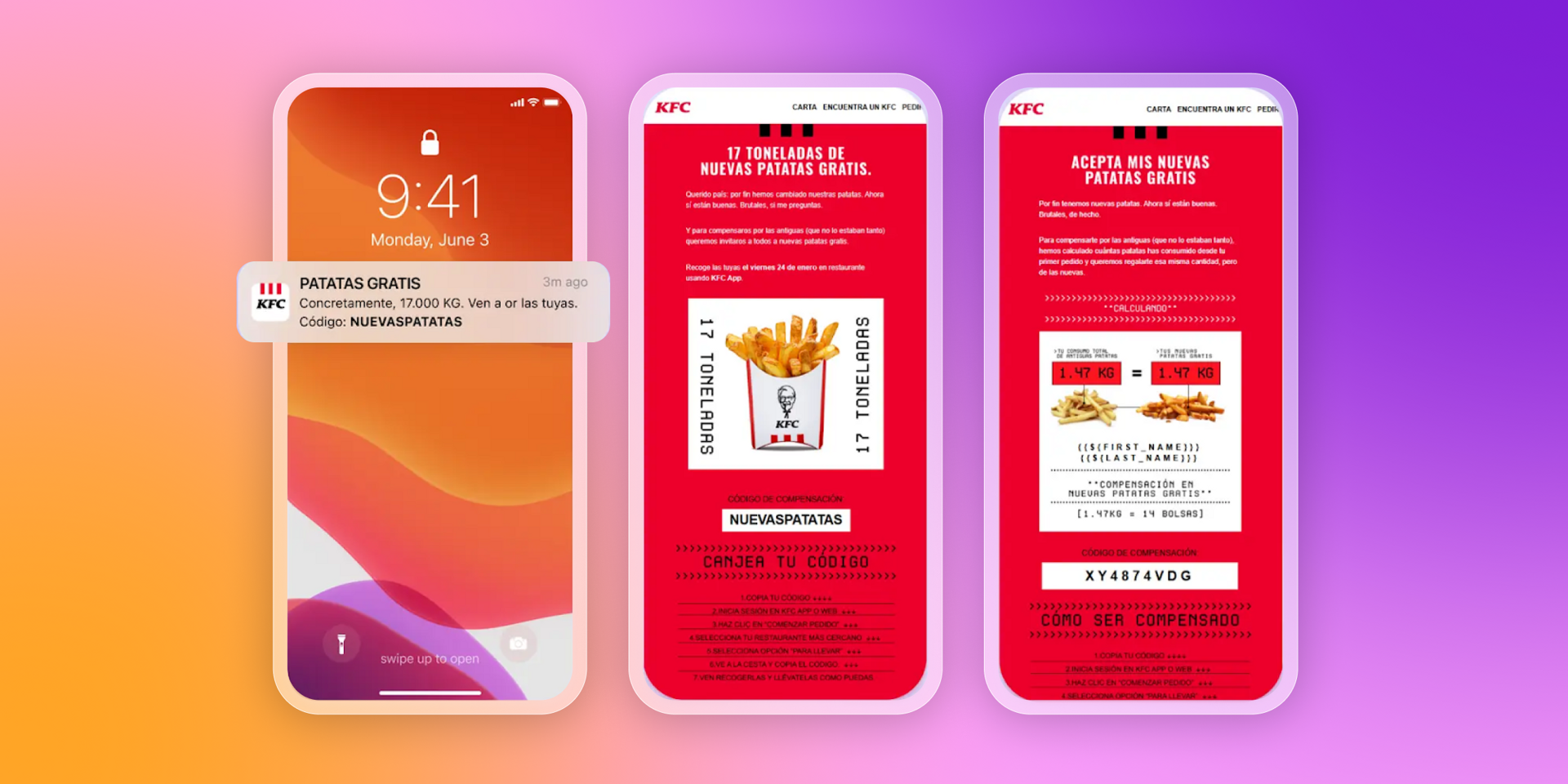
Using historical CRM and transactional data to identify every customer who had previously bought fries, KFC Spain launched the "Fries Compensation" program. Each identified customer received a personalised message through email, push, and in-app channels, acknowledging their specific purchase history and compensating them with the exact quantity of fries they'd previously endured, on the house.
The campaign also extended to social media, with the team responding to old Google Reviews and inviting critics publicly to try the new recipe. Real customer complaints were displayed on billboards. A single marketing team member handled the entire segmentation and execution.
The wins
- 95% email open rate, KFC Spain's highest-performing CRM campaign ever
- 679% increase in app downloads
- 233% increase in daily active users
- 20X increase in daily orders on launch day
- 42M impressions and 1.3M social interactions
- Highest-ever daily app sales, despite giving away 17 tons of fries
2. Kayo Sports scores a 105% cross-sell increase with 1.2 million personalised messages
Kayo Sports is Australia's largest sports streaming service, offering fans access to more than 50 live and on-demand sports. In a competitive streaming market, Kayo built its differentiation around personalization across every stage of the customer journey.
The challenge
Kayo's existing systems limited how deeply they could personalise communications. Experiences were more generic than their data warranted, and they had no way to optimise message content, channel, timing, and offers simultaneously at the individual level.
The strategy
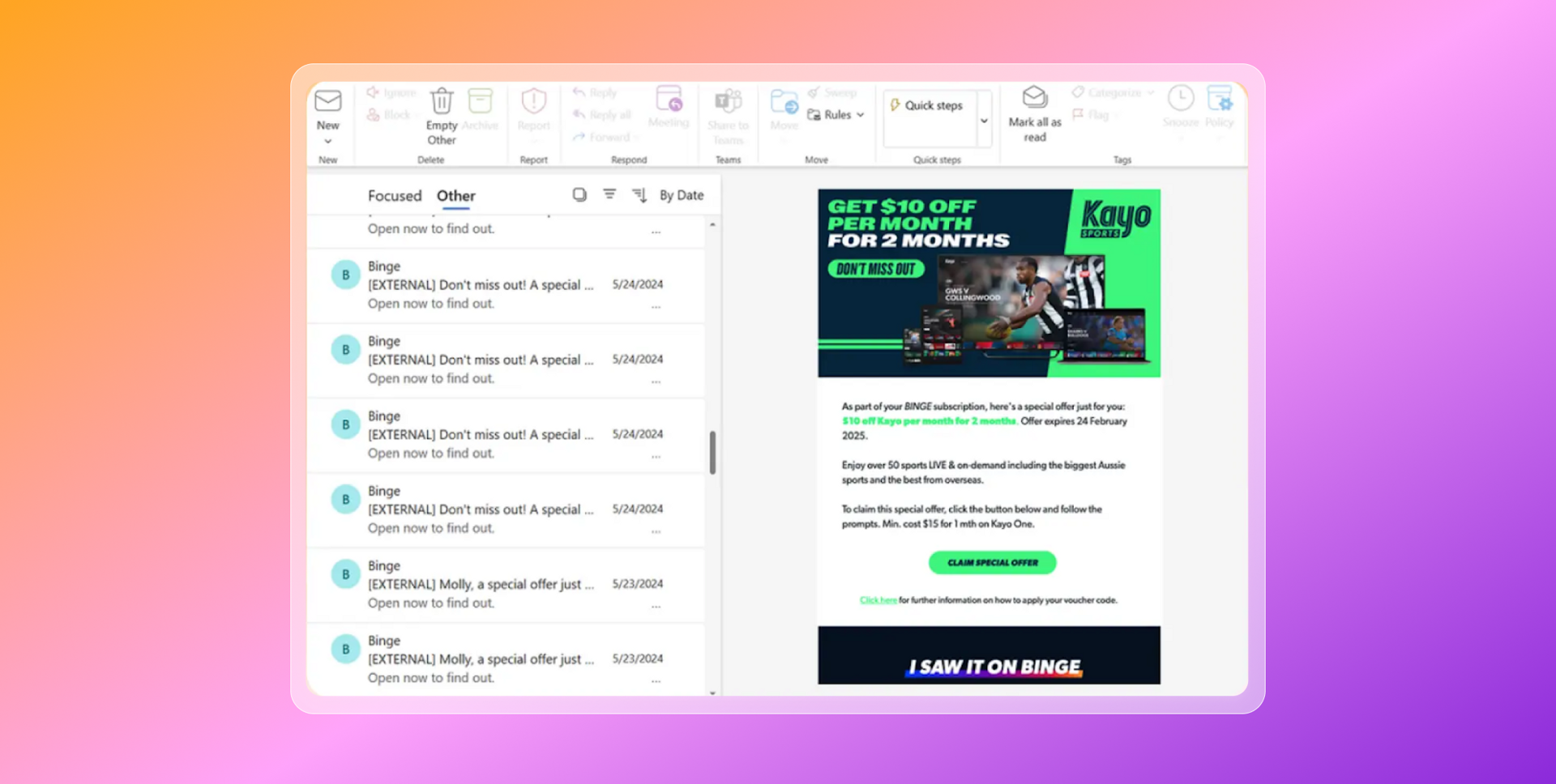
Kayo built what they called the "Customer Cortex"—a personalization engine powered by ten reinforcement learning models trained on first- and third-party data. Using BrazeAI Decisioning Studio, the system determines the optimal message, creative, channel, send time, frequency, and promotion for each individual subscriber daily. This scaled their personalised message variations from 300 to 1.2 million, delivered across email, SMS, push, and in-app channels through channel-specific Canvas journeys.
The wins
- 14% increase in subscriptions in FY24
- 8% increase in average annual occupancy
- 105% increase in cross-selling to BINGE, another Foxtel streaming service
- All achieved while average subscription prices increased by 20%
3. e.l.f. Beauty squads up for a 125% lift in monthly app usage
e.l.f. Beauty is a fast-growing cosmetics brand that crossed $1 billion in annual net sales in March 2024 and has delivered 23 consecutive quarters of net sales growth. A key driver of that growth is its Beauty Squad loyalty programme, which has more than 5.3 million members.
The challenge
e.l.f. wanted to drive higher adoption of its loyalty programme and expand into new mobile channels including push and SMS. Their existing setup required heavy manual effort for campaigns and didn't fully connect channel activity across the customer lifecycle.
The strategy
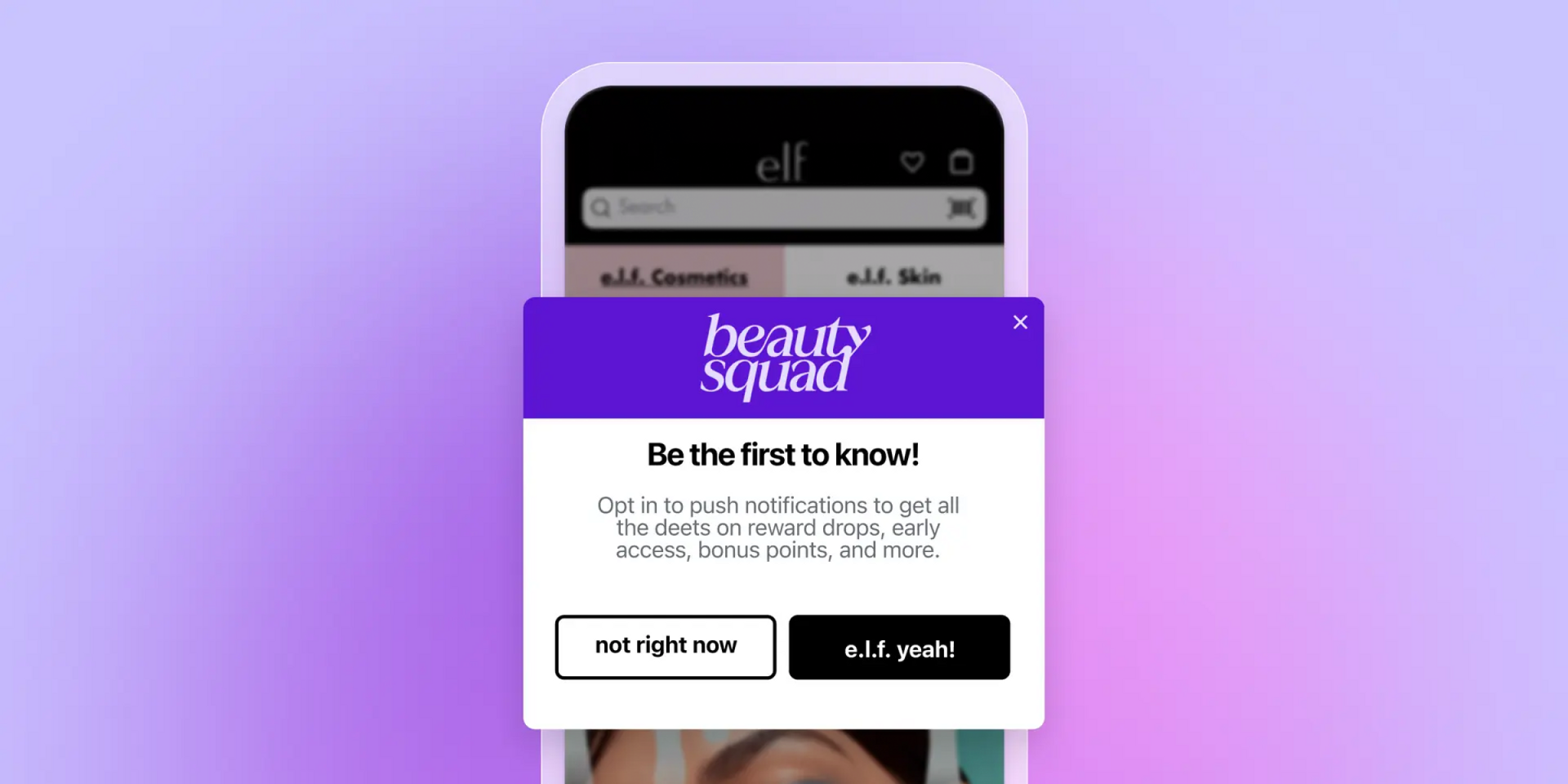
Working with Braze and solutions partner Stitch, e.l.f. built cross-channel lifecycle journeys for Beauty Squad members, adding push notifications to existing email campaigns, launching push primer campaigns to grow opt-in rates, and creating experiences like an in-app scavenger hunt and a personalised year-in-review campaign.
Their post-purchase email series was rebuilt from nearly 100 templates down to six, while expanding from four product lines to 16. Birthday moments were activated across email, SMS, in-app messages, and Content Cards simultaneously.
The wins
- 125% increase in monthly app usage over six months
- 58% increase in loyalty offer redemptions year over year
- Up to 23% push primer conversion rate
- 25% of Beauty Squad Replay campaign engagers shared content on social media
- Several hours of manual work saved per month through campaign automation
Best practices and recommendations for integrated marketing
Four practices help keep an integrated strategy coherent, measurable, and with campaigns aligned.
1. Use the RACE framework to structure campaigns around the customer lifecycle
The RACE framework gives integrated marketing a practical structure built around how customers move through a relationship with a brand. Each stage maps to a distinct set of objectives, channels, and KPIs:
- Reach builds awareness and drives traffic through paid, owned, and earned media
- Act (short for Interact) encourages prospects to engage further, generating leads and intent before any conversion ask
- Convert turns interested prospects into paying customers, across digital and offline channels
- Engage develops long-term relationships through personalised communications and experiences that drive repeat purchases and advocacy
Mapping campaigns to RACE helps identify lifecycle gaps and gives teams a shared language so paid, owned, and CRM activity works toward the same funnel objectives.
2. Adopt an always-on approach for continuous engagement
Customers take actions, lapse, and return on their own schedule. Trigger-based journeys that respond to actual behavior keep brands relevant at the moments that count. Building those journeys to run continuously, adapting to what each customer does next, produces stronger results than scheduled campaigns sent to broad audiences.
3. Plan for cross-device usage and multi-touch attribution
Most customers don't convert through a single touchpoint. Research, consideration, and purchase often happen across different devices, sometimes days apart. Tracking behavior at the user level keeps that full journey visible and helps frequency management stay consistent across channels, so customers aren't receiving duplicate or conflicting messages without any team noticing.
Multi-touch attribution distributes credit across the touchpoints that genuinely contributed to a conversion, giving teams a more accurate picture of what is driving outcomes.
4. Evaluate campaign ROI relative to channel investments
Holdout groups and control experiments establish true incremental lift, separating genuine campaign impact from conversions that would have happened regardless. A channel with strong engagement numbers but low incrementality may be drawing budget that would perform better elsewhere. Reviewing channel allocation regularly, as a normal operational habit, keeps investment aligned with actual performance.
Related Tags
Releated Content
View the Blog
A look at Braze Banners: What marketers and engineers need to know

Mark Biales

Email deliverability in Canada: Everything marketers need to know

Ess Adjekum
Maximizing your reach: Why it’s time to move to WhatsApp messages with optimized delivery