Customer engagement for SMBs: Strategies to compete, convert, and retain without the enterprise budget
Published on January 22, 2026/Last edited on January 22, 2026/11 min read

Team Braze
Customer engagement is one of the few growth drivers that small- and medium-sized businesses (SMBs) can control when budgets are tight and teams are lean.
This guide breaks down how to build scalable customer engagement strategy for startups —starting with unified customer data, then layering in personalization, automation, and omnichannel orchestration to improve metrics across the board.
What is customer engagement? (and why startups can't afford to ignore it)
Customer engagement is every meaningful interaction a customer has with your brand—and the momentum those interactions create over time. That includes opening an email, clicking a push notification, replying to an SMS, browsing a product page, completing a purchase, coming back after a lull, or upgrading into a higher-value relationship.
For startups, a customer engagement strategy ties directly to revenue. It helps you convert more first-time buyers, keep more customers, and grow lifetime value—without spending more to replace churn.
The risk of getting it wrong, can have a huge impact. 76% of consumers feel frustrated by impersonal interactions and 29% of consumers have stopped using or buying from a brand due to poor customer experience.
SMBs can’t afford to ignore this, so customer engagement should be viewed as an opportunity to start building lasting growth now, not “sometime in the future”.
Why is engagement harder for startups?
startups are expected to deliver the same real-time, relevant experiences as bigger brands—often with fewer resources and less margin for error.
- Lean teams can’t manually optimize every campaign, segment, and channel while still running the business.
- Fragmented tools make it harder to unify customer data, trigger messages from real behavior, and keep experiences consistent across channels.
- Budget constraints raise the stakes. Every send has to earn attention, and every workflow has to scale without adding headcount.
The SMB customer engagement paradox: Why lean teams win
A small or medium-sized business (SMB) is often told it’s at a disadvantage in customer engagement because it doesn’t have the budget, staffing, or martech stack of an enterprise. You may even think that customer engagement tools for small businesses don’t exist.
But smaller teams can still move fast—and that speed is a competitive advantage when customer expectations change week to week.
Being small comes with built-in strengths:
- Faster decisions and tighter feedback loops: Fewer layers means you can spot what’s working and adjust quickly.
- A more authentic brand voice: Customers feel the difference when messaging sounds human, consistent, and true to the product.
- Less distance between customers and action: When a customer message, refund, or repeat purchase happens, it’s more likely to reach a real human quickly—so you can respond faster with a helpful message or next step.
You don’t need a massive team to deliver great engagement—you need a solution that reduces manual work. When customer data is unified and messages are triggered by customer behavior, a lean team can run always-on journeys, coordinate channels, and keep interactions consistent—without adding to team size every time the business grows.
What are the key SMB customer engagement strategy challenges?
For startups, the challenges are around having the time, data, and coordination to do everything that needs to be done, consistently, across every channel—without stretching the team too thin.
Limited time and attention to manage engagement: SMB teams wear multiple hats, which makes it hard to plan, build, quality assure, measure, and iterate at the pace customers expect.
Customer data scattered across tools: When email, SMS, ecommerce, support, and product data live in different places, customer context gets lost. That leads to messages that arrive late, repeat what the customer already did, or miss the moment entirely.
ROI scrutiny and pressure to prove value quickly: With tighter budgets, every tool and every message has to earn its place. That raises the bar for clear measurement—and for engagement programs that show impact fast.
Channel growth without coordination: Adding channels can increase reach, but it can also create noise. Without omnichannel orchestration, customers experience disconnected touchpoints instead of a connected conversation.
Manual workflows that don’t scale with the business: One-off campaigns can work early on, then turn into a treadmill: pulling lists, rebuilding segments, copying content, and reacting late. As volume increases, the workload grows faster than the team.
Personalization that stalls at broad segments: Many SMB programs get stuck at generic lifecycle stages. Without behavioral triggers and real-time context, personalization stays surface-level—and customers tune it out.
Growth goals that shift over time: Some SMBs are optimizing for rapid growth; others focus on sustainable retention and predictable revenue. Engagement systems need to flex with those priorities, without a full rebuild each time.
These challenges are solvable with unified customer data, automation, and coordinated journeys across channels.
How do SMBs unify customer data for better engagement?
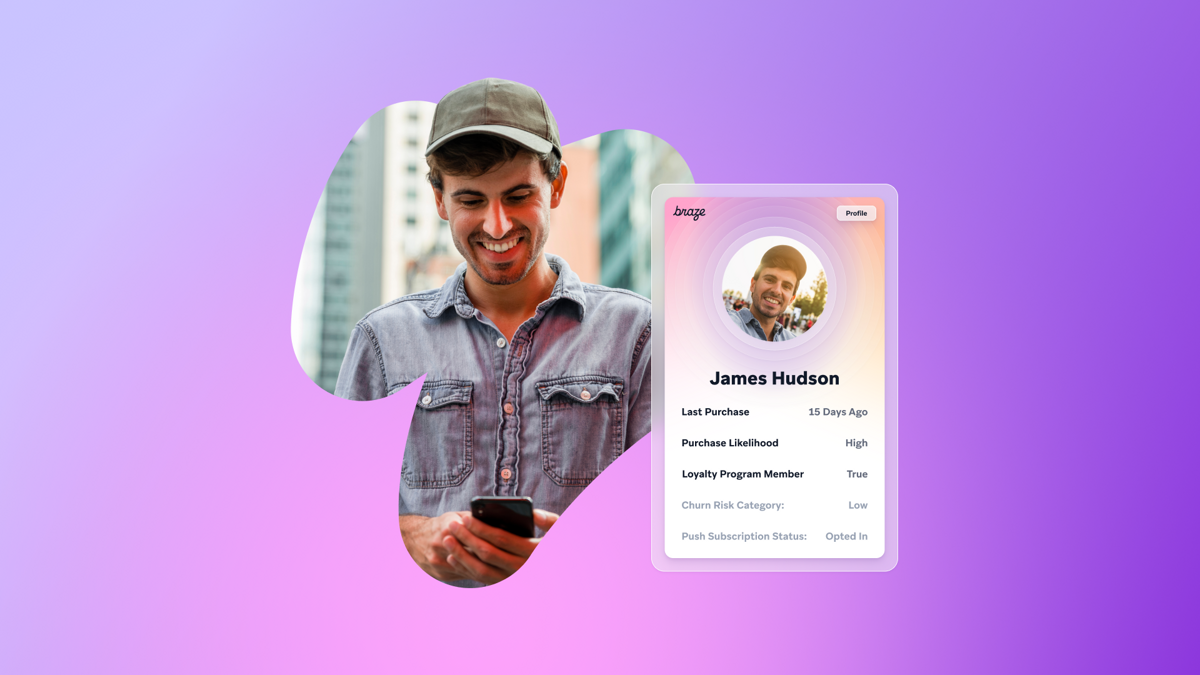
If engagement is the outcome, data is the input. For startups, the fastest way to make engagement feel “personal” is to start with a unified view of the customer.
Data unification simply means bringing your key customer signals into one place and connecting them to a single profile. That typically includes:
- Who they are (profile attributes like plan, location, preferences)
- What they do (events like browse, add to cart, purchase, subscribe, cancel, open, click)
- Where they do it (channel and device context)
- What they’ve already received (message history, frequency, outcomes)
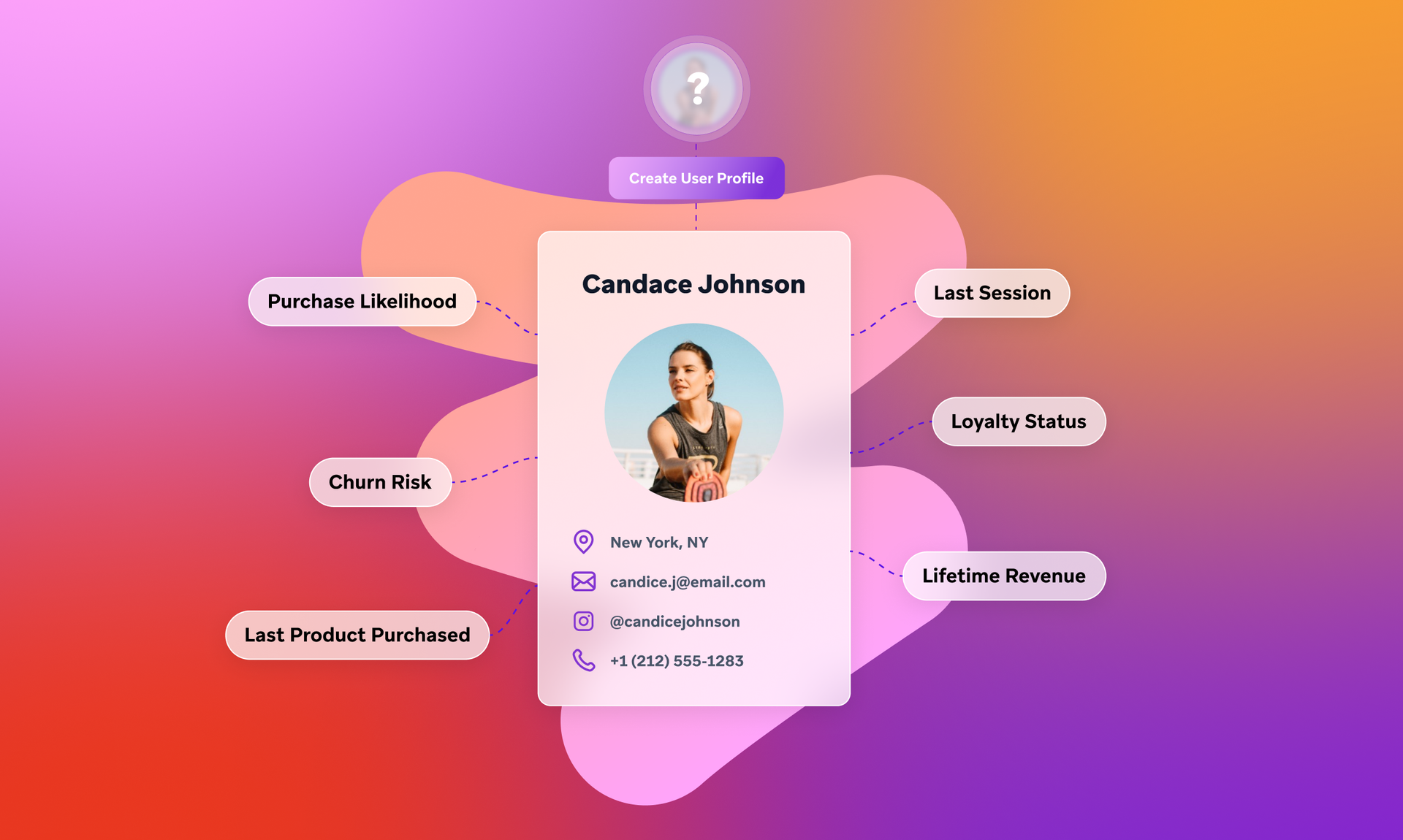
Once that data is connected, you can layer on customer intelligence and turn raw behavior into decisions you can act on. Moving your efforts from “send a campaign” to “respond to intent”—using real-time triggers such as:
- viewed a product twice in a week
- started checkout but didn’t complete
- hit a usage milestone in your app
- showed signs of churn (drop in activity, canceled renewal, refund)
How do SMBs move from segmentation to real-time personalization?
Personalization at scale means delivering messages that reflect what each customer needs next—without rebuilding the same campaign for dozens of micro-audiences. For startups, segmentation alone has a ceiling. You can create “new customers,” “VIPs,” and “at-risk” segments, but customers don’t behave in neat groups. They move in and out of intent constantly.
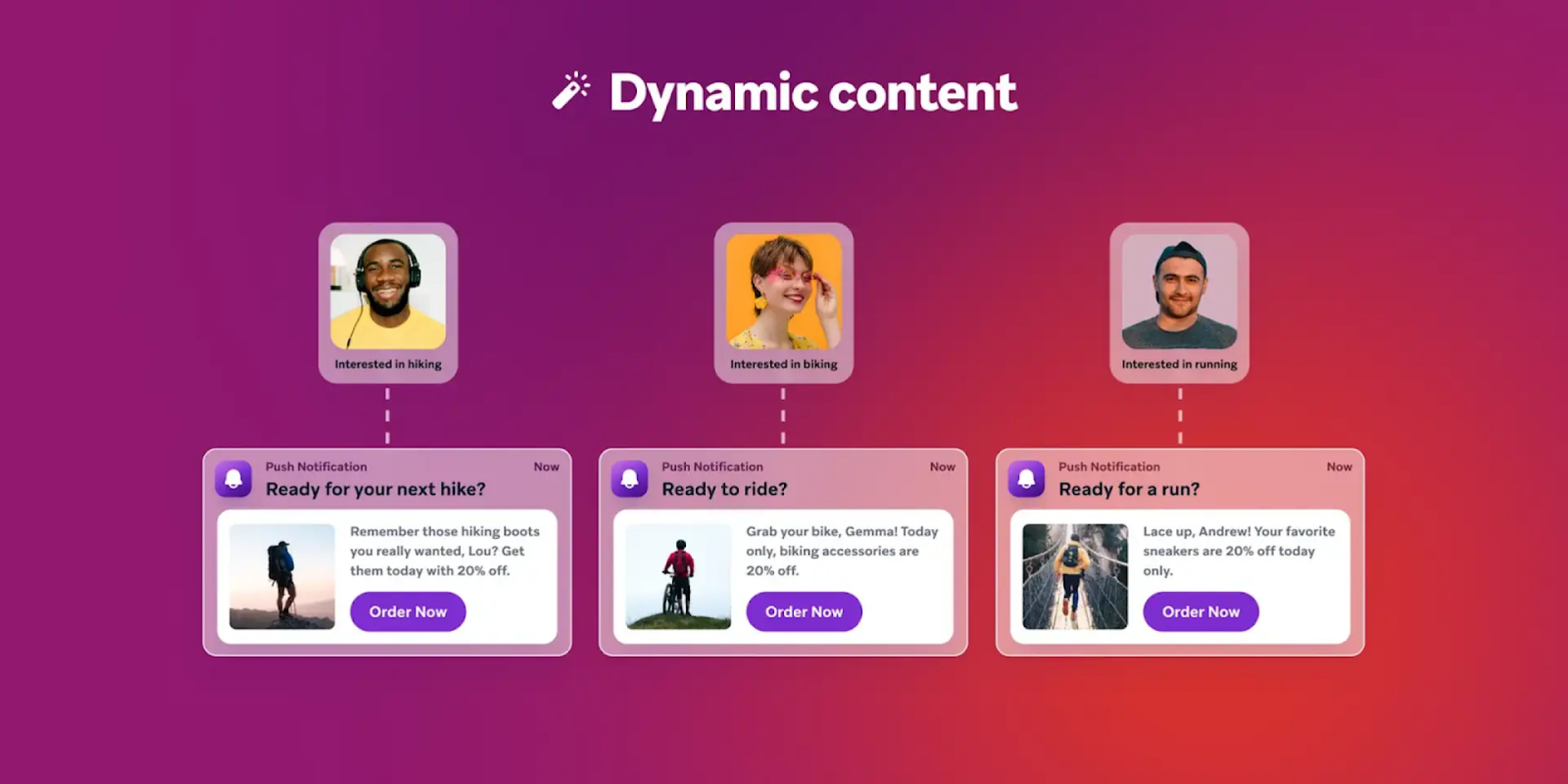
A stronger approach pairs a small set of durable segments with automation that reacts to behavior. Keep your segmentation model simple and consistent across channels (for example: new, active, repeat, high-value, at-risk). Then use behavioral triggers and dynamic content so messaging adapts to what someone just did—across timing, channel, and content.
Examples:
- A first-time buyer receives a welcome series that adapts based on category browsed or items purchased
- A lapsed customer sees reactivation messaging that responds to browsing activity and intent
- A trial user receives nudges tied to usage milestones, not just the number of days on the trial
What is automation and journey orchestration, and why does it matter for startups?
As an SMB grows, manual campaign management can turn into busywork. It often looks like pulling lists, rebuilding segments, duplicating creative across channels, and relying on calendars instead of customer behavior. Scaling becomes impossible.
Automation helps remove that friction by triggering messages from real-time actions—so engagement keeps moving even when the team is focused elsewhere.
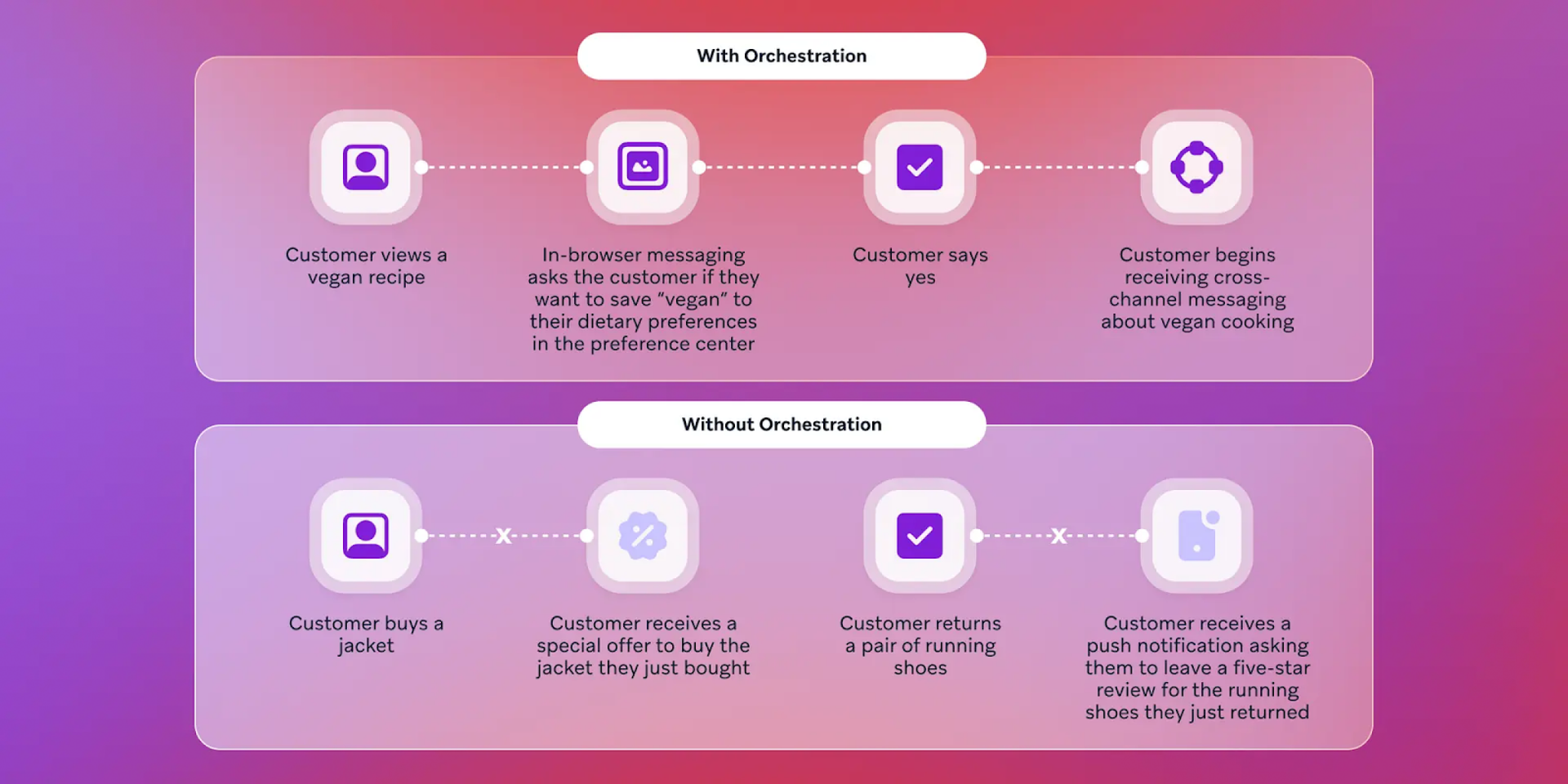
Journey orchestration takes automation a step further by connecting messages into a coordinated sequence across channels. Customers receive the most relevant touchpoint based on what they do—whether they convert, browse, go inactive, or take a different path than expected.
Braze Canvas is the visual workflow builder for orchestrating these omnichannel journeys. It lets teams map out an end-to-end flow (welcome, onboarding, post-purchase, reactivation, loyalty), then:
- trigger each step from real-time behaviors (browse, purchase, churn risk signals)
- branch the journey based on outcomes (clicked, purchased, inactive)
- coordinate channels so customers don’t get disjointed messaging
- add guardrails like frequency capping and suppression to avoid fatigue
Which engagement metrics matter most for startups?
Engagement metrics only matter when they connect to business outcomes. For SMBs, that usually means tracking a small set of signals that show (1) whether customers are responding and (2) whether that response is turning into revenue and retention.
Metrics that matter
- Customer acquisition cost (CAC)Engagement can reduce effective CAC by improving conversion and keeping more customers—so you aren’t constantly paying to replace churn.
- Engagement rateChannel-level actions such as email opens/clicks, push opens, SMS replies/clicks, in-app interactions, and on-site behavior. Use this to spot relevance and fatigue early.
- Conversion rateThe percentage of engaged customers who take a meaningful action (purchase, upgrade, book a demo, start a trial, renew). This is where engagement turns into measurable value.
- Customer retention rateThe percentage of customers who stay active over a time period. This is often the clearest indicator that your messaging and product moments are landing.
- Customer lifetime value (CLV)The clearest “north star” for engagement ROI, because it captures repeat purchases, renewals, and expansion over time.
- Net promoter score (NPS)A useful directional signal for advocacy and loyalty, especially when you pair it with behavior (repeat purchases, referrals, reviews).
- Customer ROIA simple way to tie engagement back to dollars is to compare the incremental revenue driven by your engagement programs against the cost of your engagement platform. ROI % = (Revenue from engaged customers − cost of engagement platform) / cost of platform × 100Example: If onboarding and reactivation journeys drive £60,000 in additional revenue over a quarter, and your engagement platform costs £12,000 for that period: ROI = (60,000 − 12,000) / 12,000 = 4.0 x 100 = 400% ROI
Building your SMB engagement tech stack: Tools and best practices
A strong SMB engagement stack keeps two things true at the same time. Customer data stays connected, and teams can act on that data without stitching workflows together manually. You’ll choose different tools depending on how you sell and where customers interact—but most SMB stacks still need the same essentials.
The core tools most SMBs need
- Customer engagement platform: The system that orchestrates messaging across channels (email, SMS, push, in-app) and supports automation, journey orchestration, and experimentation.
- Source-of-truth data systems: Your product, ecommerce, payments, and support tools generate the signals that power engagement (purchases, usage milestones, refunds, tickets, cancellations).
- Customer data layer: A way to unify customer profiles and events so you can segment accurately and trigger messaging from real behavior. Depending on your setup, this might be a CDP, a data warehouse, or customer engagement platform like Braze that keeps profiles in sync.
- Analytics and measurement: Reporting that connects engagement activity to conversion, retention, and CLV—so you can see what’s working and double down.
Best practices for keeping the stack simple and scalable
- Prioritise integration over tool count: A smaller stack that shares data cleanly will outperform a bigger stack with gaps and manual exports.
- Standardise your event taxonomy early: Define a small set of events that matter (viewed product, added to cart, purchased, started trial, hit milestone, churn risk) and keep naming consistent. It makes segmentation, automation, and reporting easier.
- Design for real-time triggers, not calendars: Calendar sends have a place, but behaviour-driven automation is what keeps engagement relevant without extra staffing.
- Build reusable journeys before adding more campaigns: Put your effort into foundational flows you’ll run all year—welcome/onboarding, post-purchase, replenishment, winback, loyalty, and preferences.
- Use governance to protect the customer: Frequency caps, suppression rules, and preference centres keep messages from piling up as channels expand.
What does customer engagement look like for successful startups?
Customer engagement can feel theoretical until you see it working in the real world. The two examples below show how growing businesses used unified customer data, personalized journeys, and automation to improve retention and drive meaningful results—without needing enterprise budgets or a huge team.
Tapas doubles new user retention with data-driven onboarding
Tapas Entertainment is a fast-growing digital publishing platform for webcomics and novels. With millions of readers discovering new stories every day, the team needed onboarding that could adapt to real behavior—and build habits early.
The problem
Tapas had plenty of customer data, but it lived across siloed tools. That made it harder to measure onboarding performance, understand retention drivers, and send timely, relevant recommendations—especially at scale.
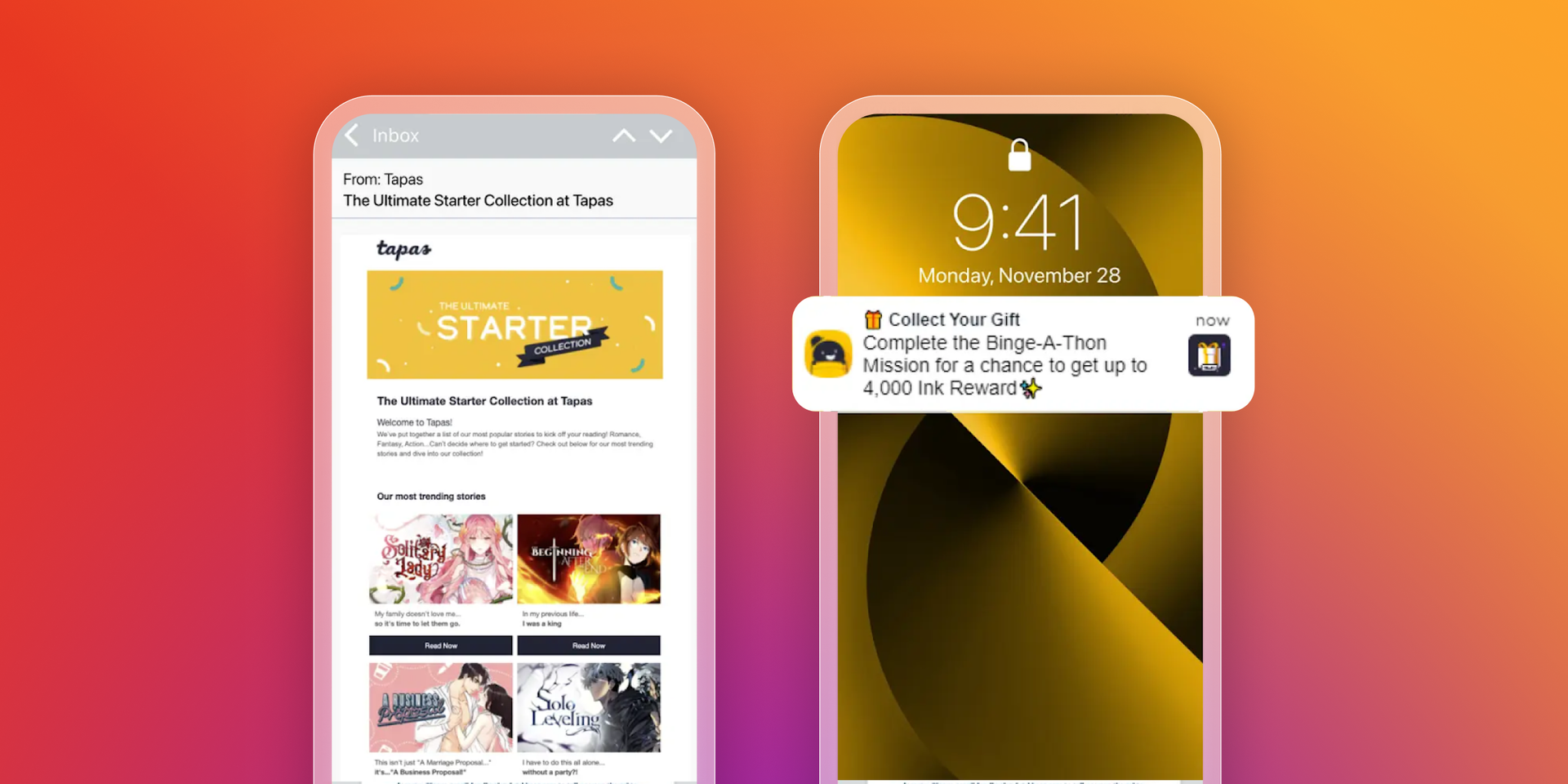
The strategy
Tapas connected Amplitude insights with Braze Canvas to evolve onboarding based on what readers actually did after signing up. Journeys were built around first-party behavioral signals, with continual testing and iteration informed by funnel drop-off and conversion data. The team also replaced manual, CSV-based processes with automated messaging so campaigns could respond in real time.
The results
Tapas achieved a 100% increase in new user retention, along with a 28% increase in “Ink” purchases, a 10% increase in the episode read funnel, and a 30% increase in email open rates.
How does Braze help SMBs improve customer engagement?
Braze can help startups unify customer data and activate it across channels, so messages stay relevant as the business grows. With Braze, teams can orchestrate email, SMS, push, and in-app engagement from the same customer context—then automate always-on journeys in Canvas, the visual journey builder in Braze.
Braze also supports responsible scaling, with controls to manage message frequency and keep customer touchpoints consistent. And as programs mature, AI-powered decisioning can help determine create campaigns with more accuracy and precision. With constant experimentation, it motivates customers to take action, rather than predicting what they might need next.
Key takeaways and next steps
- Customer engagement is a revenue driver for Startups because it improves retention, repeat purchases, and lifetime value.
- Lean teams win when engagement is built on unified data, behavioral triggers, and automation across channels.
- Focus on a small set of core journeys first (welcome/onboarding, post-purchase or activation, winback), then expand once those are performing.
- Measure what matters—engagement rate, conversion rate, retention, CLV, and ROI tied to incremental revenue.
Next steps: Audit where customer data lives, choose the signals that matter most, and build one always-on journey that responds to customer behavior in real time.