Customer data: Centralize, orchestrate, and activate for AI-driven marketing
Published on April 23, 2026/Last edited on April 23, 2026/12 min read

Team Braze
Most customers can tell when a brand doesn't really know them. The email promoting something they just bought, or the push notification that has nothing to do with what they just did in the app. The recommendation that misses entirely.
These aren't just minor annoyances. McKinsey research finds that 76% of consumers get frustrated when brands fail to deliver personalized interactions, and frustration tends to become inaction.
Customer data is what makes genuine personalization possible. Collecting it isn't the hard part. Getting it out of siloed systems, keeping it accurate, and activating it in real time across mobile, web, and app is where most brands have real work to do. The right infrastructure, (including a customer data platform built for scalable engagement), is what turns that data into better retention, stronger engagement, and smarter AI-driven decisions.
This guide covers what customer data is, the types that matter most, how to centralize and orchestrate it across channels, and what becomes possible when it's properly activated.
TL;DR
- Customer data includes demographic, behavioral, and transactional data, each serving a different purpose in building personalized experiences
- Most brands already have enough data. The challenge is centralizing it, keeping it accurate, and activating it at the right moment
- AI-driven personalization is only as good as the data foundation beneath it
Key takeaways
- Siloed data is one of the most common obstacles to effective personalization—connecting sources across channels is the first and most important step
- When companies use data to accurately predict and meet customer needs, consumers are 30% more likely to stay loyal and 26% more likely to recommend the brand
- Dynamic segmentation and real-time analytics keep campaigns relevant as customer behavior changes, rather than reflecting how customers behaved last quarter
What is customer data?
Customer data is the information collected from customer interactions with a brand, including what people buy, how they behave across channels, and what they tell you directly about themselves. It's the foundation of any marketing strategy built around personalization, retention, and engagement.
Data collected directly from your own platforms, including your website, app, and email, is known as first-party data, and it's become especially important as privacy regulations continue to tighten the rules around how third-party data can be collected and used.
The most valuable customer data generally falls into three categories: demographic data, which describes who your customers are; behavioral data, which captures what they do; and transactional data, which records what they buy. Each tells a different part of the customer story, and each informs a different kind of marketing decision.
What is demographic data?
Demographic data describes who your customers are: age, location, gender, and language. It's useful for broad segmentation and becomes more powerful when combined with behavioral and transactional signals.
What is behavioral data?
Behavioral data captures what customers do: pages visited, emails opened, features used, and where they drop off. It reflects intent in a way demographic data doesn't, making it particularly valuable for segmentation and automated campaign triggers.
What is transactional data?
Transactional data is the record of what customers buy, including order value, frequency, and product categories. It informs loyalty programs, re-engagement strategies, and product recommendations, and connects directly to retention metrics.
Why does customer data matter for engagement, retention, and revenue?
Customer data matters because it underpins personalization, and personalization drives results. McKinsey research shows that faster-growing companies generate 40% more of their revenue from personalization than their slower-growing peers. For most teams, the challenge isn't having data—it's having data that's connected, accurate, and ready to act on.
Data centralization and orchestration: how to connect your customer data
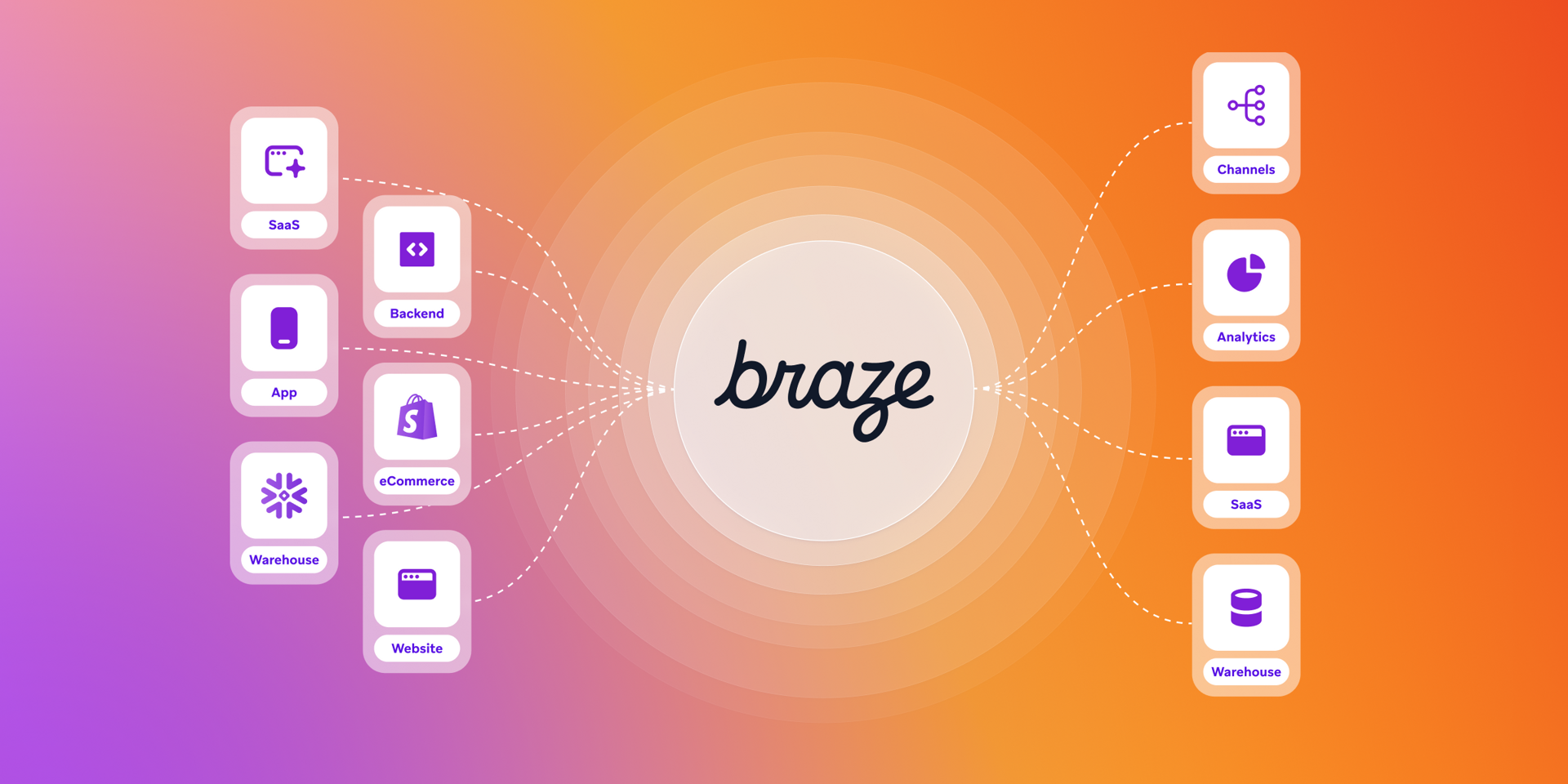
Data centralization means bringing customer data from all sources into a single accessible place. Orchestration is how that data is then coordinated across systems and channels to inform decisions in real time. The challenge for most brands isn't a lack of data. It's data scattered across tools that don't talk to each other, which makes acting on it almost impossible.
Aggregating data from multiple channels and sources
Most customers touch multiple channels before making a decision. They might discover a product via email, browse on mobile, and convert through the app, all in the same week. Mobile data collection at each of those touchpoints typically ends up scattered across separate platforms: email performance in one tool, app behavior in another. According to research from the CDP Institute, 68% of brands say they still struggle with siloed data, and fragmented systems prevent the unified customer view needed for relevant, personalized experiences. Connecting those sources is the prerequisite for everything else.
How does cross-channel data activation connect the dots?
Cross-channel data activation is what happens after centralization. Once data is unified, connected dashboards and platforms can coordinate campaigns across push, email, SMS, and in-app messaging simultaneously and in real time. Tools like Braze Connected Content make this possible by pulling in real-time data to personalize messages dynamically at the moment of send. A customer who abandons a cart on mobile and then receives a relevant push notification, followed by a personalized email if they still haven't converted, is experiencing that coordination in practice. The message is informed by behavior that was tracked, connected, and acted on automatically, and that only works when the underlying data is unified and accessible from one place.
How do unified customer profiles work?
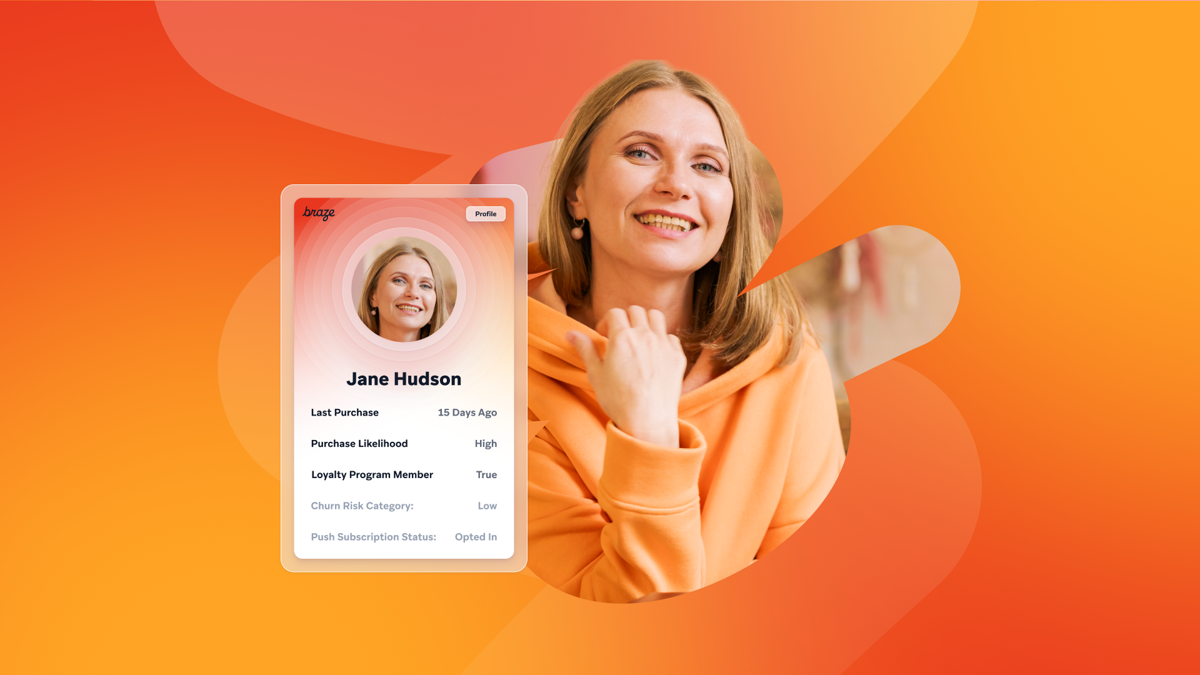
A unified customer profile is a single record that consolidates everything a brand knows about an individual: their demographic attributes, behavioral history, transactional data, channel preferences, and consent status. Rather than a customer existing as separate entries in your email platform, your CRM, and your app analytics tool, a unified profile brings all of that together and keeps it updated in real time. When a customer makes a new purchase or opts out of a specific channel, that change is reflected across the entire system, keeping every campaign informed by the same accurate picture.
How does customer data power AI personalization?
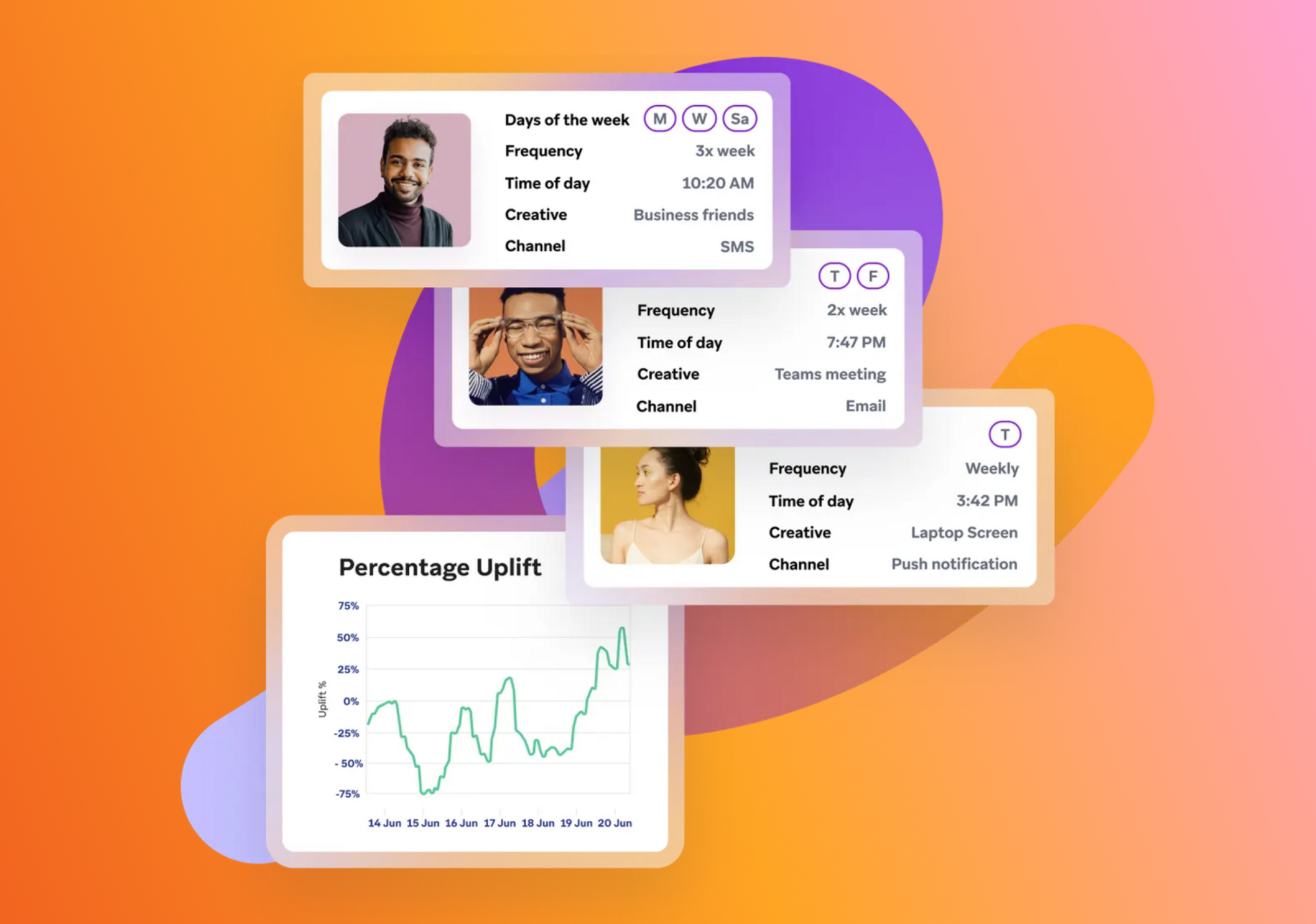
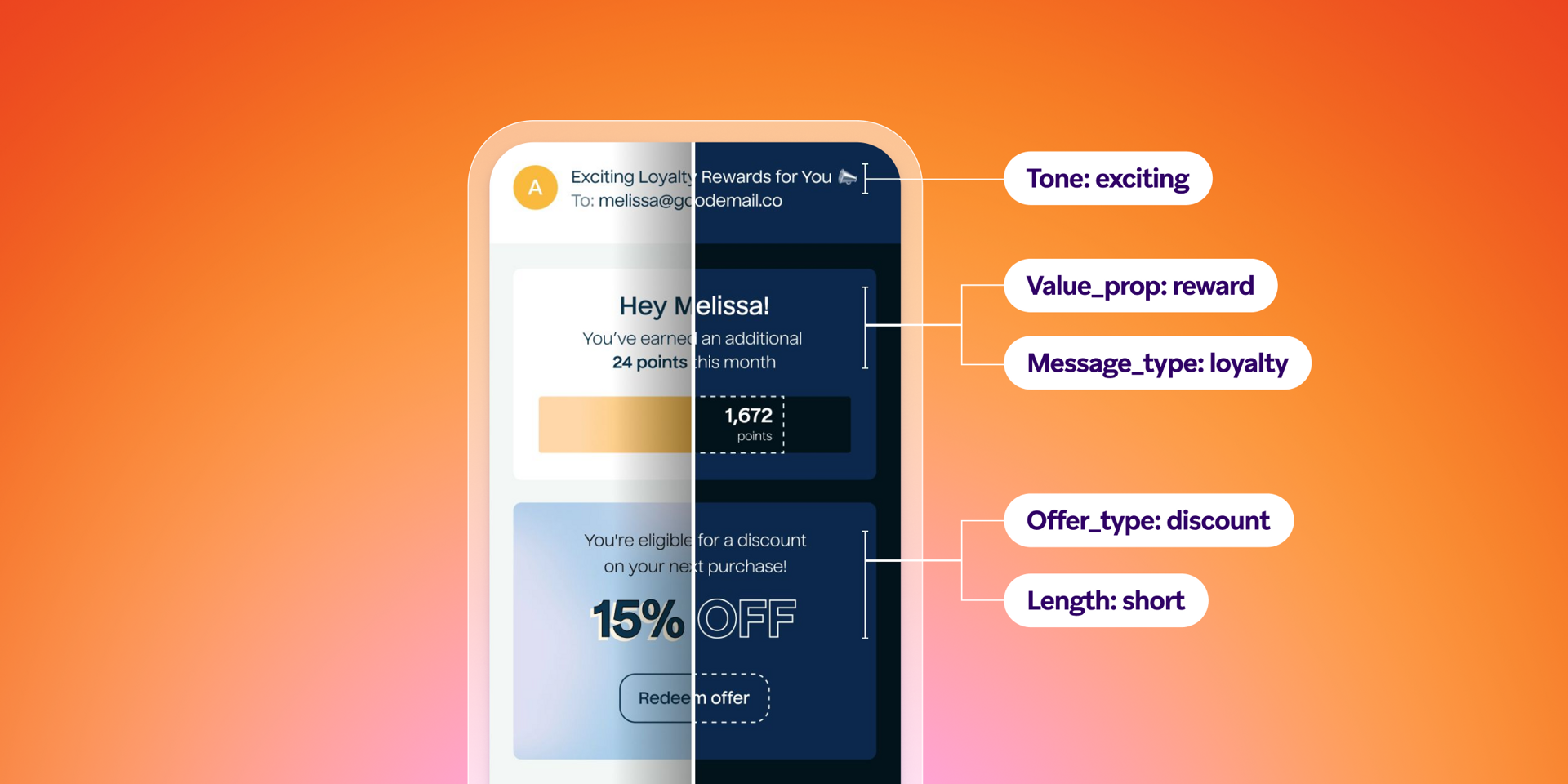
AI personalization means using machine learning models to analyze customer data and automatically deliver the most relevant experience for each individual. The AI-driven insights those models generate are only as good as the quality and completeness of the data feeding them, which is why the investment in centralization and orchestration has such a direct line to what customers actually experience.
What role does customer engagement data play in dynamic segmentation?
Customer engagement data captures interaction patterns across channels and feeds directly into dynamic segmentation. It includes which messages customers open, which they ignore, which channels they prefer, and at what times they tend to be active.
Dynamic segmentation uses that engagement data alongside behavioral and transactional signals to continuously update who belongs in which audience. A customer who stops opening emails but keeps using the app, for instance, would automatically shift from an email-priority segment into an app-led one. According to the Braze 2025 Global Customer Engagement Review, top-performing brands are 30% more likely to use AI-powered predictive analytics to identify customers likely to churn, a capability that relies directly on rich engagement data and real-time segmentation to work effectively.
Using retention data to reduce churn and improve loyalty
Retention data is the set of signals that indicate whether a customer is likely to continue engaging with a brand or drift away. It includes metrics like session frequency, time since last purchase, feature usage trends, and declining engagement across specific channels.
When connected to predictive insights and AI models, this data allows marketing teams to identify at-risk customers early and act before disengagement becomes permanent. A customer whose weekly app sessions have dropped by 50% over two months might be a strong candidate for a re-engagement campaign with a personalized incentive, well before they cancel or stop purchasing altogether. The Braze 2026 Global Customer Engagement Review found that when companies use data to accurately predict and meet customer needs, consumers are 30% more likely to stay loyal and 26% more likely to recommend the brand.
Personalized campaigns across push, email, SMS, and in-app messaging
A solid data foundation makes it possible to run personalized campaigns across multiple channels without those campaigns feeling disconnected or contradictory.
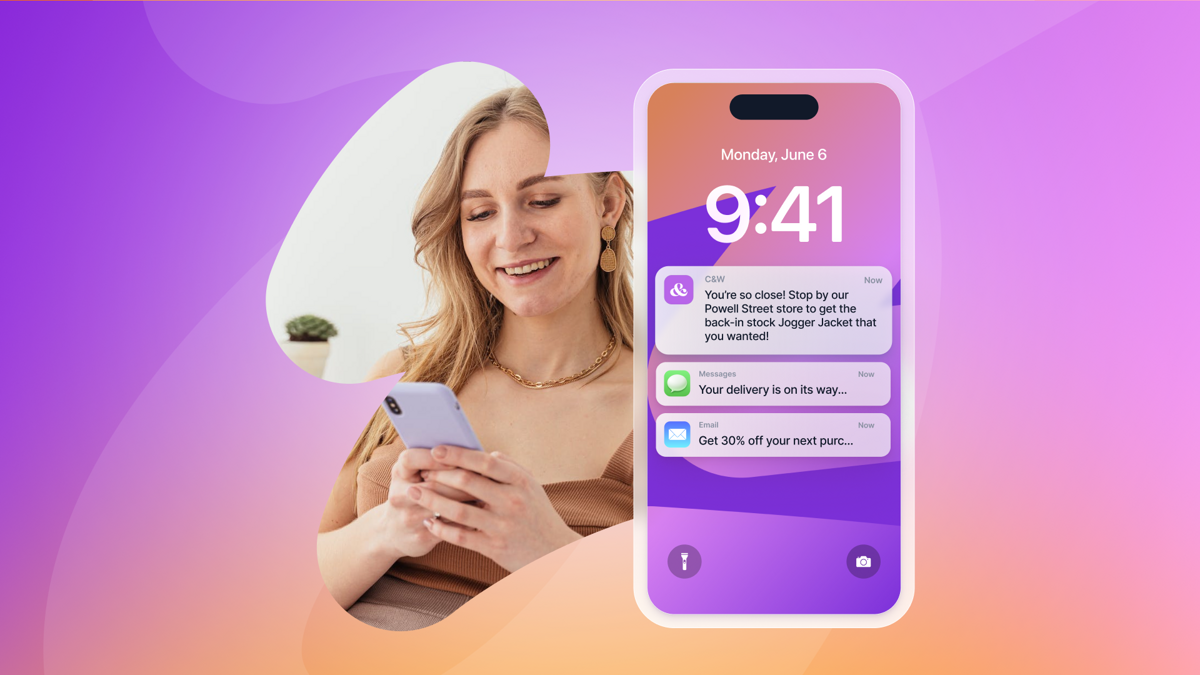
A customer who frequently purchases from a specific product category might receive a push notification when a relevant item is back in stock and an in-app message when they open the app shortly after. Both touchpoints are informed by the same underlying behavioral insights: purchase history, browsing behavior, and channel engagement preferences. Because the data is centralized and the campaigns are coordinated, the experience feels cohesive rather than like three separate teams messaging the same person without comparing notes. This consistency is also what compounds over time into stronger retention and higher lifetime value.
Examples of effective customer data use
Customer data strategies look different depending on the industry, the audience, and what success actually means for that brand. The following examples show how three very different organizations put centralized, activated data to work—and what it produced.
1. Order up: Rappi's WhatsApp strategy delivers 80% more purchases
Rappi is a Latin American superapp founded in Bogota in 2015, now serving consumers across nine countries and more than 300 cities. With services ranging from grocery and food delivery to prescription pickup and beyond, Rappi's engagement strategy centers on reaching users at the right moment with offers that are genuinely relevant to them.
The challenge
Rappi needed a more effective out-of-product channel to reach lapsed users and motivate them to purchase again, while also encouraging more frequent purchases from their active user base. Push notifications and email alone weren't producing the results they needed.

The strategy
Rappi expanded their channel mix to include WhatsApp, using its high regional adoption rate across Latin America to reach users on a channel they already trusted. Dividing their audience into active and lapsed segments, they built personalized campaigns for each within Braze, populating WhatsApp templates with content tailored to each user's behavior and purchase history.
The wins
- 80% increase in users who made a purchase versus the control group
- 28% lift in lapsed users who reactivated and made at least one purchase within 30 days
- 43% lift in lapsed users who reactivated and made two or more purchases within 30 days
2. Sorted for success: How HBO Max turned a Hogwarts House survey into a 6X engagement lift
HBO Max is a direct-to-consumer streaming platform in the Warner Bros. Discovery family, known for its diverse catalog of premium entertainment. Their customer engagement strategy combines highly personalized content recommendations with interactive campaigns designed to collect zero-party data directly from subscribers.
The challenge
Ahead of the premiere of Fantastic Beasts: The Secrets of Dumbledore, HBO Max wanted to engage subscribers with tailored Wizarding World content. The goal was to activate the existing fandom in a way that felt personal and drove measurable engagement, rather than a generic promotional broadcast.
The strategy
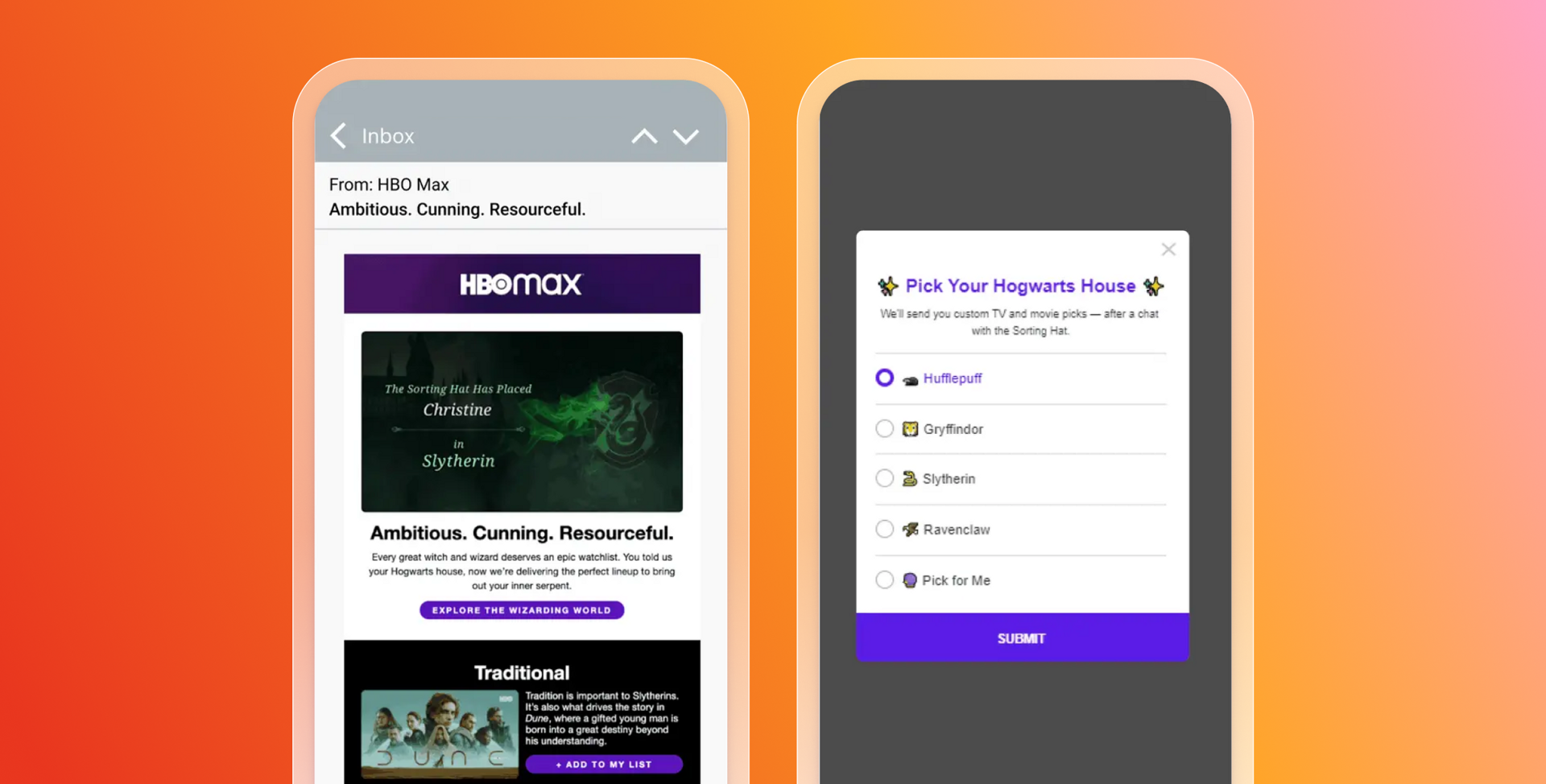
HBO Max built a "What's Your Hogwarts House" survey using a Simple Survey in-app message, triggering a personalized messaging flow via Braze Canvas based on each fan's selection. Users received a personalized email or push notification featuring their house crest, five curated content recommendations based on their house's traits, and a deep-linked spotlight page with a longer list. A "choose for me" option handled the undecided, randomly assigning a house and triggering the corresponding content automatically.
The wins
- 6X higher click rate to the in-app message versus benchmark
- 3.12% lift in session starts over the control group
- 3.36% lift in viewership of the recommended titles
3. On the ball: How U.S. Soccer unified customer data for a 43% subscription boost
U.S. Soccer is the national governing body for soccer in the United States, representing both the U.S. Men's and Women's National Teams. With the sport's profile continuing to rise domestically, U.S. Soccer set out to build an engagement strategy that could match that growth and turn casual fans into loyal, paying members.
The challenge
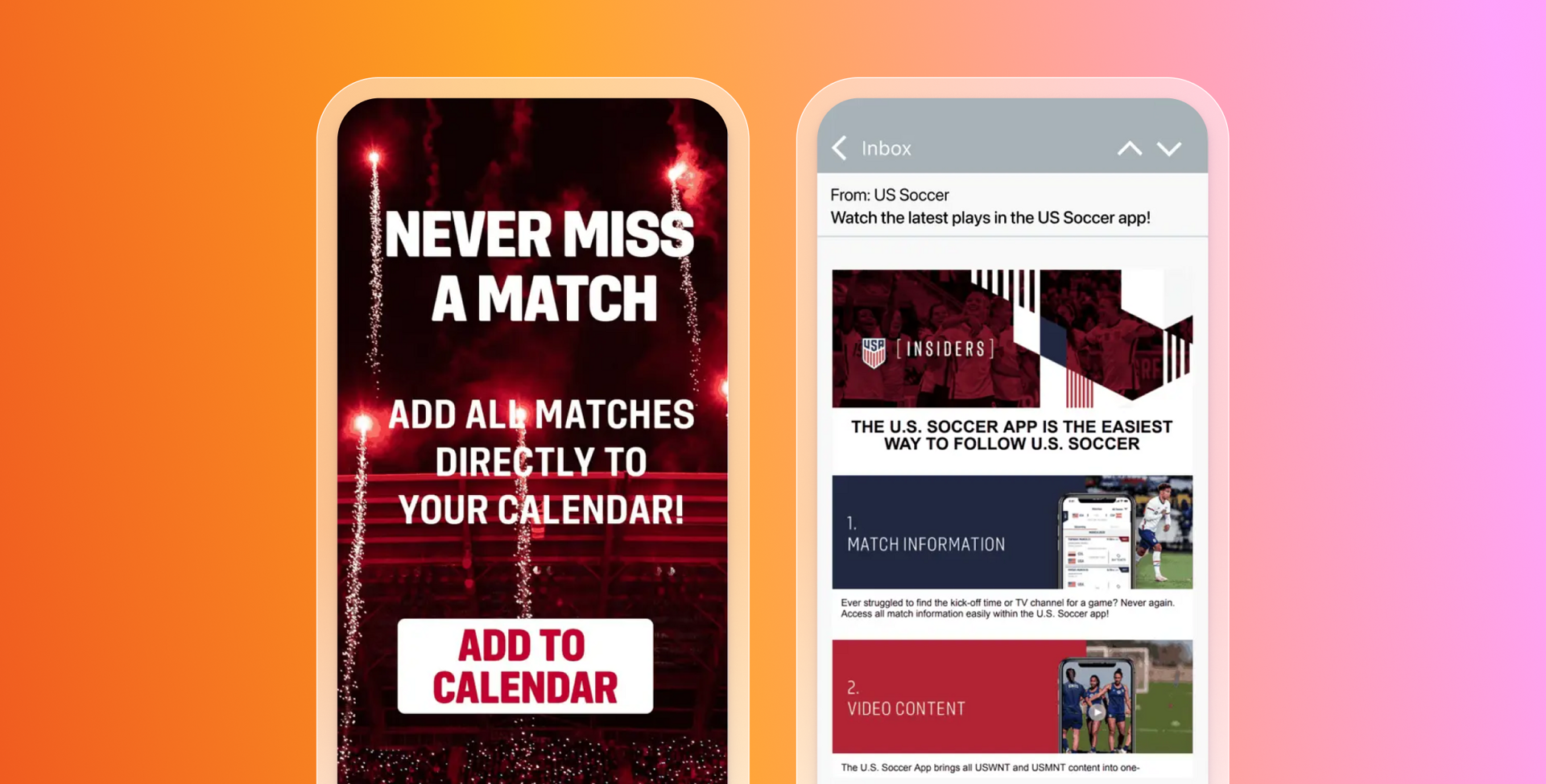
U.S. Soccer had been working with separate point solutions for email, push, and in-app messaging, leaving their customer data siloed and their campaigns disconnected. They needed a way to consolidate their communications into a single platform, unlock a unified view of fan behavior across touchpoints, and improve their ticketing, merchandising, and membership experiences without adding operational complexity.
The strategy
U.S. Soccer used Braze alongside Treasure Data and Shopify to connect purchase history, conversions, and behavioral data into a single view. With that foundation in place, the team used Liquid personalization to automate ticketing presale emails timed to each user's buying behavior, added Content Cards to deliver targeted content within the app, and built personalized merchandising campaigns that drove loyalty and incremental sales.
The wins
- 43% increase in paid Insider subscriptions
- 20.3% increase in email open rates
- 25% decrease in campaign execution time
Final thoughts and takeaways
Good customer data strategy tends to be less glamorous than the AI tools built on top of it. Centralizing data, keeping it clean, connecting it across channels—none of that makes for a compelling headline. But it's what determines whether the personalization a brand promises actually shows up in the experience a customer has.
Data-driven marketing at scale depends on the same decisions being made consistently: invest in the data foundation first, choose infrastructure that can activate insights in real time, and treat privacy compliance as part of the strategy rather than a constraint on it.
- Customer data is the foundation of AI-powered, cross-channel personalization. The quality of what goes in determines the quality of what comes out.
- Centralizing data across channels, orchestrating it across platforms, and managing it in a privacy-compliant way aren't separate workstreams. They're the same project.
- The right customer engagement platform gives brands the infrastructure to scale both insights and activation, without the manual overhead of keeping disconnected systems aligned.