
Braze vs Iterable: How To Compare Two Cross-Channel Engagement Platforms
Published on October 15, 2026/Last edited on October 15, 2026/17 min read
Team Braze
Braze and Iterable are cross-channel engagement platforms that orchestrate messaging across email, SMS, push and in-app from a single customer profile. They differ on how quickly data becomes usable, how deep the mobile feature set goes, and how many of the features require a separate commercial conversation.
Braze is built as one owned platform. It sends email natively, connects to your data warehouse natively, and runs on a streaming data layer that updates segments and triggers journeys as events happen. Iterable assembles more of its platform from partners, including third-party email providers for delivery, Hightouch for warehouse ingestion and Twilio or Telnyx for SMS, and much of its data movement runs on a schedule.
This Braze vs Iterable comparison has been written by Braze and compiled as neutrally as possible, but we recommend you weigh it against Iterable's own materials and independent review data before deciding.
TL;DR
- Braze started as a mobile SDK in 2011 and Iterable started with email. Those origins still show in how fast data becomes usable and how much you can do inside your own app.
- Both platforms cover the same core jobs. The difference is architecture. Braze evaluates segments and triggers journeys on a live stream of events. Iterable's dynamic lists are evaluated on a schedule, its warehouse sync runs no faster than every 15 minutes, and its warehouse export lands 6 to 12 hours later.
- Neither vendor publishes a full rate card. Braze prices on edition, monthly active users and Action Credits, with all channels, the data platform and AI included. Iterable prices per usage line, with several capabilities added through your customer success manager. Ask both for multi-year pricing at your projected volumes and a written list of everything outside the standard contract.
- Migration is phased rather than all at once: one program first, both platforms in parallel, then channel-by-channel cutover with email last. Templates get rebuilt either way.
What is the difference between Braze and Iterable?
A customer engagement platform ingests and unifies customer data, decides what each individual should receive, and executes across email, push, SMS, in-app, web and messaging apps from one profile. Both Braze and Iterable cover the same core jobs, including audience segmentation, journey orchestration, cross-channel messaging, personalization and experimentation, but their origins differ.
Braze's mobile-first origins are why its live profile and in-app messaging run deeper. It launched in 2011 as Appboy, a software development kit for app developers and added email, web and newer channels as it grew. Iterable started with email. By 2016 it had expanded beyond email to add mobile push notifications on iOS and Android, and from there broadened into a fuller cross-channel platform covering push, in-app and SMS.
Those origins still show up in data freshness, in the depth of the mobile feature set and in which capabilities are included versus separately contracted. Braze went deep on mobile instrumentation and streaming ingestion first Iterable was founded in 2013 with email as its first channel and expanded from there into push, in-app, SMS, embedded messaging in 2024 and WhatsApp in 2025.
Where Iterable is the stronger fit
Iterable's strengths sit in email, marketer autonomy, journey design and channel reach. Here are four capabilities worth checking against how your own program runs.
Email heritage and flexible sending infrastructure
Email platforms send through a service that owns the sending servers and the IP addresses attached to them. Those IP addresses carry reputation with inbox providers, and reputation can take months to build. Iterable connects to email service provider (ESPs) accounts (ESPs) you already own, so an existing sending relationship can come with you. If your team is sending at least 150,000 messages a month, you can move to a dedicated IP address, provided through one of Iterable's supported providers. You run the warm-up yourself, since it depends on your own sending behavior and segmentation, but Iterable publishes a warm-up guide with a recommended plan, volume caps and best practices, and expects the process to take four to eight weeks. Organizations sending through their own infrastructure can use the Custom Email Platform option, although you'll likely need engineering work and a conversation with your customer success manager (CSM) to set this up. If you're an email-led retention team with warmed IPs, this is useful for keeping control of an existing ESP relationship.
AI that explains its own scoring
Iterable calls its approach a glass box rather than a black box, and it works in two parts. Explainability means that when the AI scores a customer, you can open that score up and see what built it: which campaigns contributed most, which behaviors drove it, and how that person compares with everyone else. Optionality means you can overrule the recommendation rather than just accept it. If you're a lifecycle team without data science support, this is useful for understanding what actually drives conversion, not just who to target next, and it makes those targeting decisions easier to explain to stakeholders.
Journeys that wait for a customer to reply
Iterable builds journeys from tiles, the steps you drag and connect together. Two of them handle waiting:
- Hold Until parks someone until they do something, or until a field on their profile changes.
- Hold for Reply parks someone for up to seven days after you send them an SMS or WhatsApp message, and releases them as soon as they reply.
You can define up to 10 replies you expect and send each one down a different path. Journeys can also feed into one another, so several different starting points end in one shared flow. If you're running two-way SMS or WhatsApp, this is useful when a customer's reply decides what happens next.
Reach on connected TV
If your brand has a Roku app, Iterable can reach customers inside it. Its Roku SDK supports Roku OS 10.5 and above and tracks events you define in your app, so what someone watches or saves on their streaming device adds to the same profile as everything else you know about them. Viewing behavior can shape the emails and push notifications they get, and you can message them on the streaming device itself. If you're a streaming service or broadcaster and your customers watch on a Roku app as well as your mobile app, this is useful for keeping one view of each customer across both, and putting a message in front of someone while they're watching.
Where Braze is the stronger fit
Braze is strongest in areas of data freshness, measurement, mobile depth, (what you can do inside your app) and across the included features. Here, we take a closer look at those strengths.
Segments that update as data arrives
Braze data platform connects directly to Snowflake, BigQuery, Databricks, Redshift, Azure and S3, and uses streaming data ingestion to take in events from your app and website as they happen. Segments update in real time as that data changes, so someone who abandons a cart, stalls in onboarding or hits a usage limit moves into the relevant audience the moment it happens. A journey can be triggered on customer behavior as it happens, and you can build audiences straight from your warehouse without copying the data into Braze first. Marketers build these with more than 100 ready-made filters or a plain text prompt, without going through a technical team. If your triggered programs currently run on a nightly or hourly sync, this is useful for acting on intent while it's still live.
Depth inside the app
The strength here is the range of message types that live inside your product. In-app messages can appear as modals, slideups, full-screen takeovers, multipage messages or surveys, and can show the moment someone does something in your app. Content Cards go further, embedding a stream of rich content into your app or website, built into your platform rather than sitting on top of it, and customers work through them at their own pace. Outside the app, push stories (Braze, November 2024) turn one notification into a swipeable gallery of images, each with its own caption and link, and iOS Live Activities keep a live update on the lock screen while something is happening, like a delivery on its way or a match in progress. Maestra, in a 2026 comparison, names mobile engagement as the area where Braze is strongest, and recommends it for mobile-first brands needing WhatsApp, advanced in-app messaging or Content Cards. If your app is where most of the relationship happens, this is useful for running a lifecycle program inside the product itself.
Measurement across the whole program
Funnel reports (Braze, 2021) follow the path customers take after entering a campaign or Canvas, tracking a series of events and showing where people drop off. Where funnel reports work inside one journey, the Global Control Group (Braze, 2021) works across all of them, holding back a randomly selected subset of users from every campaign and Canvas so you always have a group receiving nothing to measure against. Braze then reports incremental uplift against any custom event you track, showing how many more conversions the messaged group produced compared to the untouched one. Both sit alongside Braze Reporting and Analytics, built for marketers rather than analysts. If you're being asked to justify program spend, this is useful for separating what your messaging drove from what customers would have done anyway.
What comes included
Braze pricing takes into account your Platform Edition, your monthly active users, and Action Credits, a pooled balance spent across channels. There's no per-seat fee, so growing the team doesn't grow the bill. Every edition covers cross-channel messaging across email, push, SMS, MMS, RCS, WhatsApp, KakaoTalk, LINE, in-app messages and banners, so adding a channel is a question of setting it up, not renegotiating. The same applies to the data layer: Cloud Data Ingestion, zero-copy segmentation and personalization from your warehouse, and catalogs are all part of the platform. BrazeAI™ is included too, covering the Intelligence Suite and generative AI capabilities. Beyond that, Content Cards and BrazeAI Decisioning Studio™ are both available through your account team, the latter making 1:1 decisions that optimize any business KPI by choosing channel, message, creative, offer, timing and frequency for each individual. If you're comparing quotes, this is useful for seeing where the line falls between what's in the price and what isn't.
Third-party comparisons reach similar conclusions about where Braze sits relative to Iterable. G2 names Braze the best overall alternative to Iterable. Maestra, in a 2026 comparison, calls it "Iterable's closest competitor." GetVero, writing in April 2026, calls it "the most direct enterprise-tier alternative."
Braze vs Iterable: a customer engagement platform comparison
This table sets out what each platform does across the capabilities that come up most often in an evaluation.
Capabilities as documented in September 2026. Both platforms ship changes frequently, so check anything decision-critical against current documentation and in a demo against your own data.
What impacts a decision most when choosing a cross-channel marketing platform?
The rows that actually change a decision are these four:
- Segment refresh determines whether a triggered program can act while someone's intent is still live, or only when the next send goes out.
- Warehouse ingestion determines how much engineering time stands between your data and a marketer being able to use it.
- Experimentation and hold-out groups decide whether you can measure a single campaign or the whole program, since one platform holds users out at account level and the other per campaign.
- AI capabilities tell you how much of what you saw in the demo is in the price and how much is a separate conversation.
How pricing and packaging differ
Braze uses a value-based pricing model, which means the price scales as the value you get from the platform scales. It charges on three things:
- Your Platform Edition, which reflects how sophisticated your engagement strategy is and how much capacity you need for live campaigns and journeys.
- Your monthly active users, so you're billed on the audience you're actually engaging rather than every address in your database, with an allowance built in for inactive contacts.
- Action Credits, which cover the channels you send on and the AI you use.
There's no charge for adding team members. The four editions and what each one includes are set out on the Braze pricing page.
Iterable describes its pricing as an integrated platform fee covering all channels, with no separate data storage fees. The plans and what they meter on aren't published, so you'll need to ask for a detailed quote.
Both platforms have features that sit outside the standard contract. With Braze, BrazeAI Decisioning Studio™ are arranged through your account team. With Iterable, Data Sync, Stored Messages and Embedded Messaging all go through your customer success manager.
A few costs can catch teams out:
- Data warehouse integration & engineering time. Connecting your warehouse and other systems to the platform, then keeping those connections working.
- Getting your data back out. Moving your messaging results into your own reporting tools, plus whatever your cloud provider charges to move them.
- Extra implementation hours. The setup time you paid for running out mid-project.
- Managing two suppliers. If another company's technology sits in the middle of your setup, fixing a problem means getting both of them on the call.
Before making any decisions, put these three questions to each vendor in writing:
- What exactly are we charged for, and what happens if we go over? Get their definition of an active user, whether people who never open anything still count, and what happens when you exceed your limit.
- Which parts of this proposal aren't in the standard contract? Ask for a list of anything that costs extra, needs a paid setup, or only works above a certain data volume.
- What will this cost over 12 months, including setup and our own team's time? Ask both to work it out against your actual channels and audience size, not a standard package.
How to choose: Iterable vs Braze
Choosing between Iterable and Braze comes down to how mature your engagement program is, because that's where the differences become apparent. Here are four examples of different business types and levels of maturity, and what each is likely to come up against.
Email-led, with a small secondary channel
Email carries most of your revenue. Push or SMS exists but isn't material yet, and the team is two or three marketers without dedicated data support.
This one's closer than it looks. Iterable can connect the ESP account you already use, so the sender reputation you've spent years building comes with you rather than being rebuilt, and Smart Ingest points at a table you already have, so a first sync doesn't wait on an engineering ticket. But a small team without data support needs more than an easy first sync — it needs AI and segmentation that work without paying for extra seats or a data scientist. BrazeAI's Intelligence Suite is included in every Platform Edition, not gated behind a CSM conversation, and marketers can build audiences from more than 100 ready-made filters or a plain-text prompt with no technical team involved. If keeping your existing ESP relationship matters most, Iterable removes a real migration cost. If you need explainable AI and self-serve segmentation without add-on pricing creeping in later, Braze is worth the harder look.
Adding a second and third channel
Email works, push has just launched, and the question is whether to bolt on point solutions or move everything onto one platform.
Braze is the stronger fit whichever channels you are adding. If they are SMS and WhatsApp, both are native channels in Canvas with two-way handling, subscription groups, quiet hours and the same experiments and AI optimization as every other step; on Iterable, WhatsApp is an add-on that sits outside experiments, AI, channel optimization and quiet hours. If they are in-app and push, Braze gives you more surfaces to work with, including Content Cards, feature flags, Live Activities on the lock screen and push stories. Either way, the second and third channels arrive as full members of the journey rather than as exceptions to it.
Multi-channel lifecycle marketing
Five or more channels, journeys with real branching, and a team shipping changes weekly.
Braze is the stronger fit, and it comes down to how much of the customer relationship can live inside your product. Content Cards persist until each individual reads them, with the read, clicked and dismissed state tracked per person, so a message survives being ignored rather than disappearing. You can run several feeds at once, pin cards, set expiry dates and A/B test the whole feed against a proper control. At this stage, the app becomes a place where the relationship continues between sends.
Enterprise-scale orchestration
Multiple brands or regions, a data team with opinions, and a finance team asking what your messaging contributed rather than how it performed.
Braze is the stronger fit, on one thing above all: the Global Control Group is set once and holds a slice of your users out of every campaign and journey. That gives you a single untouched baseline for the whole program, so when someone asks what a quarter of messaging was worth, you have a number. Holdouts configured campaign by campaign answer a narrower question, and they don't add up to a program-level figure.
If you want to go deeper than the head-to-head, our guide to choosing a customer engagement platform covers defining your non-negotiables, interrogating the data architecture and testing with your own data.
If your shortlist runs wider, we've also compared Braze and Salesforce Marketing Cloud and Braze and Adobe Journey Optimizer.
What a Braze or Iterable migration actually involves
The fear of moving platforms keeps plenty of teams on tools that have already stopped fitting. It's worth knowing what the work of a migration actually looks like, because it's rarely the all-at-once switchover people imagine. Here's what to expect, whether you're moving from Braze to Iterable or the other way around.
It starts with one program class
Rebuilding one well-understood program end to end, usually post-purchase or cart abandonment, tells you what your data really looks like before you commit to the rest. The temptation is a lift-and-shift — porting everything across unchanged — which carries over the same inefficiencies and data problems you already had. Migration is also a reasonable moment to clean house, since there's nothing to gain from moving unresponsive contacts to a new platform.
Both platforms run in parallel for a while
Data pipelines feed both systems during the transition, so you can compare audience counts and catch a mapping error before a customer sees one. Budget the engineering time for it, because it's the phase teams most often leave out of the plan.
Channels move one at a time
Push and in-app usually launch first. Email launches last, because IP reputation takes weeks to build and a move to a dedicated IP needs warming before you send at full volume. Plan that warm-up early rather than treating it as a final step, since a delay there delays your whole email program. Expect, on average, four to eight weeks of gradually increasing volume.
Templates get rebuilt
Personalization is written into templates using a templating language, the code that pulls in a customer's name, order or recommendations. Braze uses Liquid and Iterable uses Handlebars, so templates don't convert between them.
Some things won't come with you
Profiles, attributes, subscription states and consent records all move across. The behavioral history collected through mobile SDK instrumentation doesn't, and in-product message state can't be recreated from an export.
What decides how long it takes
Platform migrations range from a few weeks to several months. Central Retail moved seven business units and 250 campaigns in two months. How clean your data is, how many templates you're rebuilding, and whether you have engineering time allocated or borrowed will all affect how quickly the migration happens.
Talk to the Braze team about what a side-by-side evaluation would look like against your own data and channel mix.
Releated Content
View the Blog
Key insights from Grow with Braze Bangkok 2026
Team Braze

How composability drives ROI through speed and flexibility

Sahiz Kaur
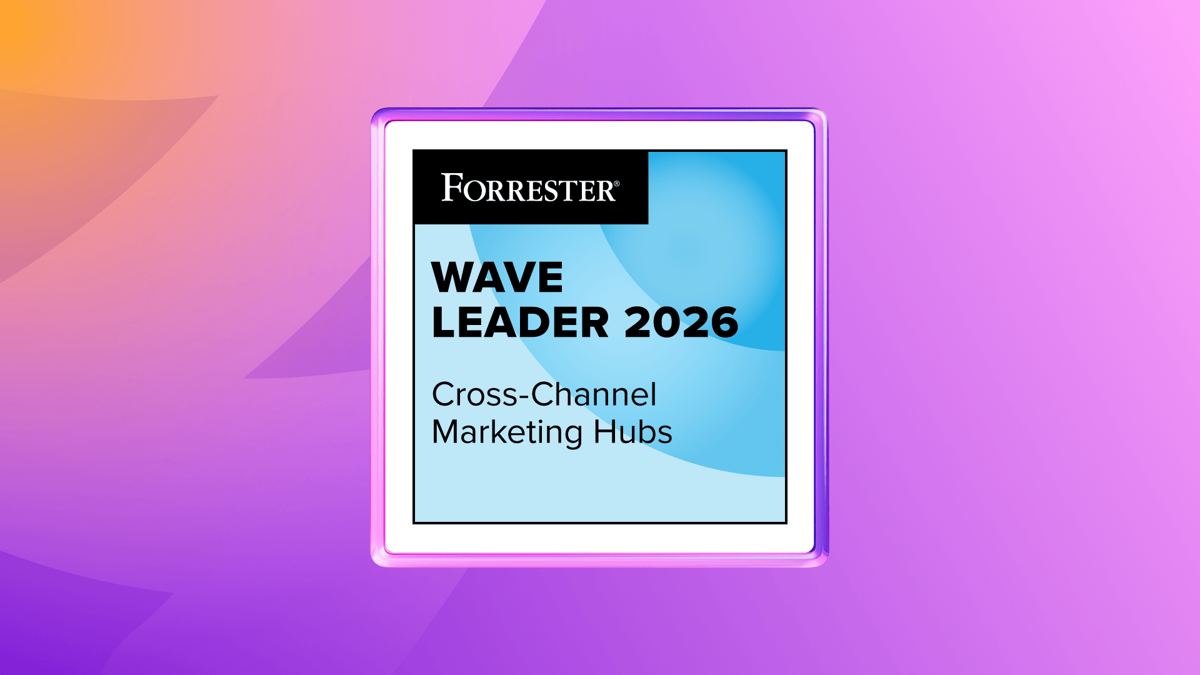
Braze named a Leader in the Forrester Wave™: Cross-Channel Marketing Hubs, Q4 2026