
AI customer engagement: How artificial intelligence is transforming customer connections
Published on January 30, 2026/Last edited on January 30, 2026/11 min read


Team Braze
Sixty-four percent of business leaders say AI technology is evolving so rapidly that making long-term strategic decisions feels like trying to hit a moving target. At the same time, 61% of consumers expect seamless communication across all channels, no matter where they show up next.
AI customer engagement gives brands a way to respond to both pressures at once. It uses artificial intelligence to connect data, context, and timing so teams can react to what people do in real time, without rebuilding journeys every time behavior changes. These systems are designed to read live signals, predict what someone is likely to need next, and select the right message, channel, and moment automatically.
What began with simple rules and scheduled sends has grown into a network of decisioning models, real-time personalization tools, and agentic systems that work alongside engagement teams. This article looks at how AI customer engagement works in real terms, and how teams can use it to build customer relationships that feel consistent, responsive, and sustainable over time.
What is AI customer engagement?
AI customer engagement is the use of artificial intelligence to decide how, when, and where your brand interacts with each customer across their journey. It connects data, context, and timing so every touchpoint—whether that’s a message, an in-app prompt, or a support interaction—feels like it was designed for that moment rather than pushed from a calendar.
Traditional engagement tactics rely on static segments, fixed workflows, and campaigns that behave the same way for everyone until a marketer updates them. AI customer engagement replaces that one-size-fits-all logic with systems that learn from real behavior, update their own choices, and adapt experiences automatically.
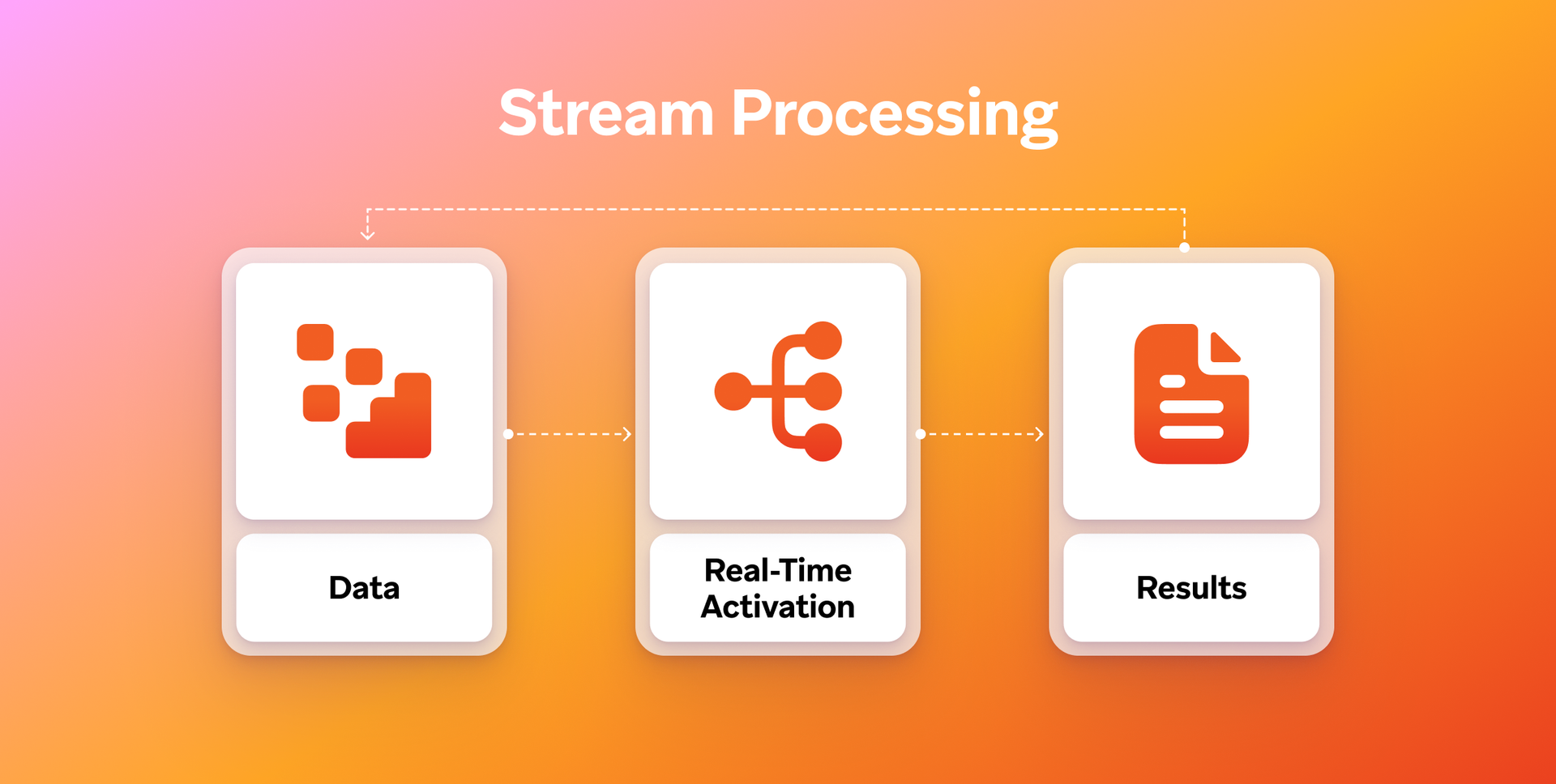
An AI customer engagement system can typically help brands to:
- Combine behavioral, transactional, and contextual data into a live view of each customer
- Use that view to choose from multiple possible responses in the moment, not only on a pre-set schedule
- Tailor content, offers, and product experiences through real-time personalization
- Coordinate engagement automation across channels so messages feel connected, not duplicated
- Respond quickly and consistently while still honoring preferences and privacy
This kind of AI customer engagement gives brands a way to build stronger customer relationships without relying on constant manual tweaks.
The evolution from automation to intelligent AI marketing engagement
Early automation focused on getting the same message out more efficiently—scheduled campaigns, simple “if this, then that” journeys, and fixed segments that only changed when someone stepped in to update them. The logic lived in static workflows, and those workflows behaved the same way for everyone who qualified.
AI customer engagement solutions now extend far beyond those basics, from triggered messaging and predictive analytics to conversational AI and, at the advanced end, AI decisioning that steers how customers engage with more precision and relevancy, providing a truly 1:1 experience.
With AI decisioning, rather than pushing every customer through a single predefined path, these systems evaluate context in the moment—who the person is, what they just did, and how similar customers behaved—and choose from multiple options across channel, timing, message, offer, and frequency.
Using reinforcement learning (RL) and contextual bandits, AI decisioning experiments with different combinations, learns which ones motivate customers to take action, and updates its choices automatically against the goals you set. These techniques operate inside AI decisioning systems to help them learn which choices perform best in different contexts over time. Every open, click, purchase, or unsubscribe becomes feedback about whether a particular decision moved someone closer to, or further from, the outcome you care about.
An intelligent engagement system keeps experiences aligned with how customers actually behave.
How AI in customer experience enhances every stage of the journey
AI customer engagement can support the whole lifecycle, using data, predictive analytics, and AI decisioning to adapt how you acquire, engage, and retain customers in the moment.
Acquisition: Predictive customer engagement with lead scoring and personalized offers
At the top of the funnel, AI can help teams focus on the people most likely to deliver long-term value. Instead of treating every new contact the same, models estimate intent and value early, then feed those scores into journeys and campaigns.
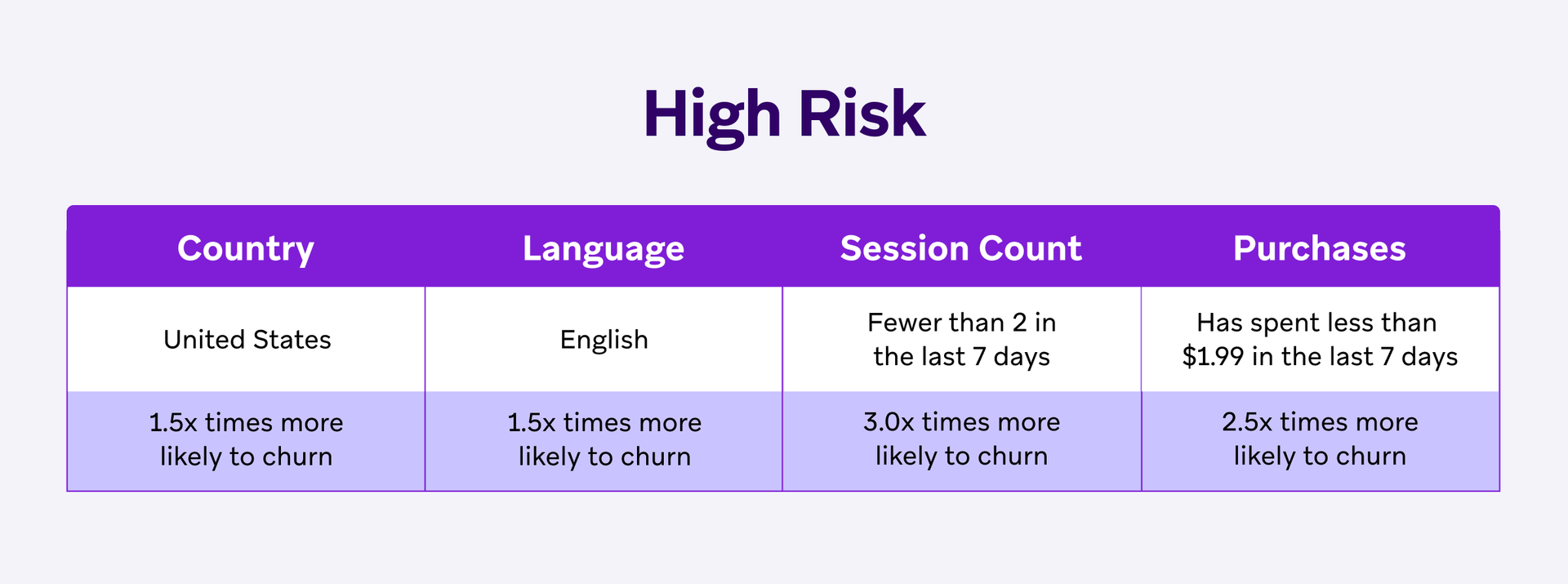
With predictive analytics, brands can:
- Use predictive lead scoring to prioritize prospects likely to convert or become high-value customers
- Tailor offers and creatives based on interests, behaviors, and traffic source
- Hold back aggressive remarketing for low-intent audiences and redirect spend to higher-quality segments
- Route high-potential leads into richer onboarding or nurture programs, while keeping lighter-touch paths for everyone else
Engagement: Dynamic content and timing optimization
Once someone is active, AI customer engagement focuses on keeping interactions useful, timely, and consistent across channels. Models watch how people browse, click, purchase, and use your product; AI decisioning can then experiment with content, timing, and channel combinations to keep momentum going.
During the engagement stage, AI systems can:
- Generate and rotate dynamic content variants that reflect a person’s preferences or lifecycle stage
- Use engagement automation and send-time modeling so outreach lands when each individual is most likely to respond
- Select channels—email, push, in-app, SMS, or conversational AI agents—based on recent behavior and responsiveness
- Trigger targeted nudges, education, or recommendations when someone stalls, repeats an action, or explores a new feature
Retention: Churn prediction and win-back automation
Retention is where AI customer engagement often has the clearest, most measurable impact. Instead of waiting for customers to cancel or go quiet, models look for early signs of risk, and AI decisioning can test which interventions help people stay active or return.
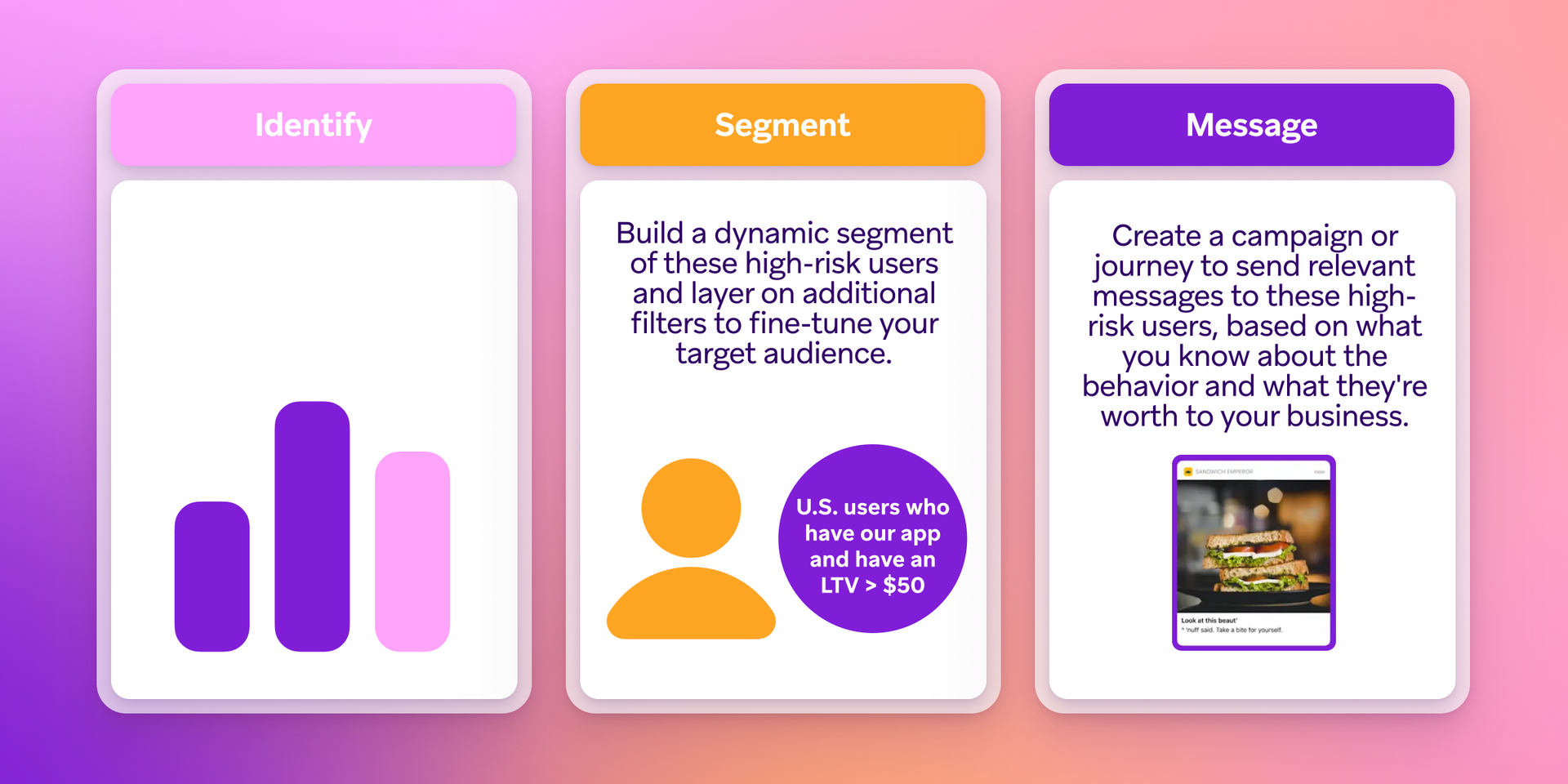
For retention and loyalty, AI systems can:
- Use churn prediction to flag at-risk customers based on usage, support history, or purchase patterns
- Trigger save journeys that combine check-ins, incentives, and tailored education content
- Identify which win-back messages, offers, and channels work best for different at-risk groups
- Adjust long-term frequency, content mix, and incentives for customers showing fatigue or declining engagement
The AI tech stack powering modern engagement
AI customer engagement draws on different types of AI that each do a specific job, moving brands from raw data and manual workflows to programs that can understand customers, support marketers, and optimize experiences continuously.
Predictive AI: Turning data into signals
Predictive AI focuses on analyzing customer data and making informed predictions about what is likely to happen next. It uses techniques like supervised and unsupervised learning to:
- Make predictions about customer propensities, such as churn risk, conversion likelihood, product or category affinity
- Identify patterns in behavior, like lookalike audiences or AI-built segments
- Estimate business outcomes, including revenue or customer lifetime value
In AI customer engagement, predictive analytics often power features like churn prediction, predictive events, and recommendation models. These outputs become signals that journeys, campaigns, and decisioning systems can act on—so messaging, offers, and paths are informed by what customers are actually likely to do.
Generative AI: Helping marketers work faster
Generative AI focuses on creating new content—text, images, or code—based on a prompt. In customer engagement, its primary role is to support marketers so they can spend more time on strategy and less time on repetitive production work.
Generative AI can help teams:
- Draft and refine copy for different channels, audiences, and lifecycle stages
- Create multiple variants of subject lines, CTAs, and in-app prompts for experimentation
- Generate images or visual assets to support campaigns
- Simplify technical tasks, such as writing SQL for segments or transforming data through chat-based interfaces
Used inside clear guardrails, generative AI makes it easier for marketers to act as strategic conductors—setting direction, reviewing outputs, and deciding what goes live—while the system handles more of the hands-on creation.
Agentic AI: Optimizing experiences through AI decisioning
Agentic AI describes how AI decisioning systems are applied to manage decisions autonomously within customer engagement programs. Rather than referring to a separate type of model, it reflects how decisioning is orchestrated across multiple interactions and goals within a journey.
Decision intelligence for “next best everything” selection
In AI customer engagement, this is where AI decisioning and autonomous marketing systems sit. Using reinforcement learning and related decisioning methods, agentic systems can:
- Run autonomous experimentation across combinations of channel, timing, offer, message, and frequency
- Make 1:1 decisions for each customer, choosing the “next best everything” based on live data and past results
- Learn continuously from opens, clicks, conversions, and churn to refine which decisions actually motivate customers to act
Examples include features like Intelligent Selection, Catalyst-style optimization, and decisioning engines that plug into journey builders. Predictive AI helps provide some of the signals, generative AI broadens the creative options, and agentic AI decides how to use both in real programs.
Predictive, generative, and agentic AI give brands a practical tech stack for AI customer engagement—one layer to transform data into insight, one to support content and workflow, and one to drive ongoing optimization across the customer experience.
The future of AI customer engagement
AI customer engagement is moving toward systems that can sense, decide, and act with more autonomy, while keeping humans in control of strategy, guardrails, and governance. Three trends are already shaping what comes next.
Rise of agentic marketing systems
Agentic marketing systems use AI agents to manage parts of your engagement program against clear goals. Instead of only recommending options, these agents can run controlled experiments, make 1:1 decisions, and update journeys based on what they learn.
That can look like:
- Agents tuning contact strategy for specific lifecycle stages, such as onboarding, repurchase, or win-back
- Continuous experimentation on combinations of channel, timing, offer, and frequency, guided by business KPIs
- Systems that take a high-level objective—like improving activation or reactivation in a segment—and translate it into concrete changes across journeys and campaigns
Teams still define objectives, constraints, and action banks. Agentic AI takes on more of the day-to-day optimization work inside those boundaries.
Integration of conversational AI and predictive analytics
Conversational AI is moving closer to the rest of the engagement stack. Instead of sitting apart as a support-only tool, assistants and chat interfaces are starting to draw on the same profiles, predictive models, and AI decisioning as campaigns and journeys.
That opens up use cases such as:
- Assistants that know where someone is in a lifecycle journey and adapt answers accordingly
- Conversations that factor in churn risk, propensity to buy, or product affinity when suggesting next steps
- Seamless movement between human-guided journeys and AI-guided conversations, with shared context and history
Over time, customers will expect email, app, web, and conversational experiences to feel like one single connection with your brand.
Privacy-first, responsible AI frameworks for CX
As predictive, generative, and agentic AI touch more of the customer journey, brands will need stronger, more transparent approaches to responsible AI. Privacy, consent, and control should be core parts of AI customer engagement, not afterthoughts.
For CX and marketing teams, that often means:
- Clear policies on what data is collected, how it is used in models, and how long it is retained
- Preference and consent flows that give customers meaningful choices about personalization
- Human review for high-impact automated decisions and sensitive journeys
- Testing and monitoring for drift, bias, and unintended behaviors in AI systems
- Shared governance across marketing, data science, legal, security, and product
Brands that treat responsible AI as part of the experience—explaining how systems work, giving people control, and honoring their choices—will find it easier to sustain trust as AI customer engagement becomes more central to how they operate.
How Braze makes AI customer engagement real
AI customer engagement works best when data, decisions, and channels sit in one place. Braze combines AI tools with journey building and real-time messaging in a single platform.
Intelligent decisioning and Canvas for adaptive journeys
Inside Braze, AI decisioning works side by side with Canvas, the visual journey builder. BrazeAI Decisioning Studio™ sits on key points in a journey and decides how to treat each person based on live data.
Marketers choose the goal and the options—things like messages, channels, offers, and how often to reach out. The BrazeAI Decisioning Studio™ can then:
- Test different combinations for different customers
- Learn which patterns lead to more revenue, activation, or retention
- Apply those learnings across the audience without rebuilding the whole journey
The team still owns the strategy and creative; AI helps handle the trial-and-error work in the background.
Predictive Events and Intelligent Timing: acting on signals earlier
BrazeAI Predictive Events helps teams spot what someone is likely to do next, such as making a purchase, upgrading, or churning. Those predictions can be used to:
- Group people into high-, medium-, and low-likelihood audiences
- Trigger different journeys based on how likely someone is to take a key action
- Focus offers and messages on the customers who are most likely to respond
BrazeAI Intelligent Timing adds another layer by learning when each person usually engages. Instead of sending campaigns at one global time, Braze can send messages at the moment each individual is more likely to open or tap.
Cross-channel activation of AI insights in real time
Once Braze has made a decision or prediction, it can use that insight across channels from a single customer profile. Teams can:
- Drop AI-driven scores, segments, and decisions straight into Canvas journeys and one-off campaigns
- Reach people through email, push, in-app messages, SMS, and more without rebuilding logic for every channel
- Share Braze data and decisions with other tools in the stack so AI-driven engagement can show up in paid media or other surfaces
This is how Braze turns AI customer engagement from a planning exercise into messages and experiences that adapt in the moment.
Related Tags
Releated Content
View the Blog
Demographic segmentation: How to do It, examples and best practices
Team Braze
Landing pages made simple: How to build your first Braze Landing Page

Courtney Baum
AI decision making: How brands use intelligent automation to scale personalization and drive revenue